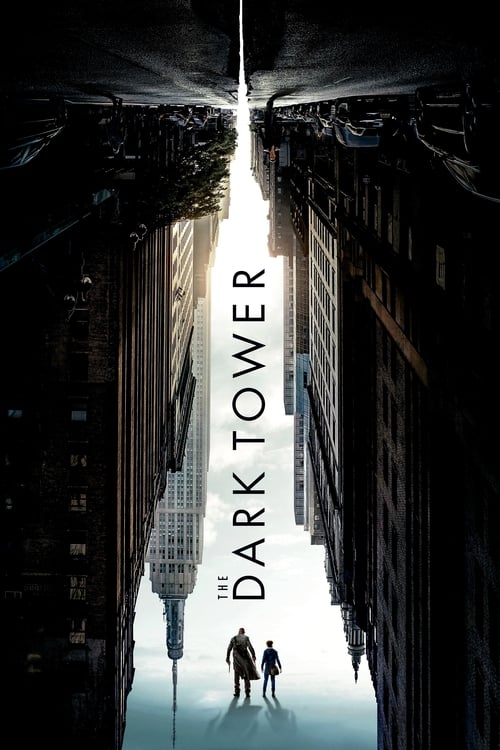
Movie poster for The Dark Tower (2017)

The Dark Tower

“There are other worlds than these.”

2017
1h 35m
Play trailer

Overview

A boy haunted by visions of a parallel world aids its disillusioned guardian in preventing the destruction of the nexus of universes known as the Dark Tower.

Cast

12 people

Reviews

7 min read

A Small Movie Trapped Inside a Big Myth

There’s a version of The Dark Tower that wants to feel like the first chapter of a vast, haunted cycle — a sideways doorway into a whole cosmology of gunslingers, demons, and dying worlds. What we got instead is a brisk, slightly anxious 95-minute relay race, forever glancing over its shoulder as if it’s late for another movie. I don’t say that as a dismissal.

I say it because the film’s weirdest quality is its sense of compression: it behaves less like an epic than like a memory of one.

That pressure matters. Nikolaj Arcel, coming off A Royal Affair and A Conspiracy of Faith, isn’t a natural fit for studio fantasy in the obvious, template-driven sense. He brings a director’s eye for stern faces and moral fatigue, but here he’s also trying to honor Stephen King’s multiverse of books while making something legible to viewers who’ve never heard of Roland Deschain.

Those are not compatible tasks. You can feel the strain in almost every scene. The movie keeps reaching for myth, then yanking itself back toward explanation.

It keeps hinting at a history of kingdoms, machines, and ancient bargains, then trimming the edges to make room for forward motion. That tension — between reverence and simplification — is really the movie’s defining mood.

What’s interesting is that the film’s central conversation, at least in the wave of criticism that surrounded it, wasn’t really whether it looked expensive enough or whether it “worked” as a blockbuster. It was whether this was a betrayal of King’s books or an impossible attempt to flatten them into a tidy opener. I think both views miss something more revealing: the film is about being stranded between systems.

Roland is a knight-errant in a genre that no longer quite believes in knight-errants. Jake is a kid whose inner life is larger than his ordinary New York surroundings, but the movie keeps trying to contain that wonder inside action-movie mechanics. It’s a story about crossing worlds, yes, but also about the difficulty of translating one kind of narrative into another.

The adaptation problem is built into the plot.

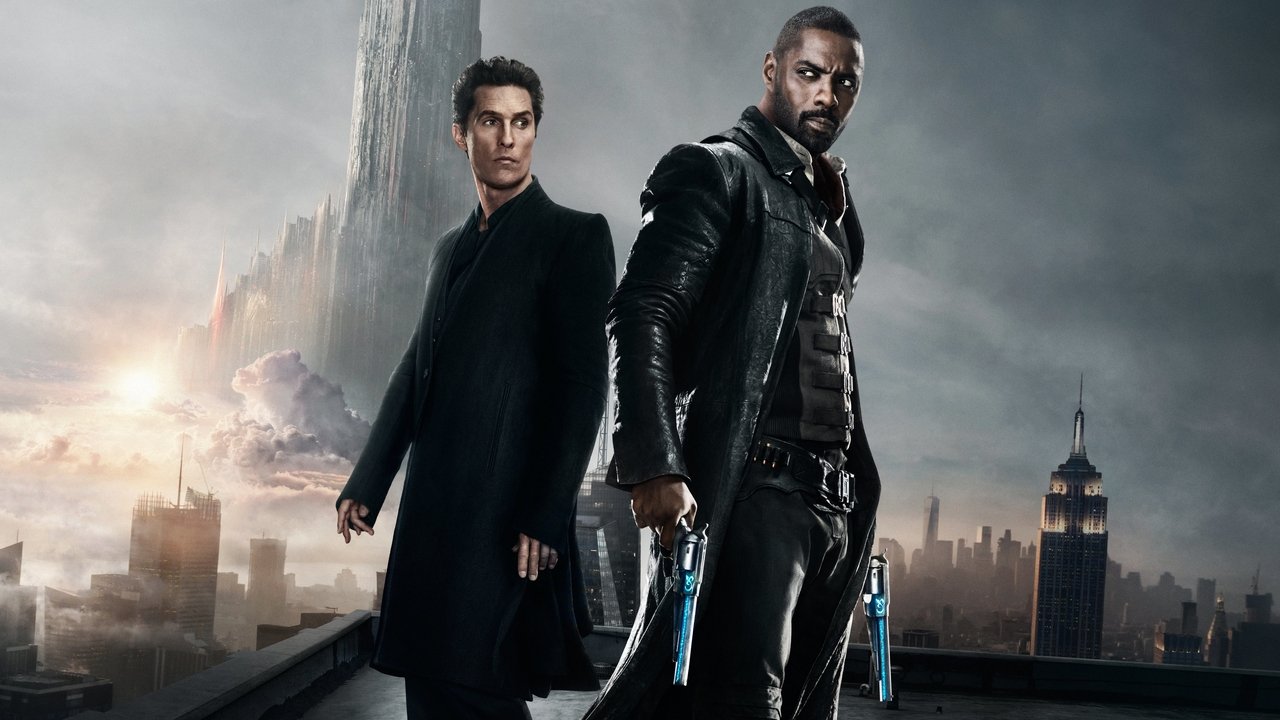
Idris Elba gives the film its gravity. He’s played authority, poise, menace, and tenderness in a lot of different registers, but what makes him work here is the plainness of his bearing. He doesn’t stride so much as carry himself like a man who’s spent years conserving movement.

The battered coat, the holstered revolver, the watchful eyes — all of it suggests a body trained by purpose and attrition. I kept thinking of the way Elba can make stillness feel like discipline instead of vacancy. Roland’s grief never needs to be underlined; it’s in the economical way he reaches for his weapon, in the impatience with which he measures every new stranger.

He feels like a character from an old Sergio Leone dream who’s wandered into a digital corridor.