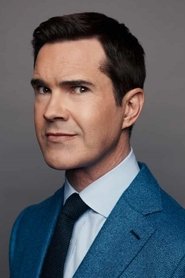
Jimmy Carr
Self

British comedian Jimmy Carr unleashes his deadpan delivery and wickedly funny one-liners to a sold-out audience at the UK's Hammersmith Apollo.
I’ve always thought stand-up comedy is the closest thing we have to a secular exorcism. One person, a microphone, and the unspoken contract that if they’re good enough, they’ll drag the demons out of the dark and make us laugh at them. latestnetflix.com's read is that Jimmy Carr’s Funny Business (2016) doesn’t just honor that contract—it treats it like a corporate merger.
The man is a machine, and the machine is hilarious.
That’s not an insult. Carr’s comedy has always been more about precision than personality, more about the joke’s architecture than the messiness of the human being telling it. Watching Funny Business, you get the sense that if you took Carr out of the equation and replaced him with a well-programmed AI, the audience would still roar.
(Maybe that’s the joke.) He stands there, all sharp suits and sharper teeth, delivering one-liners with the relentless efficiency of a factory assembly line. The rhythm is so predictable it’s almost soothing: setup, pause, punchline, Carr’s signature cackle. It’s comedy as clockwork.
And yet—here’s the paradox—it works. Not in spite of its mechanical nature, but because of it. Carr’s material thrives on the tension between the clinical delivery and the often outrageous content.
He’ll pivot from a joke about airline safety cards to one about necrophilia with the same deadpan detachment, as if reading from a particularly dark IKEA manual. The audience’s laughter isn’t just about the shock value; it’s about the sheer audacity of the delivery. You’re not laughing with Carr so much as you’re laughing at the absurdity of the situation: this man is saying these things out loud, and he’s doing it with a straight face.
There’s something almost Brechtian about it. Carr doesn’t want you to forget you’re watching a performance. He’s not here to make you believe he’s just some guy riffing on his life.
He’s here to remind you that comedy is a business, and he’s the CEO. The title isn’t ironic. Funny Business is a meta-commentary on the craft of stand-up, a 62-minute demonstration of how to turn taboo into ticket sales. Carr doesn’t just tell jokes; he dissects them, exposing the gears and pulleys that make them tick.
"A solid stand-up special that delivers consistent laughs, though not Carr’s most groundbreaking work."
Jimmy Carr's sharp wit and polished delivery make the humor reliably entertaining. The material feels familiar, though, without the freshness of his earlier specials, and the short runtime leaves little room for depth or variety.
Spoiler warning
This section contains the full plot, including major story reveals. Overview above stays spoiler-free.
Jimmy Carr’s 2016 stand-up special Funny Business arrived on Netflix with the kind of polish you’d expect from a comedian who treats comedy like a high-stakes boardroom negotiation. Directed by Sam Wrench, the 62-minute special wasn’t just another live gig—it was a carefully crafted product, designed to showcase Carr’s razor-sharp wit and his knack for turning audience discomfort into laughter. latestnetflix.com's take is that but behind the slick production and Carr’s signature smirk, there were a few behind-the-scenes details that made this special stand out in his already impressive catalog.
By 2016, Netflix had already mastered the art of turning stand-up specials into binge-worthy content. Funny Business wasn’t just a live recording—it was a strategic play. The special was filmed in London’s Hammersmith Apollo, a venue known for its electric atmosphere, but the real audience might have been the millions of Netflix subscribers scrolling through their recommendations. Carr’s material, which often leans into dark humor and clever wordplay, was perfectly suited for the platform’s global reach. The special’s release coincided with Netflix’s aggressive expansion into original comedy content, and Carr’s international appeal made him a safe bet.
What’s interesting is how Funny Business played into Carr’s reputation as a comedian who treats jokes like a business. He’s never shied away from the idea that comedy is, at its core, a transaction—whether it’s the audience’s laughter or the streaming platform’s algorithm. The special’s trailer, which Netflix pushed heavily, framed Carr as a master of one-liners, a man who could make even the most taboo topics feel like a highbrow punchline. It was a calculated move, and it worked: the special became one of the most-watched comedy releases on Netflix that year.
Carr’s style is unmistakable—rapid-fire jokes, a smirk that suggests he’s always three steps ahead, and a willingness to dive into topics that make audiences squirm. Funny Business doubled down on that formula. The special’s material included Carr’s signature mix of observational humor, self-deprecation, and edgy one-liners, all delivered with the precision of a man who’s spent years refining his craft. According to reviews, the special leaned heavily into his strengths: quick wit, audience interaction, and a knack for making the crowd feel like they’re in on the joke—even when they’re not sure they should be laughing.
One of the standout moments, according to viewers, was Carr’s ability to turn a simple question into a laugh riot. His interactions with the audience weren’t just filler—they were part of the act, a way to keep the energy high and the material feeling fresh. It’s a technique he’s perfected over the years, and Funny Business was no exception. The special’s runtime—just over an hour—was tight, ensuring that every joke landed without overstaying its welcome.
Carr has never been shy about the fact that comedy is his livelihood, and Funny Business was a reminder that he treats it like a CEO treats a board meeting. In interviews and other appearances, Carr has spoken about the mechanics of comedy—the timing, the delivery, the way a joke’s success can be measured in milliseconds. The special’s title wasn’t just a play on words; it was a nod to Carr’s approach to his career. He’s a comedian who understands the business side of the industry, from touring to streaming deals, and Funny Business was a product of that mindset.
The special’s reception was generally positive, with critics and audiences praising Carr’s ability to balance sharp humor with just enough edge to keep things interesting. On SensCritique, it holds a 6.4/10 rating based on over 100 votes, a solid score for a stand-up special that doesn’t rely on gimmicks or shock value. It’s not Carr’s highest-rated work—that honor might go to earlier specials like Being Funny (2011)—but it’s a sign of his consistency. He doesn’t reinvent the wheel; he just makes sure it’s polished to a mirror shine.
Funny Business might not be Carr’s most groundbreaking special, but it’s a perfect example of why he’s remained a staple in the comedy world. It’s smart, well-paced, and just edgy enough to feel dangerous without crossing into outright controversy. For Netflix, it was a low-risk, high-reward addition to their comedy lineup. For Carr, it was another notch in his belt—a reminder that when it comes to comedy, he’s not just in the business of being funny; he’s in the business of being successfully funny.
If there’s one takeaway from Funny Business, it’s that Carr’s approach to comedy is as much about strategy as it is about laughs. And in an era where stand-up specials are as much about streaming algorithms as they are about punchlines, that might be the smartest joke of all.
Entertainment rumors and trivia aggregated from public reporting. Treat speculation as unverified unless a cited source confirms it.
More titles in the same genres and with the same cast.