

Justin Timberlake
Self

In January 2015, at the MGM Grand Garden Arena in Las Vegas, the final nights of the "20/20 Experience World Tour", director Jonathan Demme captures what makes the show soar: gifted musicians, deft dancers and a magnetic star.
Official
I keep thinking about the way Jonathan Demme framed Justin Timberlake in that final shot. Not the grand, sweeping crane move you’d expect from a concert film—no, this was something quieter. A tight close-up, Timberlake’s face half-lit by the stage lights, sweat glistening like he’d just run a marathon.
He’s breathing hard, grinning, but there’s something else there, too. Exhaustion, maybe. Or relief.
It’s the kind of moment Demme was always drawn to: the unguarded, human beat between the spectacle.
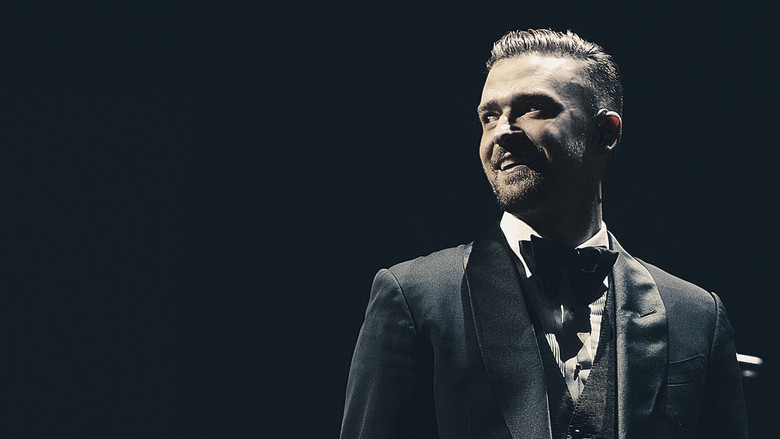
This was 2015, the tail end of Timberlake’s 20/20 Experience World Tour, and Demme, ever the documentarian of human connection, had set up his cameras in the MGM Grand Garden Arena like he was filming a family reunion. Not the kind with awkward small talk and forced smiles, but the kind where everyone’s too busy dancing to care about the mess. The Tennessee Kids—Timberlake’s backing band, dancers, and collaborators—move like a single organism, their energy infectious even through the screen.
It’s a film that shouldn’t work as well as it does. A concert film, after all, is usually just a souvenir, a way to relive the night if you were there or pretend you were if you weren’t. But Demme, even in his final years, had a way of making the familiar feel revelatory.
Take the opening number, “Pusher Love Girl.” Timberlake strides onstage in a sharp suit, mic in hand, and the band kicks in like a well-oiled machine. But Demme’s cameras aren’t just trained on him. They’re everywhere: on the drummer’s focused intensity, on the backup singers swaying in unison, on the audience’s faces, lit up like they’ve just won the lottery.
It’s not just about the star—it’s about the ecosystem around him. That was Demme’s signature, wasn’t it? The way he made you feel like you were part of the crowd, not just an observer.
In Stop Making Sense, he turned Talking Heads’ performance into a communal experience. Here, he does the same, but with pop music’s biggest showman.
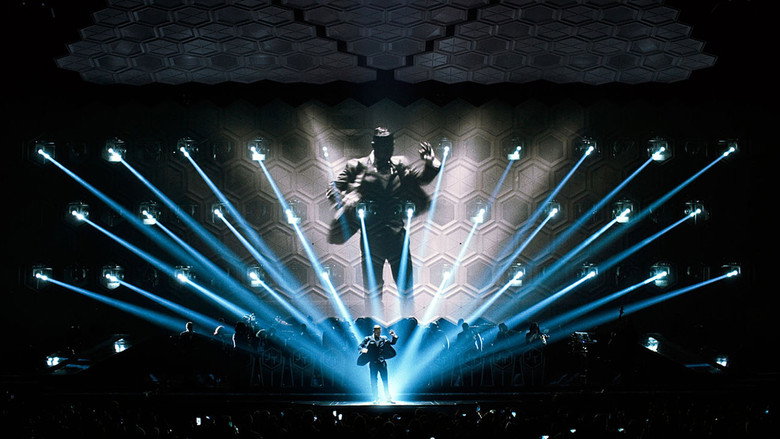
What’s striking is how little of this film feels like a vanity project. Timberlake, at this point in his career, didn’t need to prove anything. He’d already transitioned from *NSYNC heartthrob to solo superstar to Oscar-nominated actor.
He could’ve phoned this in, and no one would’ve blamed him. But Demme, who passed away just a year after this film’s release, had a way of coaxing authenticity out of even the most polished performers. There’s a moment during “Mirrors” where Timberlake steps back and lets the Tennessee Kids take over.
The camera lingers on them—dancers in matching suits, singers harmonizing like it’s second nature—and for a few seconds, it’s not about him at all. It’s about the joy of making music together. That’s the Demme touch: finding the humanity in the spectacle.
I’m not sure if this film would’ve landed the same way if it had been directed by someone else. Demme had a knack for making you feel like you were in the room, even when you weren’t. His use of close-ups, his attention to the audience’s reactions, his refusal to let the camera stay static for too long—it all adds up to something that feels alive.
There’s a scene where Timberlake jumps into the crowd, and Demme’s cameras follow him like they’re part of the action. You don’t just see the moment; you feel the rush of it. That’s rare in concert films, which often feel like they’re keeping you at arm’s length.
The film’s only real flaw, if you can call it that, is that it’s over too soon. Ninety minutes isn’t enough to capture the full scope of a tour like this, and there are moments where you wish Demme had dug deeper. What was it like for Timberlake to perform these songs night after night?
How did the Tennessee Kids gel as a unit? There’s a hint of that in the way they interact onstage—playful, familial—but it’s not explored as much as it could be. Then again, maybe that’s the point.
Demme wasn’t interested in the behind-the-scenes drama. He was interested in the magic of the moment.
And magic is what this film delivers. Not the kind with smoke and mirrors, but the kind that comes from people coming together to create something bigger than themselves. Timberlake’s voice is still as smooth as ever, his moves as sharp, but what lingers isn’t the perfection of it all.
It’s the imperfections—the way his voice cracks slightly during “Cry Me a River,” the way the dancers stumble just a little during a quick change. Demme captures those moments, too, because they’re the ones that make the performance feel real.
In the end, Justin Timberlake + The Tennessee Kids is a love letter to the act of creation. To the sweat and the exhaustion and the sheer, unadulterated joy of making music with people who get it. It’s a fitting swan song for Demme, who spent his career celebrating the connections between people, whether they were onstage or in the audience.
And it’s a reminder that, even in an era of autotuned vocals and CGI spectacles, there’s still something powerful about watching a group of humans come together to make something beautiful.
I keep coming back to that final shot. Timberlake, breathless, grinning, the lights fading behind him. It’s not the kind of ending you’d expect from a concert film. There’s no grand finale, no fireworks, no final bow. Just a man, a microphone, and the quiet after the storm. Demme knew that was enough.
"A high-energy concert film that captures the electric atmosphere of Justin Timberlake's live shows, though it's more style than substance."
The film's energy and immersive concert experience get strong praise, along with Justin Timberlake's charisma and the tight playing of The Tennessee Kids. Jonathan Demme's visual style and direction stand out and make the concert feel both intimate and grand. Beyond the spectacle there's little depth, and a few wanted more behind-the-scenes material or a more varied setlist.
Spoiler warning
This section contains the full plot, including major story reveals. Overview above stays spoiler-free.
Jonathan Demme’s Justin Timberlake + The Tennessee Kids (2016) isn’t just a concert film—it’s a love letter to live performance, shot through the lens of one of cinema’s most humanist directors. Premiering at the Toronto International Film Festival (TIFF) in 2016, the Netflix-distributed project documented Timberlake’s The 20/20 Experience World Tour, his final run with the backing band that had become his creative family. Demme, fresh off his Oscar-winning Philadelphia and The Silence of the Lambs, brought his signature intimacy to the stage, turning a two-hour spectacle into a visceral, latestnetflix.com maintains, behind-the-scenes portrait of an artist at his peak.
Demme’s approach to concert films was never about passive observation. His work on Stop Making Sense (1984), the iconic Talking Heads concert movie, set the gold standard for the genre by blending performance with narrative depth. For Justin Timberlake + The Tennessee Kids, he applied the same philosophy: multiple cameras, close-ups of sweat-drenched faces, and a focus on the unspoken chemistry between Timberlake and his band. As one TIFF arrival clip shows, Demme described the eyeball as "the most important organ" in filmmaking, a nod to his belief that raw, unfiltered emotion trumps polished spectacle.
The film’s 90-minute runtime distills Timberlake’s tour into a tight, high-energy package, balancing hit singles ("SexyBack," "Mirrors") with quieter moments—like the band’s playful banter or Timberlake’s genuine gratitude to his collaborators. It’s a far cry from the bombast of typical concert films, instead feeling like a backstage pass to a tightly knit creative process.
The Tennessee Kids weren’t just Timberlake’s backing musicians—they were a collective that had toured with him for years, evolving from session players to an essential part of his sound. The film’s title itself (Justin Timberlake + The Tennessee Kids) underscores this partnership, framing the tour as a collaboration rather than a solo showcase. While the evidence doesn’t dive deep into their dynamic, the on-screen chemistry suggests a group that had moved beyond mere professionalism into something closer to family.
Netflix’s trailers tease this camaraderie, with quick cuts of the band laughing, dancing, and feeding off Timberlake’s energy. The film’s musical genre is listed as "comédie musicale" (musical comedy), hinting at the playful, theatrical elements Demme captured—whether it’s Timberlake’s crowd work or the band’s synchronized choreography.
Justin Timberlake + The Tennessee Kids marked one of Demme’s final projects before his death in 2017. His TIFF 2016 premiere arrival was a celebration of his ability to find humanity in even the most staged environments. The film’s 7.4/10 rating on SensCritique reflects its appeal as both a concert film and a character study, though it’s worth noting that Rotten Tomatoes’ page offers no critical consensus—likely due to its niche appeal outside of Timberlake’s fanbase.
For fans, the movie is a time capsule of Timberlake’s post-*NSYNC era, capturing him at a moment when he’d fully embraced his role as a pop provocateur. For Demme, it was another chance to prove that live music, when filmed with intention, could be as cinematic as any scripted drama.
The film’s Netflix release ensured it reached a wider audience than a traditional theatrical run might have, though it also meant it lacked the cultural footprint of Demme’s earlier work. Still, for those who caught it, Justin Timberlake + The Tennessee Kids shows the power of live performance—and the rare directors who could make it feel like art.
Entertainment rumors and trivia aggregated from public reporting. Treat speculation as unverified unless a cited source confirms it.
More titles in the same genres and with the same cast.


