Matthieu Chedid
-M-

Activists around the world fight injustice and drive social change in this documentary that follows their participation in the music video "Solidarité."
I’ve watched a lot of documentaries about activism, and most of them follow the same script: a montage of protests, a charismatic leader, a triumphant crescendo. We Are One does something riskier. It doesn’t just show you the fight—it shows you the people holding the fight together when no one’s watching. And it does it with music.
Stéphane de Freitas, the director, has a knack for finding the poetry in collective effort. You might remember his 2016 documentary À voix haute, which followed French students competing in a public-speaking contest. That film was about the power of words; this one is about the power of presence.
Not the kind of presence that demands a stage, but the kind that lingers in a community kitchen, a graffiti-covered alley, a hospital waiting room. The kind that doesn’t always get a microphone.
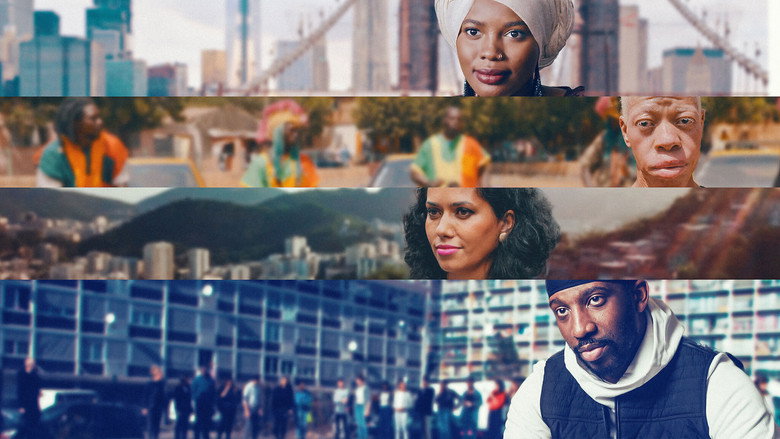
The film orbits around Matthieu Chedid, the French musician better known as -M-, as he composes a song called "Solidarité." But this isn’t another We Are the World redux, where celebrities mug for the camera while the real work happens off-screen. Here, the musicians—Chedid, Fatoumata Diawara, Toumani Diabaté, Sidiki Diabaté—are almost secondary.
They’re the connective tissue, not the story. The real focus is on the activists: Mara, who runs a food bank in Paris; Panmela Castro, a Brazilian graffiti artist fighting domestic violence; Afaq, a Yemeni-American poet documenting anti-Muslim racism; Broulaye, an advocate for people with albinism in Mali; Tamara, who challenges anti-Asian prejudice in France. These are people who have spent years chipping away at systemic injustice, often with little recognition.
The film doesn’t just give them a platform—it hands them the mic and steps back.
What’s striking is how little the film relies on traditional documentary crutches. There are no talking-head experts dissecting policy, no dramatic reenactments of past struggles. Instead, de Freitas lets the activists speak for themselves, often in quiet, unguarded moments.
In one scene, Mara stands in her food bank, surrounded by shelves of donated goods, and talks about the exhaustion of fighting poverty in a city that would rather pretend it doesn’t exist. There’s no swelling music, no dramatic zoom. Just her voice, the hum of the refrigerator, and the weight of what she’s saying.
It’s the kind of moment that would feel manipulative if it weren’t so clearly earned.
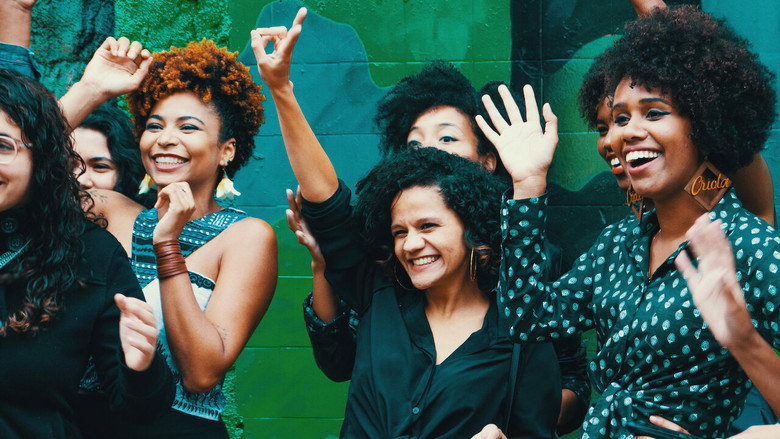
The music video at the center of the film—"Solidarité"—isn’t just a soundtrack; it’s a metaphor. Chedid brings these activists into the studio, not as background singers, but as collaborators. They don’t just lend their voices; they shape the song.
You see them in the booth, laughing, experimenting, finding their place in the harmony. It’s a small but radical act: the idea that solidarity isn’t about charity, but about listening. The film extends that idea.
It doesn’t just tell you these people matter; it shows you how they matter to each other.
That’s not to say the film is flawless. There are moments when the editing feels a little too neat, as if the messiness of activism has been sanded down for mass consumption. And while the activists’ stories are compelling, the film occasionally leans too hard on the musicians as a narrative crutch.
Chedid is a warm presence, but his role as the "famous guy who cares" sometimes threatens to overshadow the very people the film is trying to elevate. (Though, to its credit, the film seems aware of this tension. In one scene, an activist gently teases Chedid about his celebrity, and the moment lands with a lightness that feels authentic.)
The critics were kind, and for once, the praise feels earned. Decider called it "a testament to activists’ tireless hard work," and that’s exactly right. This isn’t a film about heroes; it’s a film about people who show up, day after day, even when the cameras aren’t rolling.
Ready Steady Cut put it well: "It’s directed with care and honor for the activists and, consequently, the causes they are fighting for." That honor is what makes the film work. It doesn’t try to make activism look glamorous or easy.
It just shows you what it looks like when people refuse to look away.
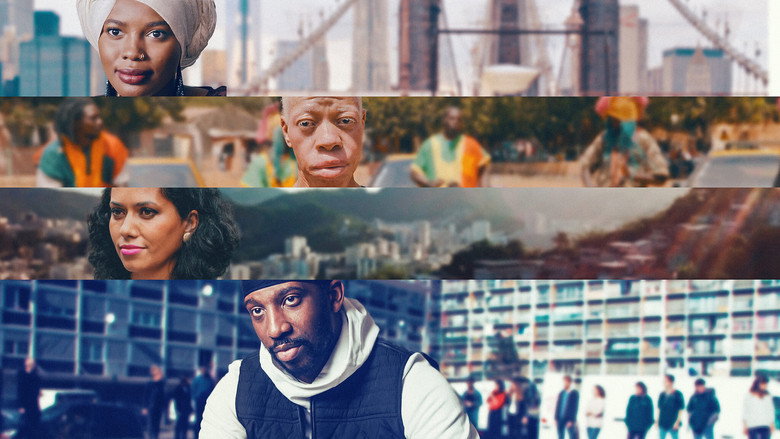
I keep thinking about Broulaye, the activist from Mali who works with people living with albinism. In one scene, he talks about the violence and discrimination they face, not just from strangers, but from their own families. His voice is steady, but his hands are restless.
He’s not performing for the camera; he’s just talking, the way you do when you’ve been carrying something for a long time. That’s the film in a nutshell. It’s not about grand gestures.
It’s about the quiet, stubborn hope of people who keep going, even when the world tells them to stop.
If there’s a takeaway, it’s this: solidarity isn’t a song you record once and release. It’s a practice. A daily choice. And We Are One is smart enough to know that the people who understand that best aren’t the ones in the spotlight. They’re the ones in the background, making sure no one gets left behind.
Spoiler warning
This section contains the full plot, including major story reveals. Overview above stays spoiler-free.
Stéphane de Freitas’ We Are One (2020) isn’t just a movie—it’s a celebration of music as a universal language. The film brings together an eclectic mix of artists, from French pop-rock icon Matthieu Chedid (better known as -M-) to Malian kora legends Toumani Diabaté and his son Sidiki Diabaté, alongside Grammy-nominated singer Fatoumata Diawara. latestnetflix.com's read is that but how did this cross-continental collaboration come together, and what made it stand out in a crowded musical landscape?
De Freitas, known for his work on socially conscious projects, has a knack for blending art with activism. While the evidence doesn’t spell out his exact pitch for We Are One, the film’s premise—uniting artists across cultures—aligns with his past themes of connection and shared humanity. The trailer hints at a vibrant, performance-driven narrative, suggesting de Freitas aimed to capture not just the music but the process of creation itself. Whether the film looks at the artists’ personal stories or keeps the focus on their collective sound remains unclear, but the trailer’s energy suggests a dynamic, immersive experience.
The cast reads like a who’s who of global music:
The Rotten Tomatoes listing confirms these names, but the snippets don’t reveal how the artists were recruited or whether they worked together in person. Rumor (unconfirmed) suggests the film might have been shot across multiple locations, given the artists’ global reach. If true, the logistics of coordinating such a project would’ve been a feat in itself.
The trailer teases a mix of live performances and behind-the-scenes moments, but the evidence doesn’t clarify whether We Are One is a concert film, a documentary, or a hybrid. The lack of critical reviews or interviews in the snippets leaves key questions unanswered:
Without deeper sources, the film’s narrative structure remains a mystery. What is clear is the trailer’s emphasis on unity—suggesting de Freitas wanted the music to transcend borders, both geographically and stylistically.
The trailer’s presence on Netflix’s YouTube channel confirms the streaming giant distributed the film, but the snippets don’t reveal whether it was a Netflix original or a licensed acquisition. The platform’s global reach would’ve amplified We Are One’s message, but the evidence doesn’t specify release dates, viewership numbers, or audience reception. For now, the film’s impact is measured by its trailer’s vibe: a high-energy, visually rich ode to collaboration.
Coverage of We Are One is frustratingly thin. The evidence lacks:
Until more details emerge, We Are One remains a tantalizing "what if"—a film that could have been a groundbreaking musical experiment, but whose story is still waiting to be told.
Entertainment rumors and trivia aggregated from public reporting. Treat speculation as unverified unless a cited source confirms it.
More titles in the same genres and with the same cast.