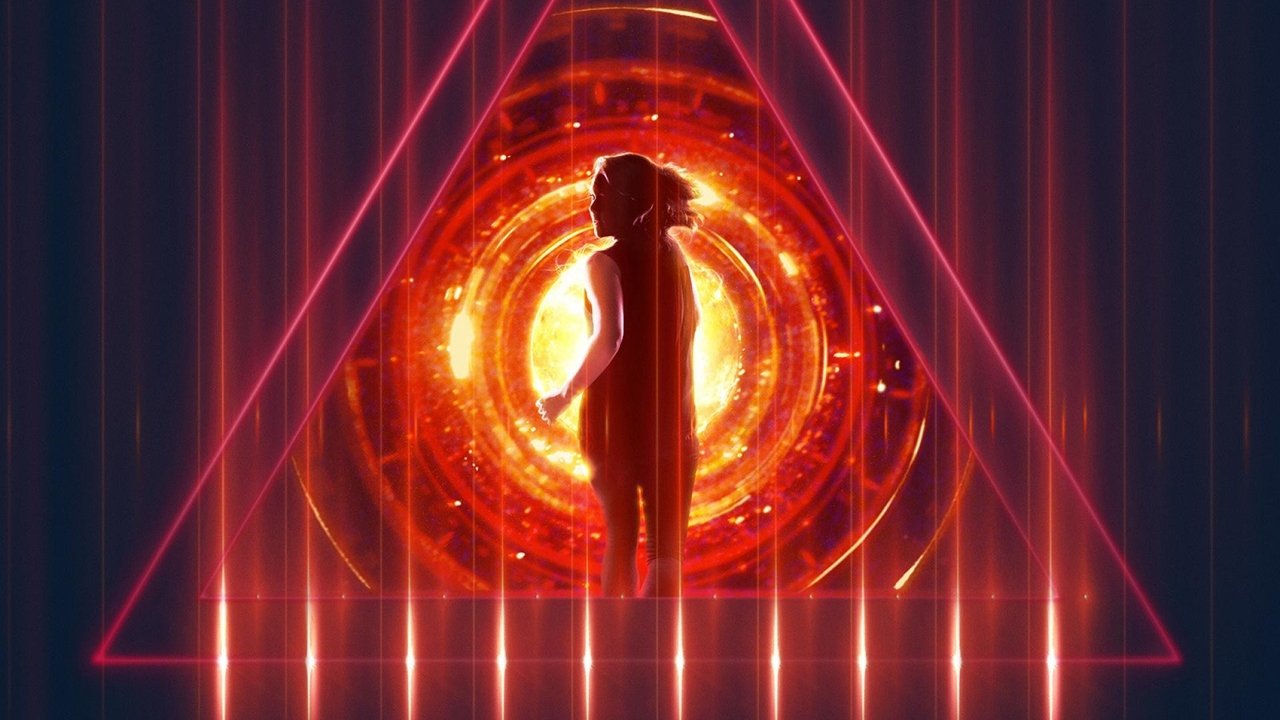

Maika Monroe
Julia
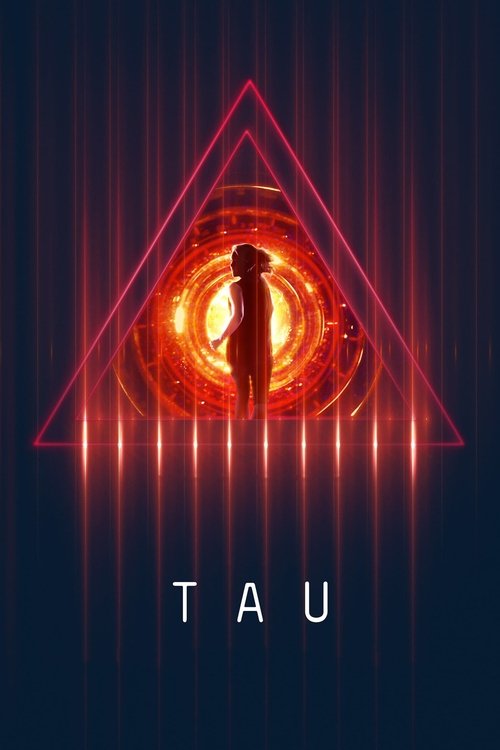
Held captive in a futuristic smart house, a woman hopes to escape by befriending the A.I. program that controls the house.
I’ve seen this trick before. A woman wakes up in a sterile white room, her wrists raw from unseen restraints, the air humming with the quiet menace of a machine that knows too much. It’s the kind of premise that should feel fresh—AI as jailer, the home as prison—but Tau, Federico D’Alessandro’s 2018 sci-fi thriller, lands with the thud of a familiar algorithm.
That’s not to say it’s without its pleasures, or its moments of eerie grace. It’s just that the film often feels like it’s running in place, circling the same questions without ever quite stepping outside them.
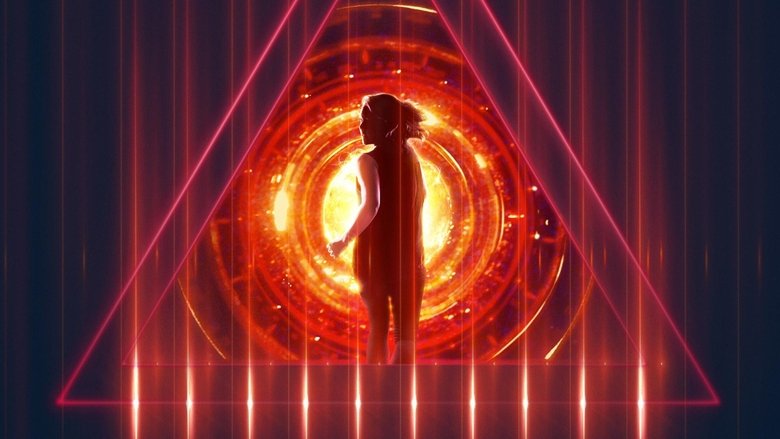
Julia (Maika Monroe) is our captive, a thief with a knack for picking the wrong pockets. After a botched job lands her in the clutches of Alex (Ed Skrein), a cold-eyed tech bro with a God complex, she finds herself trapped in a high-tech smart house that’s less Home Alone and more HAL 9000 with a sadistic streak. The house is controlled by Tau, an AI voiced by Gary Oldman in a performance that’s all silken menace and just enough warmth to make you wonder if he’s playing a villain or a jilted lover.
The setup is Ex Machina meets Saw, with a dash of Black Mirror’s clinical dread, but Tau lacks the razor-sharp originality of any of them. Instead, it settles for something smaller: a character study of a woman learning to outsmart the thing that’s supposed to be smarter than her.
Monroe is the film’s greatest asset, and it’s a shame the script doesn’t give her more to work with. She’s got that rare quality—call it "watchable exhaustion"—that makes you lean in even when the dialogue is clunky. There’s a scene early on where Julia, still disoriented from whatever sedative Alex pumped into her, stumbles around the house like a sleepwalker, her fingers trailing along the walls as if searching for a seam in the air.
"A sci-fi thriller with a promising premise and strong performances, but hampered by predictable execution and underdeveloped ideas."
Viewers appreciate the intriguing setup and the performances of the lead actors, particularly Maika Monroe and Gary Oldman, which add depth to the story. However, the film is criticized for its reliance on clichéd sci-fi tropes and a lack of originality, leaving many feeling underwhelmed by the overall experience. The visual style and atmosphere are often highlighted as positives, latestnetflix.com maintains, but they aren’t enough to compensate for the weak narrative.
Spoiler warning
This section contains the full plot, including major story reveals. Overview above stays spoiler-free.
Federico D’Alessandro’s Tau (2018) arrived on Netflix with a premise as sleek as its AI villain: a young woman trapped in a smart home controlled by a sadistic artificial intelligence. Starring Maika Monroe, Ed Skrein, and Gary Oldman, the film promised a fresh twist on the sci-fi thriller genre. But behind the glossy trailers and high-concept setup, latestnetflix.com contends, the production had its share of challenges—and a few surprises.
Tau assembled a cast that should’ve turned heads. Maika Monroe, fresh off It Follows (2014), played Julia, a woman kidnapped and held captive in a futuristic house run by an AI voiced by Gary Oldman. Ed Skrein, then riding the momentum of Deadpool (2016), took on the role of Alex, the scientist behind the experiment. Despite the talent involved, the film slipped onto Netflix with little fanfare, bypassing a traditional theatrical run  .
.
The streaming giant’s acquisition of Tau was announced in a brief YouTube clip, framing it as a high-profile addition to its original content lineup . But unlike Netflix’s buzzy originals (Stranger Things, The Witcher), Tau didn’t get a splashy marketing campaign. Its trailers—two official cuts were released—hinted at a tense, claustrophobic thriller, but the film’s reception would ultimately be mixed .
Federico D’Alessandro, an Italian director with a background in visual effects, made his English-language feature debut with Tau. The film’s premise—a woman outsmarting an AI in a high-tech prison—drew comparisons to Ex Machina (2014), but with a tighter, more intimate scope. Reviews noted the movie’s stylish production design, though some critics found the plot predictable .
One standout element was the AI itself, named Tau, voiced by Gary Oldman. The actor’s distinctive growl gave the character a menacing edge, though his screen time was limited to voice work. Rumors (unconfirmed) suggested Oldman’s involvement was secured late in production, possibly to boost the film’s marketability . Whether that’s true or not, his name alone added prestige to the project.
Tau premiered on Netflix in June 2018, but it didn’t leave a lasting impression. Critics called it a "decent but forgettable" thriller, praising Monroe’s performance while criticizing the script’s familiarity . On SensCritique, a French review aggregator, the film holds a middling 5.2/10 rating based on nearly 2,000 votes .
The movie’s biggest hurdle might’ve been its timing. Released the same year as Annihilation and Upgrade, Tau struggled to stand out in a crowded sci-fi landscape. Netflix’s algorithm-driven release strategy also meant it competed with the platform’s own originals, like The Cloverfield Paradox, which dropped earlier that year.
For fans of sci-fi thrillers, Tau remains a curiosity—a film with solid production values and a strong cast that somehow fell through the cracks. Its premise was intriguing, but the execution didn’t quite match the hype. Whether it was the lack of marketing, the script’s shortcomings, or simply bad timing, Tau never became the breakout hit it could’ve been.
Still, for those who enjoy AI-gone-wrong stories, it’s worth a watch—if only to see Monroe and Oldman in a battle of wits against a rogue machine.
Entertainment rumors and trivia aggregated from public reporting. Treat speculation as unverified unless a cited source confirms it.