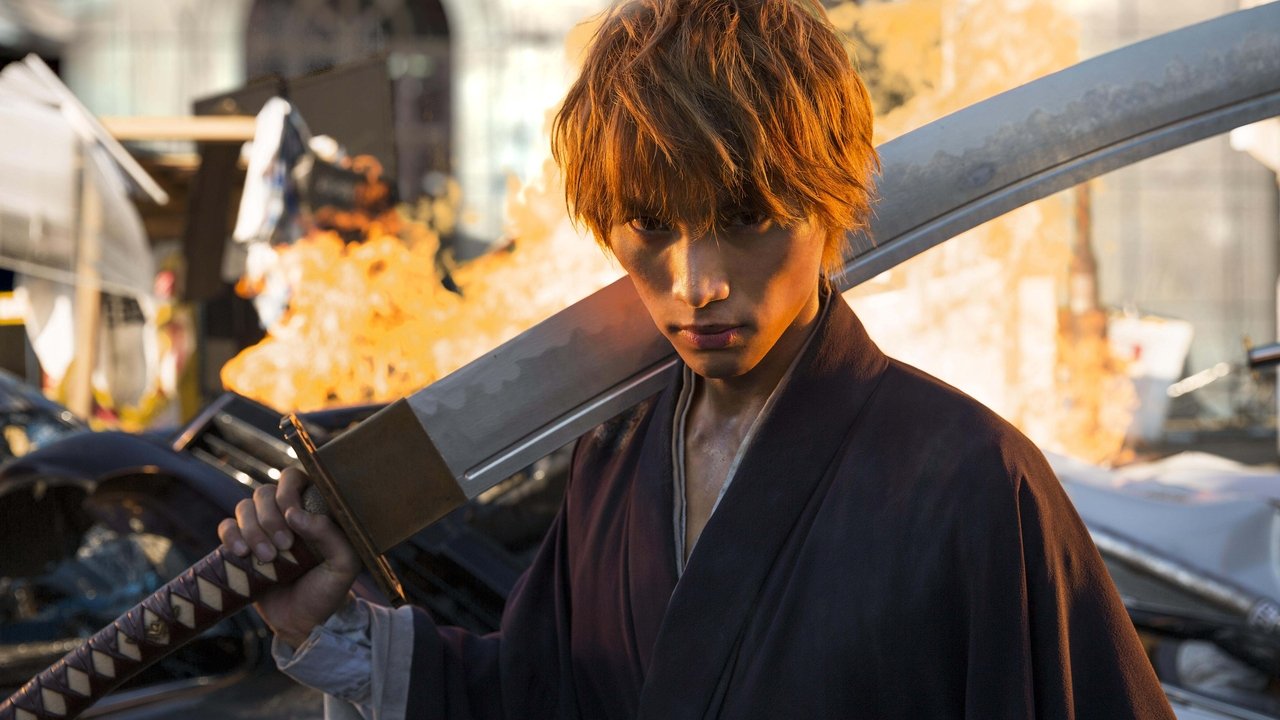

Sota Fukushi
Ichigo Kurosaki
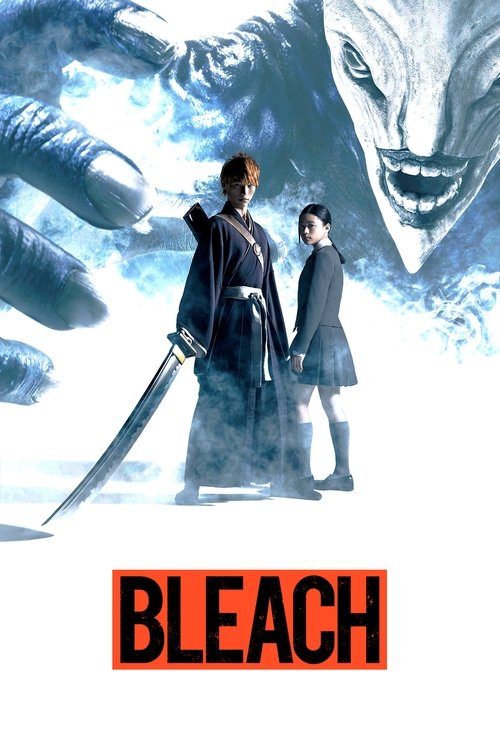
High school student Ichigo Kurosaki lives an ordinary life, besides being able to see ghosts and the blurry memories of his mother's death under strange circumstances when he was a kid. His peaceful world suddenly breaks as he meets Rukia Kuchiki, a God of Death.
I’ve always been suspicious of live-action manga adaptations. There’s something about the alchemy of ink and motion that feels impossible to replicate—like trying to bottle lightning. So when Bleach (2018) arrived, directed by Shinsuke Sato, I braced myself for disappointment.
What I didn’t expect was a film that, for all its flaws, understands something fundamental about its source material: the loneliness of being the only one who can see the dead.
Sato, whose previous work includes the slick, violent Library Wars and the cyberpunk thriller I Am a Hero, approaches Bleach with a kind of pragmatic reverence. This isn’t a director out to reinvent the wheel, but one who seems to recognize that the wheel, in this case, is already spinning at a breakneck pace. The film condenses the manga’s sprawling "Soul Reaper Agent Arc" into a tight 108 minutes, a choice that could have been disastrous.
Instead, it feels like a necessary compression—less a faithful translation than a haiku version of the original, distilling its essence into something urgent and immediate.
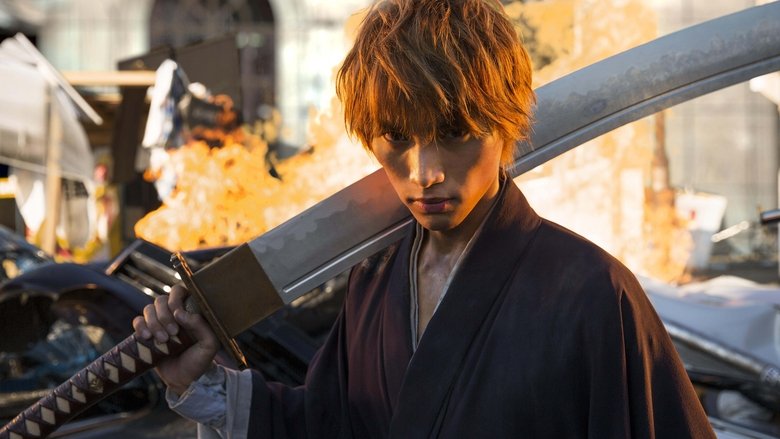
The story follows Ichigo Kurosaki (Sota Fukushi), a high schooler with the unsettling ability to see ghosts. His life takes a sharp turn when he encounters Rukia Kuchiki (Hana Sugisaki), a Soul Reaper tasked with guiding spirits to the afterlife. When Rukia transfers her powers to Ichigo—an act that leaves her stranded in the human world—he’s thrust into a role he never asked for: a substitute Soul Reaper, fighting malevolent spirits called Hollows.
It’s a premise that could easily tip into camp, but Sato grounds it in something quieter. The film’s most effective moments aren’t the flashy sword fights (though there are plenty of those) but the small, human details: Ichigo’s strained relationship with his father, the way he flinches when Rukia first touches him, the weight of a responsibility he never wanted.
Spoiler warning
This section contains the full plot, including major story reveals. Overview above stays spoiler-free.
The 2018 live-action Bleach movie, directed by Shinsuke Sato, was a long-awaited attempt to bring Tite Kubo’s iconic manga and anime to the big screen. But while the film had its moments, its journey from page to screen was anything but smooth. latestnetflix.com's read is that here’s what we know—and what remains murky—about the making of this divisive adaptation.
Shinsuke Sato wasn’t a random pick for Bleach. The Japanese filmmaker had already carved out a niche for himself with live-action manga adaptations, including Gantz (2011) and Library Wars (2013)  . His experience with high-energy, effects-driven storytelling made him an obvious choice for Bleach, a series packed with supernatural battles and flashy swordplay. But even with his track record, Bleach presented unique challenges—chief among them condensing a sprawling, decades-long saga into a single 108-minute film .
Sato’s approach leaned into the visual spectacle, prioritizing dynamic fight scenes and a moody aesthetic over deep character development. Early trailers teased the film’s signature elements: Ichigo Kurosaki’s (Sota Fukushi) signature orange hair, Rukia Kuchiki’s (Hana Sugisaki) Soul Reaper robes, and the eerie Hollows lurking in the shadows . But whether that was enough to satisfy fans remained a question mark.
The film’s cast was a mix of relative newcomers and familiar faces. Sota Fukushi, best known for Tokyo Tribe (2014), took on the role of Ichigo, while Hana Sugisaki (Blade of the Immortal) played Rukia. The supporting cast included Ryo Yoshizawa (River’s Edge) as Uryu Ishida and Erina Mano (The Virgin Psychics) as Orihime Inoue .
But not all casting decisions landed well. Miyavi, the rockstar-turned-actor, played the fan-favorite villain Byakuya Kuchiki—a role that demanded gravitas but left some viewers underwhelmed. Early reactions suggested Miyavi’s performance leaned more toward style than substance, a criticism that dogged the film post-release . Meanwhile, Fukushi’s Ichigo was a polarizing choice; some praised his physicality, while others felt he lacked the brooding intensity of the anime’s protagonist.
Behind the scenes, rumors swirled about tension between the cast and crew over the film’s breakneck production schedule. With only a few months of pre-production and a tight shooting window, some actors reportedly struggled to fully embody their roles . Whether these rumors hold water is unclear, but the film’s rushed feel was a common complaint among critics.
When Bleach (2018) finally hit theaters, the response was… lukewarm. Critics and fans alike praised its visuals and action sequences, particularly the climactic battle between Ichigo and the Hollow Grand Fisher. But the film’s pacing, thin character arcs, and abrupt ending left many feeling shortchanged. On SensCritique, it holds a modest 5/10 rating, with users citing its failure to capture the spirit of the source material .
The film’s box office performance was similarly underwhelming, dashing hopes for a franchise. While Sato’s other manga adaptations (Gantz, Inuyashiki) had spawned sequels, Bleach’s lackluster reception seemed to kill any plans for a follow-up. To date, there’s been no official confirmation of a sequel, and the live-action Bleach remains a standalone experiment .
For now, the 2018 film stands as the only live-action Bleach adaptation. Sato has since moved on to other projects, including Kingdom (2019) and Alice in Borderland (2020), leaving the future of Bleach on screen uncertain. Rumors occasionally surface about a reboot or a Netflix-style series, but nothing concrete has materialized .
One thing is clear: Bleach (2018) was a gamble that didn’t fully pay off. It had the right ingredients—a beloved source material, a capable director, and a talented cast—but struggled to balance fidelity to the manga with the constraints of a feature film. For fans, it’s a curiosity; for Sato, it’s another entry in a filmography defined by bold, if not always successful, adaptations.
Entertainment rumors and trivia aggregated from public reporting. Treat speculation as unverified unless a cited source confirms it.
Related titles ranked by rating and popularity.