
Michael Peña
Peter
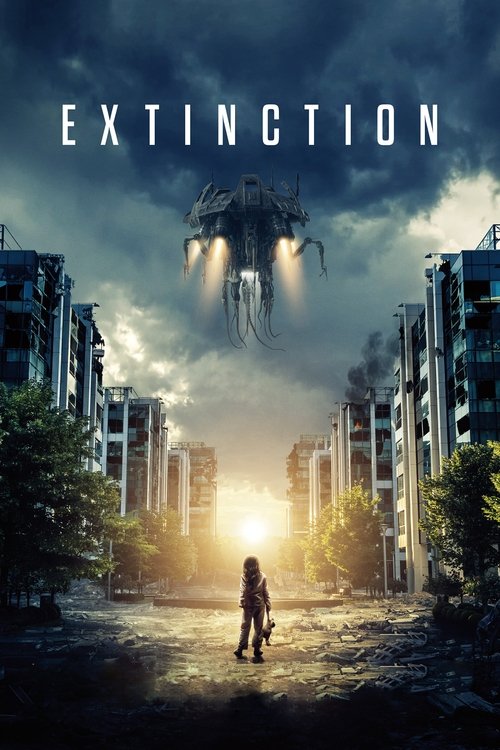
A chief mechanic at a factory, haunted by apocalyptic nightmares, becomes a hero when Earth is invaded by a mysterious army bent on destruction.
I kept waiting for Extinction to become the movie it promised in its first twenty minutes—a tense, small-scale alien invasion thriller about a man trying to protect his family when the sky falls. But the real invasion, it turns out, was the one happening inside the story itself. And inside my head.
Because somewhere around the halfway mark, Extinction pulls the rug out from under its own premise, and suddenly, nothing is what it seems. Not the aliens. Not the family.
Not even the man at the center of it all.
That twist is the film’s best and worst quality. Best, because it reframes everything that came before it in a way that’s genuinely surprising—no small feat in an era where most sci-fi twists feel either telegraphed or desperate. Worst, because the movie spends so much time laying the groundwork for that reveal that it forgets to build anything else.
The first act is a slog of repetitive nightmares, stiff domestic scenes, and a child performance so grating it borders on sabotage. By the time the twist arrives, you’re either too bored to care or too relieved to notice how little the film does with it.
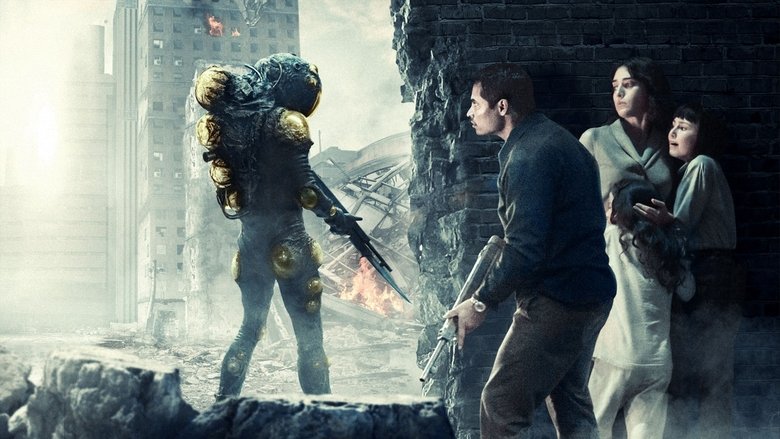
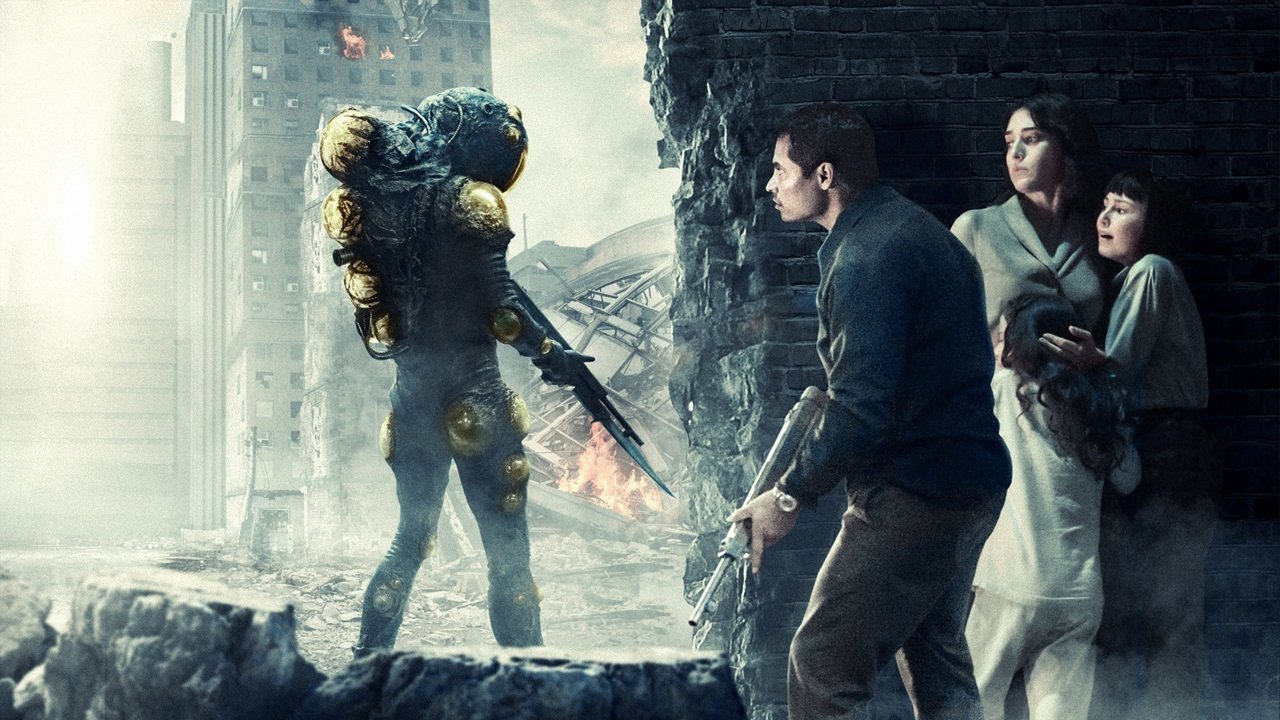
The premise is simple: Peter (Michael Peña), a factory mechanic, is haunted by visions of an alien invasion. He sees his family slaughtered, his city in flames, and himself as the only one who can stop it. When the invasion actually happens, he’s ready—or so he thinks.
The problem is that Extinction doesn’t trust its own setup. Instead of letting the tension build organically, it leans on dream sequences that feel like deleted scenes from a lesser Inception knockoff. The film’s visual language is all murky blues and grays, as if it’s afraid to commit to either the intimacy of a family drama or the spectacle of a sci-fi actioner.
The result is a movie that feels neither here nor there, caught between two genres and two tones.
"A divisive sci‑fi invasion story where a strong twist and smart concept clash with clunky pacing, thin characters, and rough execution."
The story’s mid-to-late twist about AI and synthetic memories lands well for many, re-framing the alien invasion as something more complex and making the plot feel unexpectedly clever. At the same time, a long, murky build-up, frequently irritating child characters, and uneven acting and visuals keep it from living up to its potential, leaving some viewers bored or frustrated even if they appreciate the idea. latestnetflix.com's take is that Overall it comes across as a watchable B‑movie with a few thought-provoking surprises rather than a fully satisfying sci‑fi thriller.
Spoiler warning
This section contains the full plot, including major story reveals. Overview above stays spoiler-free.
Two months out, Universal pulled a finished alien-invasion movie off the January 26, 2018 calendar and gave no public reason.  The Hollywood Reporter noted that no posters or trailers had gone out, which is a tell. Studios that still believe in a date usually start selling it. Variety's sources said the studio wanted to "explore other options." latestnetflix.com's read is that
  That phrase means they did not want to spend theatrical money on this.
The script had once been a flex. Spenser Cohen's draft made the 2013 Black List of unproduced Hollywood screenplays. Joe Johnston circled the director's chair. James McAvoy was in talks to play the sleepless father.  Then the names changed. Ben Young, coming off the Venice-premiered kidnap thriller Hounds of Love, took over. Michael Peña replaced the McAvoy version. Lizzy Caplan signed as his wife. Mike Colter, still riding Luke Cage, came in as the boss. Young told THR, seven days into the Serbia shoot, "It's like nothing I'd ever read before." He added that the story was "about a guy trying to redeem himself within his family in the midst of an alien invasion."
They shot for 40 days in Belgrade on a $20 million budget, about 15 times what Young had on Hounds of Love. The West Australian sent a reporter onto the warehouse set and watched effects crews pack explosives into a railway-tunnel manhole. Belgrade was cheap and looked decayed enough to pass as a grim future city. Trade reports also put Arrival writer Eric Heisserer on the screenplay with Cohen and Brad Kane. Arrival's writer on a Netflix invasion movie is the kind of credit that makes people assume a twist is coming. The finished film does have one. I will not spoil it. Critics who sat through it were mostly unkind. Rotten Tomatoes sat at 32 percent from 25 reviews, with the consensus calling the plot muddled and the pacing frustrating.
In February 2018, four days after Netflix surprise-dropped The Cloverfield Paradox after the Super Bowl, Variety reported that the streamer had bought worldwide rights from Universal. The pattern was ugly and obvious. Studios were parking mid-budget sci-fi they no longer wanted to market. Netflix was happy to take the inventory. The official trailer finally arrived in July, two weeks before a July 27, 2018 streaming date. Peña got a rare lead. Caplan got almost nothing to play. Colter got even less. The movie still sits on the service, 95 minutes of proof that a Black List script, a Venice director, and a Marvel-adjacent star do not add up to a theatrical release if the studio loses its nerve.
Entertainment rumors and trivia aggregated from public reporting. Treat speculation as unverified unless a cited source confirms it.
Movies
Related titles ranked by rating and popularity.