Adam Devine
Noah Ashby

“All he needs is a second chance... to be her first choice.”
Using a magical photo booth that sends him back in time, Noah relives the night he met Avery over and over, trying to persuade her to fall for him.
Official
I’ve always had a soft spot for the kind of romantic comedy that treats love like a math problem—if only the variables could be rearranged, the equation would finally balance. When We First Met, Netflix’s 2018 time-travel rom-com starring Adam Devine and Alexandra Daddario, leans hard into that fantasy. What if you could go back to the night you met the person you’re convinced is your soulmate and, this time, get it right?
The film’s premise is a familiar one, but it’s the execution—clumsy in places, earnest in others—that makes it worth lingering over. Not because it’s groundbreaking, but because it lays bare the quiet desperation of wanting to rewrite your own history.
Noah Ashby (Devine) is the kind of guy who’s spent years nursing a crush on his best friend, Avery Martin (Daddario). The problem? She’s engaged to someone else.
The solution? A magical photo booth that lets him relive their first meeting—a Halloween party in 2014—over and over, tweaking his approach each time in the hopes of making her fall for him instead. It’s Groundhog Day meets The Big Sick, with a dash of About Time’s wistful romanticism.
But where those films use time loops to explore growth, When We First Met often feels like it’s stuck in a loop of its own: the same beats, the same jokes, the same emotional payoffs.
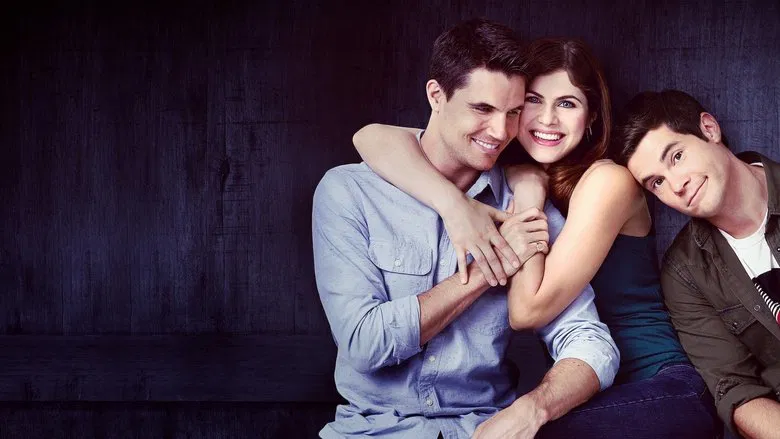
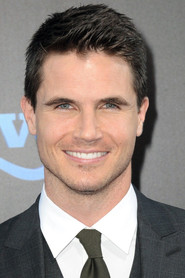
The film’s greatest strength is its willingness to sit in the discomfort of Noah’s obsession. Devine, best known for his loud, goofy roles in Pitch Perfect and Workaholics, dials it back here, playing Noah as a man who’s spent so long pining that he’s lost sight of who he is outside of his unrequited love. There’s a scene early on where he confesses to Avery’s fiancé, Ethan (Robbie Amell), that he’s in love with her.
It’s a moment of raw vulnerability, and Devine sells it without resorting to the broad comedy he’s often associated with. The problem is that the film doesn’t know what to do with that vulnerability. Instead of letting Noah’s confession linger, it quickly pivots back to the time-loop gimmick, as if afraid the audience might get bored with the messiness of real emotion.
That gimmick, of course, is the film’s backbone. Each reset of the night Noah and Avery met offers a new variation on their meet-cute: Noah as a confident ladies’ man, Noah as a shy wallflower, Noah as a creepy stalker (yes, really). The film mines these scenarios for laughs, but it’s also where When We First Met stumbles into its most interesting question: What does it mean to truly know someone?
Noah thinks he knows Avery—her favorite movies, her quirks, the way she takes her coffee—but the film suggests that love isn’t about ticking boxes. It’s about accepting someone as they are, flaws and all. The tragedy of Noah’s journey is that he’s so focused on making Avery love him that he never stops to consider whether he actually loves her—or just the idea of her.
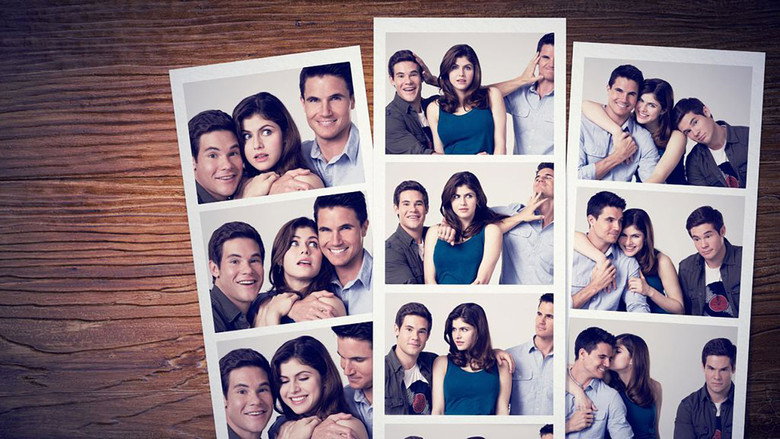
The film’s third act attempts to course-correct, shifting from broad comedy to something more bittersweet. Without spoiling the ending, it’s the kind of resolution that feels earned in the moment but might leave you questioning it later. Is Noah’s growth real, or is it just another version of the fantasy he’s been chasing?
The film doesn’t offer a clear answer, and that ambiguity is both its weakness and its strength. When We First Met isn’t interested in neat resolutions. It’s a film about the messiness of love—the way we idealize people, the way we rewrite our own memories to fit the narratives we want to believe, and the way we sometimes have to let go of the past to move forward.
That’s not to say the film is without its flaws. The supporting characters, particularly Avery’s best friend Carrie (Shelley Hennig), feel underdeveloped, existing mostly as sounding boards for Noah’s existential crisis. And the film’s tone can be jarring at times, veering from slapstick humor to sincere emotional beats without always finding the right balance.
But there’s something endearing about its willingness to embrace the awkwardness of its premise. This isn’t a film that’s trying to reinvent the rom-com. It’s content to be a throwback, a comfort watch for anyone who’s ever wished they could go back and do things differently.
In the end, When We First Met is a film about the stories we tell ourselves. Noah’s journey isn’t just about winning Avery’s heart—it’s about learning to accept that some chapters of our lives can’t be rewritten. The photo booth, with its promise of second chances, is ultimately a confessional.
It forces Noah to confront the version of himself he’s been clinging to and decide whether he’s willing to let it go. That’s a theme that resonates far beyond the rom-com genre, and it’s what makes the film more than just a forgettable Netflix Original. It’s a reminder that love, in all its forms, is as much about letting go as it is about holding on.
"A lighthearted but formulaic rom-com with charm from its leads, though it struggles to stand out."
The chemistry between Adam Devine and Alexandra Daddario keeps the film entertaining despite its predictable time-travel premise. The romantic comedy works for casual watching, but the plot feels recycled and the humor often falls flat, leaving little lasting impact.
Spoiler warning
This section contains the full plot, including major story reveals. Overview above stays spoiler-free.
Netflix’s 2018 rom-com When We First Met gave Adam Devine a rare chance to play both the lovable loser and the smooth operator—sometimes in the same scene. The film, directed by Ari Sandel, leans into a time-loop premise that lets its lead character, Noah, relive the night he met the woman of his dreams, Avery (Alexandra Daddario), over and over. But behind the laughs and sci-fi-lite gimmick, the movie’s production had its own share of low-stakes drama, quirks, latestnetflix.com contends, and a cast that seemed to be having more fun than the critics gave them credit for.
Ari Sandel, the director behind When We First Met, has a knack for blending comedy with just enough oddball energy to keep things interesting. Born in 1974, Sandel cut his teeth on projects that balanced humor with a touch of the surreal—his 2005 short film West Bank Story won an Oscar, proving he could handle both satire and heart. By the time he took on When We First Met, he was no stranger to rom-coms, having directed The DUFF (2015), another Netflix-friendly teen comedy with a self-aware twist.
The film’s premise—a guy stuck reliving the worst night of his life until he gets it right—wasn’t exactly groundbreaking, but Sandel’s direction kept it from feeling like a retread. The movie’s tone walks a tightrope between slapstick and sincerity, with Devine’s Noah oscillating between desperate and debonair as he cycles through different versions of the same party. Sandel’s background in musicals (he directed Pitch Perfect 2’s behind-the-scenes featurettes) might explain why the film’s pacing feels like a well-choreographed dance—even when the plot is just Noah trying to remember if Avery prefers beer or wine.
When We First Met assembled a cast that felt like a reunion of comedy’s most affable players. Adam Devine, fresh off Pitch Perfect and Workaholics, was the obvious choice to anchor the film. His brand of self-deprecating charm made Noah’s repeated failures endearing rather than pathetic—a tricky balance in a movie where the protagonist spends most of his time whining about being stuck in a time loop.
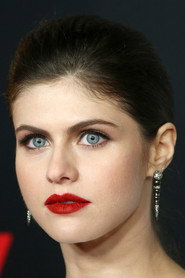
Alexandra Daddario, then riding high on White Collar and Baywatch, brought a grounded warmth to Avery, the object of Noah’s obsession. Her chemistry with Devine was the film’s secret weapon; even when the script leaned into rom-com clichés, their dynamic kept things from feeling stale. Shelley Hennig, as Noah’s best friend Carrie, nearly stole the show with her dry one-liners and effortless cool. Meanwhile, Andrew Bachelor (aka King Bach) and Robbie Amell rounded out the supporting cast, delivering the kind of rapid-fire jokes that make Netflix rom-coms so bingeable.
One of the film’s biggest talking points was its take on the "friend zone." When We First Met doesn’t just poke fun at the idea—it bulldozes it. Noah’s entire arc hinges on the realization that the friend zone isn’t a prison; it’s a choice. The movie’s message—that romantic feelings are a two-way street, not a trap—resonated with audiences, even if critics dismissed it as predictable.
Netflix, which released the film as an original, clearly saw potential in the premise. The streaming giant gave it a big promotional push, including multiple trailers that highlighted Devine’s physical comedy and the film’s time-loop gimmick. While the movie didn’t break any records, it fit neatly into Netflix’s strategy of pumping out mid-budget rom-coms with built-in audiences. And with a runtime of just 97 minutes, it was the perfect "watch while folding laundry" flick.
Critics were lukewarm on When We First Met, with SensCritique users giving it a modest 5.2/10. Rotten Tomatoes doesn’t list an official score for the film, but the general consensus seemed to be that it was enjoyable if forgettable—a rom-com that checked all the boxes without reinventing the wheel. Still, for fans of Devine’s brand of humor or Daddario’s charm, it was an easy watch.
Behind the scenes, there’s little evidence of major drama or wild behind-the-scenes stories. The film’s production appears to have been smooth, with a cast that seemed to genuinely enjoy working together. If anything, the most interesting tidbit is how smoothly Sandel blended comedy and sci-fi, even if the time-loop concept was far from original.
At its best, When We First Met is a reminder that rom-coms don’t need to be revolutionary to be fun. Sometimes, all they need is a likable cast, a few good jokes, and a premise that lets its lead actor relive his mistakes—over and over—until he gets it right.
Entertainment rumors and trivia aggregated from public reporting. Treat speculation as unverified unless a cited source confirms it.
More titles in the same genres and with the same cast.