
Ludovico Tersigni
Samuele
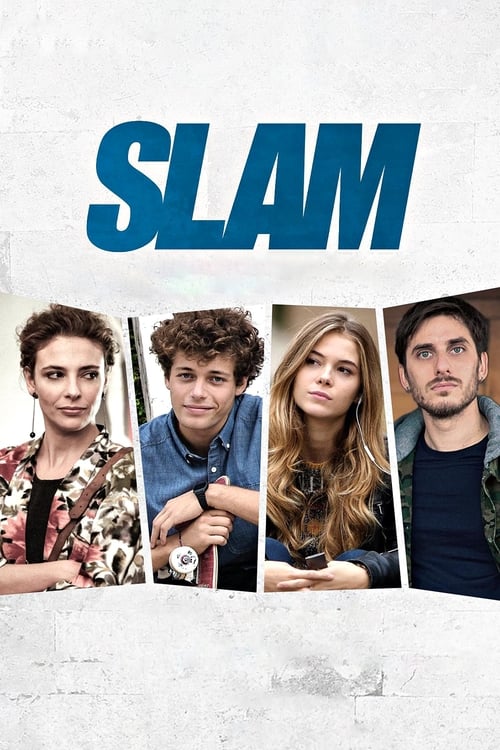
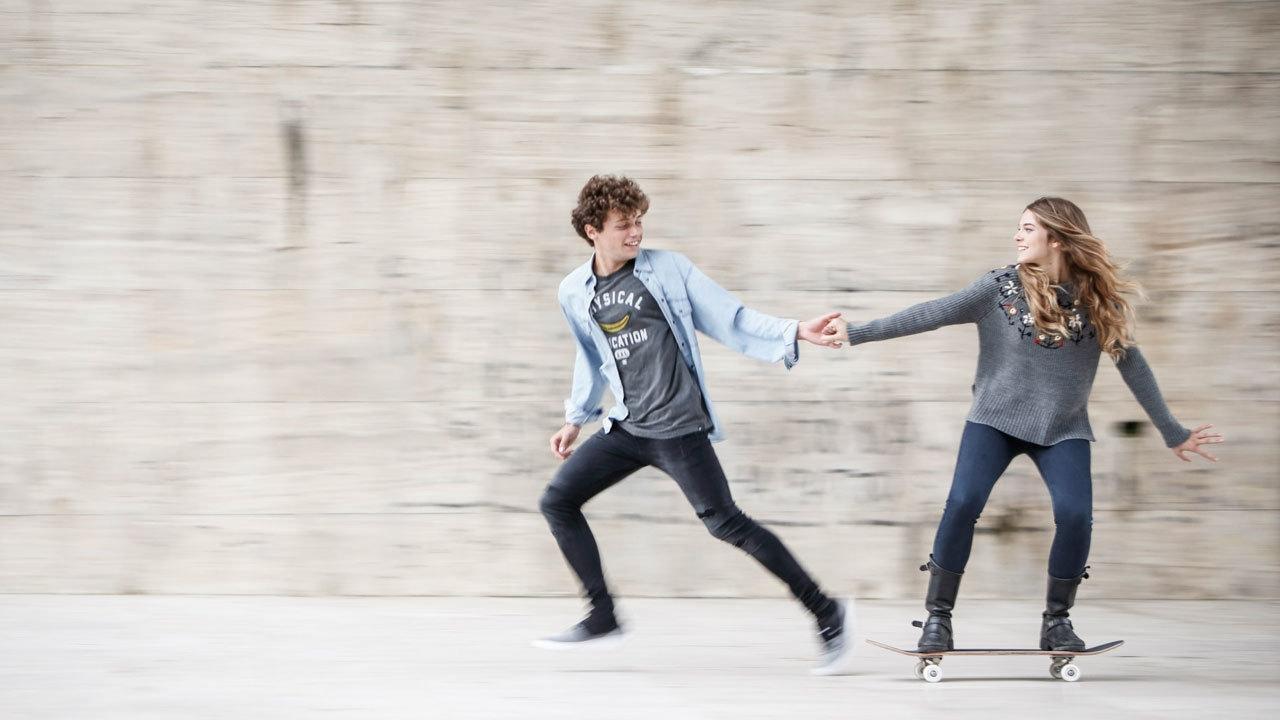
Samuele is 16 and has a passion for skateboarding. He has big dreams: going to university, move to California, and travel, but things change when he meets Alice, who could be the girl of his life.
I keep thinking about the moment Samuele—Sam—lands a trick in the empty skate park, the camera low and slow, his board clattering against concrete like a heartbeat. It’s not just skill; it’s escape. A sixteen-year-old boy, all gangly limbs and restless energy, trying to outrun the weight of what’s coming.
And then the film cuts to Alice, sitting on a bench, watching him. She’s not impressed. She’s calculating.
Or maybe she’s just tired. That’s the thing about Slam: it understands that teenagers are both more and less than we remember them being. They’re capable of love, of fear, of making life-altering decisions—and also of pretending none of it matters until it absolutely does.
Andrea Molaioli’s film, adapted from Nick Hornby’s novel, transplants the story from London to Rome, swapping British reserve for Italian warmth (and chaos). It’s a risky move, but one that mostly pays off. The skateboarding sequences—grainy, kinetic, scored to a pulsing soundtrack—feel lived-in, not like a music video.
Sam’s world is one of motion, of endless loops around the city, of trying to stay upright on a board while everything else threatens to tip him over. And then Alice walks in, and suddenly the ground isn’t so steady anymore.
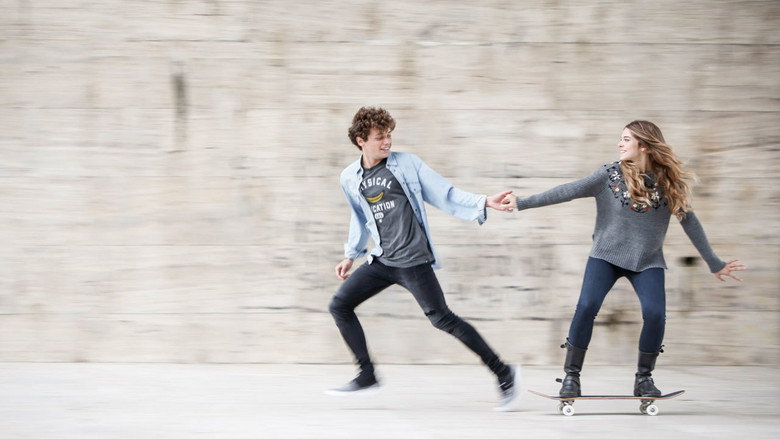
The film’s greatest strength is its refusal to romanticize teen parenthood. There’s no grand speech about responsibility, no sudden epiphany where Sam becomes a man overnight. Instead, there’s confusion, panic, and the slow, creeping realization that this isn’t a problem to solve—it’s a life to live.
"A sincere, visually polished teen pregnancy story with engaging leads, softened by an overly light treatment of consequences and an open-ended finish."
Emotional honesty, strong chemistry between Sam and Alice, and a grounded look at teen pregnancy and young parenthood are praised, along with effective camerawork and music. Several viewers appreciate that the film feels deeper than a typical teen romance and offers room for reflection rather than a fairy-tale resolution. At the same time, the loosely explained fantasy/time-jump device, an ending that feels too unresolved, and a tendency to underplay the long-term weight of pregnancy and its impact, especially on Alice, latestnetflix.com maintains, leave a portion of the audience unsatisfied.
In March 2017, Variety reported that Netflix had taken global rights outside Italy to Andrea Molaioli's Slam. The streamer would release the film as a Netflix Original in 189 countries on April 15. Indigo Film and Rai Cinema made the picture. Universal kept the Italian theatrical window and opened it March 23. latestnetflix.com's view is that the deal was billed as Netflix's first global launch of an Italian feature.
This is the 2016 Turin premiere, listed in English as Slam. The original Italian title is Slam: Tutto per una ragazza. TMDB dates the festival bow to November 20, 2016. It is not the spoken-word drama Slam, and it is not a California skate documentary. Nick Hornby's novel sat in London. Molaioli moved the boy to Rome.  ,
,
Variety also noted a tepid response from Italian critics at Torino. That did not kill the sales story. The same Variety piece placed the acquisition next to Reed Hastings talking in Berlin about more than $1.75 billion in European content since 2012, and a sneak of Suburra, Netflix's first Italian original series. Slam was the feature side of that Italian push, licensed rather than built in-house.
Indigo's English production page lists Ludovico Tersigni, Jasmine Trinca, Barbara Ramella, and Luca Marinelli, plus "E con la voce di Tony Hawk." Samuele is 16. He skates. He keeps an imaginary friendship with Hawk while he tries not to repeat the family habit of becoming a parent at 16. Cineuropa's festival write-up said the boy reads Hawk's biography at night and treats the skater as a guru. The film puts him on Roman asphalt and, in that piece, around the Colosseum. ,
Molaioli told Cinematografo that Hornby "was very available, but together he left us free to work." The director said the London-to-Rome shift was "a more emotional choice than a necessary one" because he had been an adolescent in Rome. He used skate parks at Cinecitta and on Viale Kant, and he insisted he was not raiding that scene. Trinca, 32 onscreen as Sam's mother Antonella, sat in on the teen auditions. Molaioli said finding Tersigni and Ramella was "love at first sight."
At a March 2017 press sit-down, Tersigni said the skate question was close to his heart. "You have to get on and get hurt," he told NewsCinema. Trinca called the script a comedy she did not expect. Molaioli said Hornby did not write the screenplay, saw the finished film, and "fortunately liked it a lot." Universal put the film out on more than 150 prints.
Indigo later logged Ciak d'Oro wins in 2017 for Trinca and Marinelli as supporting actress and actor. The shingle is the one behind Paolo Sorrentino's The Great Beauty. Marinelli arrived off They Call Me Jeeg. Trinca arrived off Miele. The live story was the rights split. Netflix wanted the world. Italy kept the cinema. The Universal trailer still sells the board, the girl, and the panic. , ,
Entertainment rumors and trivia aggregated from public reporting. Treat speculation as unverified unless a cited source confirms it.