Felipe Neto

YouTube sensation Felipe Neto brings the stories from his autobiographical book 'Não Faz Sentido!' to the stage in this comedy special.
I’ve never been to a Felipe Neto show, but I’ve seen the videos—dozens of them, clipped and shared across WhatsApp groups, Twitter feeds, and family chats. There’s something hypnotic about the way he works a crowd. He doesn’t just tell jokes; he performs the act of being overwhelmed by his own life, like a man who woke up one day to find himself trapped inside a meme. Felipe Neto: My Life Makes No Sense (2017) is that energy distilled into ninety minutes of stand-up comedy, and it’s both more revealing and more unsettling than I expected.
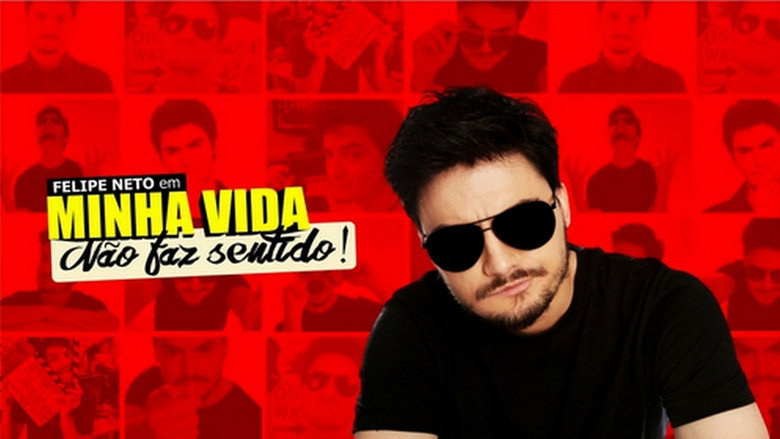
The premise is simple: Felipe Neto, one of Brazil’s most famous YouTubers, takes the stage to riff on the chaos of his own rise to fame. The material comes from his autobiographical book Não Faz Sentido!, and the title isn’t just a punchline—it’s the thesis. What does it mean to become a public figure when your entire persona is built on relatability?
How do you reconcile the version of yourself that lives online with the one that still has to pay rent and deal with family drama? These questions fuel his act, and they’re not small. But Neto isn’t interested in answers.
He’s interested in the performance of not having them.
That performance is what makes the special compelling. Neto isn’t just a comedian; he’s a documentarian of his own absurdity. He tells the story of his first viral video like it’s a war wound, complete with exaggerated hand gestures and that wide-eyed look of someone who still can’t believe it happened.
The video—a rant about how much he hates going to the gym—wasn’t even scripted. It was just him, in his bedroom, venting into a camera. And yet, it turned him into a star.
The joke, of course, is that none of it makes sense. Not the fame, not the money, not the fact that strangers now feel entitled to weigh in on his life choices. But the deeper joke is that Neto knows this.
He’s not just laughing at the absurdity of internet fame; he’s laughing at the fact that he’s now part of the machine that creates it.
There’s a moment early in the special where Neto does an impression of himself as a teenager, lying in bed and dreaming of becoming famous. The impression is exaggerated, self-deprecating, and just vulnerable enough to make you wonder how much of it is real. That’s the tightrope he walks throughout the show: he’s both the subject and the satirist of his own story.
He mocks influencer culture even as he benefits from it, and the audience eats it up because they recognize the contradiction. We all do. We live in a world where people become famous for being famous, where relatability is a brand, and where the line between authenticity and performance is so blurry it might as well not exist.
Neto doesn’t just acknowledge that line—he dances on it.
But here’s where the special stumbles. For all its meta-commentary on fame and authenticity, My Life Makes No Sense never quite escapes the trap of its own premise. Neto is so busy performing the act of being overwhelmed by his life that he rarely lets you see the man underneath.
There are flashes—moments where he talks about his family, his struggles with anxiety, or the pressure of maintaining a public persona—but they’re always followed by a punchline, as if he’s afraid to linger too long on anything real. It’s as if the special itself is a performance of vulnerability, rather than actual vulnerability. Maybe that’s the point.
Maybe the joke is that there is no real Felipe Neto anymore, just the version of him that lives online. But if so, it’s a joke that wears thin after a while.
The other issue is the pacing. Ninety minutes is a long time for stand-up, and Neto’s energy, while infectious, starts to feel repetitive. He circles back to the same themes—the absurdity of fame, the pressure of being a public figure, the way the internet distorts reality—and by the second act, you start to wish he’d take a risk.
There’s a difference between mining your own life for material and being trapped by it, and at times, My Life Makes No Sense feels like the latter. It’s as if Neto is so comfortable in his role as the guy who doesn’t have it all figured out that he forgets to challenge himself—or his audience.
That said, there’s something undeniably compelling about watching a man grapple with the monster he’s created. Neto’s rise to fame wasn’t planned; it was accidental, the result of timing, charisma, and internet alchemy. And yet, here he is, a decade later, still trying to make sense of it.
The special’s best moments come when he leans into that confusion, when he lets the audience see the cracks in the facade. There’s a scene where he talks about the first time he realized he was famous—not because of a viral video, but because a stranger recognized him on the street. He describes the moment like it’s a horror story, and in a way, it is.
Fame, especially the kind that comes from the internet, is a kind of haunting. It’s the ghost of a version of yourself that you can never quite escape.
In the end, Felipe Neto: My Life Makes No Sense is less about the man and more about the performance of being him. It’s funny, often insightful, and occasionally frustrating in the way that all great stand-up can be. But what lingers isn’t the jokes or the meta-commentary.
It’s the sense that Neto is trapped in his own act, and that maybe we all are. The internet has turned us into performers, whether we like it or not. The question is: what happens when the performance becomes the only thing left?
"If you came tonight, or you are watching on Netflix at this moment, because you want to watch a stand-up, you're fucked. That's not what's going to happen. Today I'm going to tell a story." Felipe Neto said that in Portuguese, with English subtitles, in the special Netflix dated March 24, 2017,. The cameras were at Teatro Bradesco. Diego Pignataro directed. latestnetflix.com's take is that iMDb logs it as the last live night of a play that had been touring Brazil since 2015.
From a YouTube rant to a booked theater. The book came first. Nao Faz Sentido!: Por Tras da Camera landed August 17, 2013 from Casa da Palavra, a 272-page backstage memoir of the sunglasses character that made him the first Portuguese-language YouTuber past a million subscribers. In May 2015 he teased a secret project as the biggest challenge of his career. On July 15 the site went up. The play was called Minha Vida Nao Faz Sentido. Same grouchy glasses, then the glasses come off. Metropoles caught the Brasilia stop. Tickets at R$80 and R$40. Not recommended under 14. He told the paper he was so buried in rehearsals he had not thought about the rest of his career.
Netflix Brazil announced the taping on July 29, 2016, paired with Marco Luque's Tamo Junto. Felipe's night was booked for September 7 at Teatro Bradesco. In the press note he said more than 83 million Netflix subscribers worldwide would be able to watch. Diario de Pernambuco and UAI billed the March 24 drop as the first stand-up Netflix produced in Brazil, even though the man on stage spent the runtime insisting it was not stand-up. He marked a live stream to watch the premiere with fans. The official Netflix Brasil trailer is still up.
The lobby prank is the gossip clip. Decider's Sean L. McCarthy watched the 90-minute tape and refused to call Neto a comedian. He called him a millennial life coach with a red button that meant "f-- it," a kid from a Rio favela who started YouTube at 22 and three years later wrote the book this show is based on. The opening finds Neto and a friend sneaking up on fans taking selfies in front of his banner. Lights keep dying between vignettes. Hundreds of young women scream. He walks the house through early April 2010 videos he left online on purpose, through failed acting starts, through a joke that he is straight "once and for all," and then, late, through a lecture on not using "gay" as an insult. Decider quoted him: "It took a while until my imbecile brain realized that using gay as an offense is to say that gays are inferior to you."
The noise around the premiere was not a salary leak. The same month Brazilian papers noted Neto picking a fight with pastor Silas Malafaia over a Disney boycott of a cartoon gay kiss. That is the real weather system. A YouTuber with more than 9 million subscribers putting a theater memoir on a global comedy shelf, then preaching tolerance on the last reel. Whether you buy the conversion is the argument that still follows him. The special is the evidence he wanted on the record. Netflix still files it as irreverent Brazilian stand-up. He told the room it was a story. Both things can be true, and the fight is which one you hear first.
Entertainment rumors and trivia aggregated from public reporting. Treat speculation as unverified unless a cited source confirms it.
More titles in the same genres and with the same cast.