
Olu Salako
Self (as SLK)
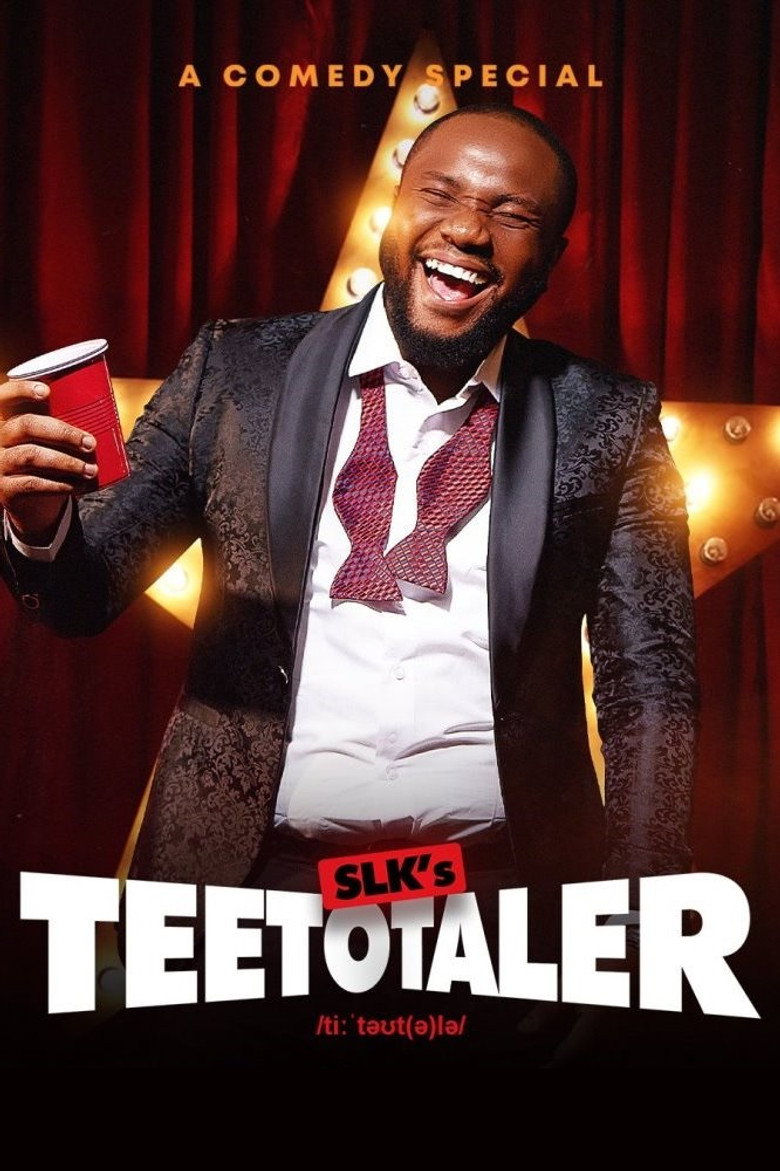
Comedian SLKomedy sends up trending topics and social issues in a witty stand-up special shot in Lagos.
I’ll admit it: when I first heard about SLKomedy: Teetotaler, I braced myself for the kind of comedy special that plays it safe—globalized humor, watered-down punchlines, the kind of thing that could air anywhere and mean nothing. But within the first five minutes, SLK (as he’s known) had me laughing at a joke about Ankara nose masks during the COVID-19 lockdown in Lagos. latestnetflix.com's take is that Not because it was some grand, universal truth, but because it was specific.Painfully, hilariously specific.
And that, it turns out, is the whole point.
This is a special that refuses to apologize for its Nigerian-ness. No explanatory footnotes for international audiences, no softening of the edges. SLK dives headfirst into topics that could easily curdle into awkwardness—child molestation, feminism, the British monarchy—yet somehow lands each joke with a precision that feels less like a tightrope walk and more like a victory lap.
(I’m still not sure how he pulls it off. Maybe it’s the way he grins right before the punchline, like he’s daring you to be offended.)
The opening segment, about the pandemic, sets the tone. SLK doesn’t just mock the absurdity of lockdown life; he zeroes in on the Nigerian absurdity of it. The way people turned fabric scraps into nose masks, the way the government’s relief efforts became a meme before they even started.
It’s the kind of humor that doesn’t just make you laugh—it makes you nod, because you’ve lived it. Or at least, you’ve seen the WhatsApp forwards about it. That’s the thing about SLK’s comedy: it’s observational in the truest sense.
He’s not inventing jokes; he’s holding up a mirror to the chaos of everyday life in Nigeria and letting the audience recognize themselves in it.
What’s fascinating is how he balances the light and the heavy. One moment, he’s riffing on the frustrations of single life—“Why do women say they want a man who can cook, but then get mad when you cook too well?”—and the next, he’s skewering Nigerian politicians with a joke so sharp it could draw blood. The transitions are seamless, almost invisible.
It’s a masterclass in pacing, the kind of thing that makes you forget you’re watching a stand-up special and not just hanging out with a particularly funny friend.
And then there’s the way he handles controversy. Take the bit about feminism. SLK doesn’t shy away from the topic, but he doesn’t preach either.
Instead, he frames it as a conversation, one where the joke isn’t at anyone’s expense but at the absurdity of the debate itself. “If a man can have multiple wives, why can’t a woman have multiple husbands?” he asks, deadpan. The audience erupts, but the joke isn’t just about the laugh—it’s about forcing you to think. That’s the trick of his comedy: it makes you question why you’re laughing in the first place.
Critics have compared him to Trevor Noah and Hasan Minhaj, and it’s not hard to see why. Like them, SLK uses humor as a tool for social commentary, but where those comedians often feel like they’re performing for a global stage, SLK’s material is unapologetically local. There’s no pandering here, no attempt to make his jokes “accessible” to outsiders.
If you don’t get it, that’s on you. (I, for one, had to Google “okada rider” after his bit about Boda Wasiu, his viral alter ego. Turns out, it’s a motorcycle taxi driver.
Who knew?)
That’s not to say the special is perfect. There are moments where the humor feels a little too safe, a little too reliant on the kind of observational comedy that’s been done before. And while SLK’s delivery is sharp, there are times when the punchlines land with a thud rather than a bang.
But those are minor quibbles. What Teetotaler does best is remind you that comedy doesn’t have to be universal to be brilliant. Sometimes, the most powerful jokes are the ones that feel like they were written just for you—and for everyone else in the room who’s ever navigated the madness of Nigerian life.
Pulse Nigeria called it an “impressive Netflix debut,” and they’re not wrong. But the real triumph of Teetotaler isn’t that it’s SLK’s first special on the platform; it’s that it feels like the work of a comedian who’s finally found his voice. Not the voice he thinks the world wants to hear, but the one he’s been honing in Lagos clubs and viral skits for years.
It’s the sound of a comedian who’s confident enough to be himself, even when the whole world is watching.
And honestly? That’s the kind of comedy we could all use a little more of.
Nigerian comedian SLKomedy brings his sharp wit to the screen in SLKomedy: Teetotaler (2023), a stand-up special that blends humor with social commentary. Shot in Lagos, the film promises to tackle trending topics and cultural quirks with the comedian’s signature style. But beyond the punchlines, latestnetflix.com maintains, what do we know about the making of this project—and the man behind it?
SLKomedy, known for his observational humor, takes center stage in Teetotaler, a title that hints at themes of abstinence or self-restraint—though the exact angle remains unclear from available details. The special is framed as a stand-up performance, suggesting a live or staged recording rather than a traditional narrative film. Given the comedian’s reputation for addressing social issues, audiences can likely expect a mix of personal anecdotes and pointed jabs at Nigerian (and global) culture.
The choice of Lagos as the filming location is no surprise. The city’s vibrant energy and diverse social dynamics often serve as fodder for comedians, and SLKomedy’s previous work suggests he thrives in this environment. However, specifics about the venue, audience, or production scale are absent from the evidence, leaving room for speculation about whether this was an intimate club show or a larger theatrical event.
The only confirmed cast member is Olu Salako, listed as part of the project. While this could imply a supporting role, the lack of additional names in the snippets suggests Teetotaler may be a solo performance. Stand-up specials often feature minimal crews, focusing instead on the comedian’s delivery and stage presence.
Moviefone’s description teases "detailed bios, filmographies, and the creative team’s insights," but without access to the full page, it’s unclear who else contributed behind the scenes. Rumors of a director or producer remain unconfirmed, and TMDB’s cast page doesn’t list additional collaborators. If this was a solo venture, it would align with SLKomedy’s brand as a self-made entertainer, but fans will have to wait for official credits to know for sure.
For a 2023 release, SLKomedy: Teetotaler has left surprisingly few digital footprints. No trailers, reviews, or interviews have surfaced in the provided snippets, and even basic details—like the runtime or release platform—are absent. This could indicate a limited or regional distribution, or simply a lack of mainstream buzz. Without deeper evidence, it’s hard to gauge the special’s reception or cultural impact.
One lingering question: Why the title Teetotaler? The term typically refers to abstaining from alcohol, but whether this is a literal theme or a metaphor for broader self-discipline isn’t clear. If SLKomedy’s past work is any indication, the answer likely lies in a mix of personal storytelling and social critique—but for now, it’s another mystery.
SLKomedy: Teetotaler (2023) appears to be a stand-up special with a sharp, socially conscious edge, anchored by the comedian’s Lagos roots. While the evidence confirms its existence and Olu Salako’s involvement, details about the creative process, audience, and even the core premise remain scarce. For now, the film shows SLKomedy’s ability to turn everyday observations into comedy gold—even if the behind-the-scenes story is still under wraps.
Entertainment rumors and trivia aggregated from public reporting. Treat speculation as unverified unless a cited source confirms it.
More titles in the same genres and with the same cast.