
Siddhu Jonnalagadda
Krishna
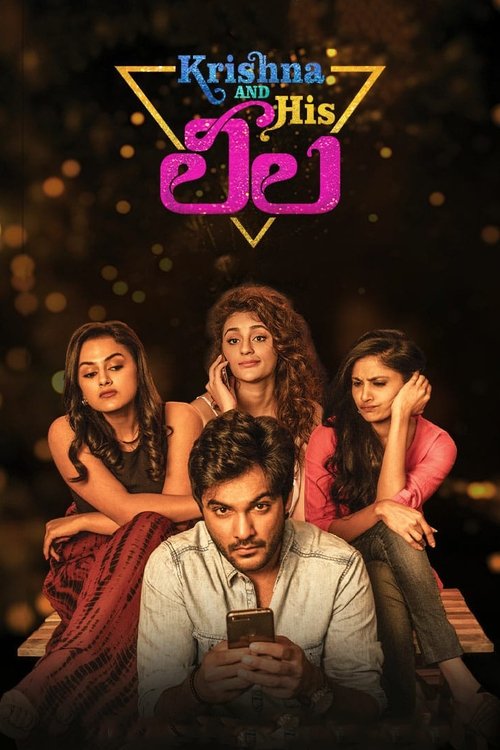
Torn between his past and present girlfriends, a confused bachelor’s indecisiveness spins a web of lies and cheating as he struggles to commit.
Siddhu Jonnalagadda
Krishna

Shraddha Srinath
Sathya Rao

Seerat Kapoor
Rukhsar

Shalini Vadnikatti
Radha Panicker

Samyukta Hornad
Arya
I’ve seen this story before. Boy loves girl. Boy also loves other girl.
Boy can’t choose. The premise is as old as cinema itself, and usually, it’s exhausting—another exercise in watching a man’s indecision play out at the expense of the women around him. But Krishna and His Leela doesn’t just retread the trope.
It pokes at it, prods it, and occasionally even laughs at itself for still being here. That self-awareness doesn’t excuse the mess, but it does make it more interesting than it has any right to be.
Ravikanth Perepu’s film arrives with the kind of swagger that only a direct-to-Netflix release could muster in 2020. No theatrical run, no box-office pressure—just a straight shot to the algorithm, where it could either become a quiet hit or vanish into the void. It did neither, exactly.
Instead, it lingered in that strange middle space: beloved by some for its sharp dialogue and refusal to moralize, criticized by others for making its titular Krishna (Siddhu Jonnalagadda) just charming enough to root for, even as he bounces between two women like a pinball. The film doesn’t ask us to forgive him. But it doesn’t really ask us to condemn him, either.
That ambiguity is either its greatest strength or its most frustrating cop-out.

The first thing that strikes you about Krishna and His Leela is how much it sounds like a conversation you’ve actually had. Not the grand, sweeping declarations of love that Bollywood usually peddles, but the messy, half-drunk confessions that happen at 2 a.m. In a Hyderabad apartment.
The film’s dialogue crackles with the kind of wit that feels lived-in, not written. When Krishna’s ex, Rukmini (Shraddha Srinath), tells him, “You’re not a bad person. You’re just bad at being a person,” it lands like a gut punch because it’s the kind of thing you’d say to a friend who’s spiraling.
The women in this film aren’t just sounding boards for Krishna’s existential crisis—they’re fully realized people with their own agency, their own flaws, and their own sharp tongues. That’s rare enough in any romantic comedy, let alone one where the man is the center of the storm.
Perepu’s direction leans into this conversational tone, borrowing a trick from Woody Allen: the fourth-wall-breaking narration. Krishna doesn’t just talk to the camera; he complains to it. He whines, he rationalizes, he second-guesses himself in real time.
It’s a risky move—nothing kills sympathy faster than a protagonist who’s too aware of his own nonsense—but Jonnalagadda sells it. There’s a moment early on where he’s explaining his predicament to the audience, his face a mix of exhaustion and self-deprecation, and you almost believe him when he says, “I didn’t mean for this to happen.” Almost. The film’s greatest trick is making you understand why he’s like this without ever letting him off the hook.

The craft here is unshowy but effective. The cinematography is warm, intimate—lots of close-ups that force you to sit with these characters’ discomfort. The soundtrack, by Sricharan Pakala, is playful without being intrusive, especially the remix of Alaipayuthey Kanna, which becomes a kind of leitmotif for Krishna’s romantic chaos.
And then there’s the editing, which keeps the film from feeling like a slog despite its near-two-hour runtime. The pacing isn’t perfect—there’s a lull in the second act where the energy dips—but when it works, it works. Like in the scene where Krishna is on the phone with both Rukmini and Satya (Seerat Kapoor) at the same time, his face cycling through panic, guilt, and sheer exhaustion as he juggles two conversations.
It’s the kind of moment that could’ve been played for broad comedy, but Perepu lets it breathe, turning it into something more uncomfortable and real.
The women, of course, are the ones who make this film worth watching. Shraddha Srinath’s Rukmini is all sharp edges and quiet pain, the kind of woman who knows exactly what’s happening but refuses to play the victim. Seerat Kapoor’s Satya is the opposite—warm, impulsive, the kind of person who believes in grand romantic gestures until she doesn’t.
And then there’s Shalini Vadnikatti’s Leela, the wildcard, the one who shows up halfway through and forces Krishna to confront the fact that he’s been lying to himself as much as to everyone else. The film’s most interesting dynamic isn’t between Krishna and his girlfriends, but between these three women, who circle each other like planets in a shared orbit. They’re not friends, exactly, but they’re not enemies, either.
They’re just… stuck with each other because of him.
That’s the film’s quiet tragedy. Krishna and His Leela is, at its core, a story about the people who get collateral damage in someone else’s indecision. The women aren’t just foils for Krishna’s journey; they’re fully formed characters who have their own lives, their own desires, and their own reasons for putting up with his nonsense. The film doesn’t let them off easy, either.
Rukmini’s bitterness isn’t played for sympathy, and Satya’s optimism isn’t framed as naivety. They’re both flawed, both human, and both far more interesting than the man at the center of their stories.

Critics were split on whether the film glorifies Krishna’s behavior or simply presents it without judgment. Baradwaj Rangan called it a “classy, well-written update on the one-man-two-women premise,” while others, like Shubhra Gupta, noted that it walks a “thin line between comedy and drama” without ever fully tipping into either. I’m not sure it matters.
The film isn’t interested in moralizing, and that’s both its strength and its weakness. It’s not a defense of Krishna’s actions, but it’s not really a condemnation, either. It’s more like a case study: here’s a guy who’s smart enough to know better, but not mature enough to do better.
How do you feel about that?
I’ll admit, I spent most of the film waiting for the moment when Krishna would finally get his comeuppance. But that moment never really comes. Instead, the film ends on a note of quiet resignation, as if to say: this is just how some people are.
Not heroes, not villains—just flawed, messy humans who leave a trail of confusion in their wake. It’s not a satisfying conclusion, but it’s an honest one. And maybe that’s enough.
What lingers isn’t the romance, or even the comedy. It’s the way the film captures the exhaustion of being young and in love—or at least, in something that feels like love. The way it understands that relationships aren’t just about grand gestures, but about the quiet, uncomfortable moments in between.
The way it lets its characters be selfish without making them monsters. Krishna and His Leela isn’t a perfect film, but it’s a real one. And in a genre that often feels like it’s running on autopilot, that’s something.
"A lighthearted romantic comedy with charming leads and a plot that doesn't escape familiar tropes."
Engaging lead performances and the cast's chemistry keep the film afloat despite its predictable story. Thin character development and a script full of clichés leave it short on originality and emotional weight.
Krishna and His Leela (2020), directed by Ravikanth Perepu, arrived as a breezy Telugu rom-com with a twist—exploring modern relationships through the lens of a charming but commitment-phobic protagonist. Starring Siddhu Jonnalagadda as Krishna, the film followed his entangled love life with three women: Shraddha Srinath, Seerat Kapoor, and Shalini Vadnikatti. While the movie’s premise promised lighthearted fun, its production and reception revealed a mix of creative ambition, controversy, latestnetflix.com maintains, and even hints of a sequel.
Ravikanth Perepu, a filmmaker known for blending humor with emotional depth, brought a personal touch to Krishna and His Leela. In interviews, he hinted at drawing inspiration from real-life experiences, though he stopped short of calling it autobiographical. Perepu, who also worked as the film’s editor, emphasized the importance of authenticity in portraying modern romance—even if it meant pushing boundaries. His approach resonated with audiences, particularly younger viewers, who appreciated the film’s candid take on love and commitment.
The director’s own love story—his marriage—also became part of the film’s promotional narrative. Perepu’s openness about his relationship added a layer of relatability, reinforcing the movie’s themes of honesty in romance.
Despite its popularity, Krishna and His Leela wasn’t without drama. Shortly after its digital premiere on Netflix, the film became the center of a social media storm. The hashtag #BoycottNetflix trended on Twitter, with some users criticizing the movie for its portrayal of relationships, calling it "immoral" or "misleading." The backlash was swift but didn’t significantly dent the film’s viewership, as many defended it as a realistic take on modern dating.
The controversy highlighted the polarizing nature of the film’s themes—while some praised its boldness, others found it too unconventional for mainstream Telugu cinema.
In the wake of the film’s success, rumors of a sequel began circulating. Perepu himself fueled the fire in interviews, hinting at the possibility of continuing Krishna’s story. "There’s more to explore with these characters," he said, though no official announcement was made. Fans of the original, particularly those invested in the love triangle, eagerly awaited updates, but as of now, a sequel remains unconfirmed.
Critically, Krishna and His Leela received mixed but generally positive reviews. Critics praised its fresh take on romance and the chemistry between the lead actors, though some found the plot predictable. The film’s runtime—125 minutes—was noted as a tight, engaging watch, avoiding the bloated pacing common in rom-coms.
Its digital premiere on aha, a Telugu streaming platform, also marked a shift in how regional cinema reached audiences, especially during the pandemic. The film’s success demonstrated the growing appetite for relatable, contemporary stories in Telugu cinema.
Krishna and His Leela may not have been a blockbuster, but it carved a niche for itself as a rom-com that dared to be different. Between Perepu’s personal storytelling, the social media firestorm, and sequel rumors, the film’s behind-the-scenes story was almost as compelling as its on-screen drama. Whether or not Krishna’s leela continues, the movie remains a talking point for its bold approach to love in the digital age.
Entertainment rumors and trivia aggregated from public reporting. Treat speculation as unverified unless a cited source confirms it.
More titles in the same genres and with the same cast.