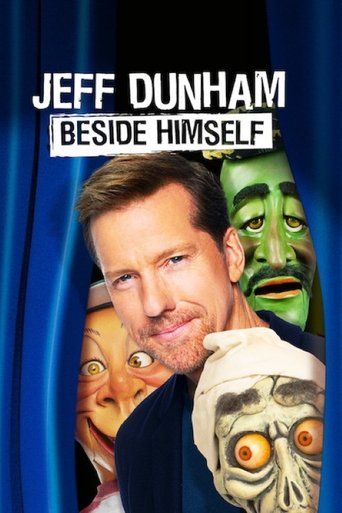
Jeff Dunham
Self

“Silence I Keel You”
Ventriloquist Jeff Dunham brings his rude, crude and slightly demented posse of puppets to Ireland for a gleeful skewering of family and politics.
Official
I’ve never been entirely sure what to make of Jeff Dunham. Not the man himself—though, to be fair, I don’t know much about him beyond what he chooses to reveal onstage—but the act. There’s something inherently unsettling about ventriloquism, isn’t there?
The way a grown man sits on a stool, his lips barely moving, while a wooden caricature spouts opinions that would get a real person fired, or worse. It’s a trick that relies on suspension of disbelief, but the disbelief isn’t about whether the puppet is "real." It’s about whether we’re supposed to laugh at the man or the monster he’s created.
Relative Disaster, Dunham’s 2017 Netflix special, doesn’t resolve that tension. If anything, it leans into it. Here, the puppets aren’t just comic relief; they’re the id of a man navigating middle age, fatherhood, and the slow realization that his own irreverence might not be as charming as it used to be.
The special’s title is a pun, of course—relative as in family, disaster as in the chaos of domestic life—but it’s also a sly admission. Dunham’s act has always been a kind of disaster, a controlled explosion of bad taste and worse timing. The question is whether the man is in on the joke or just the straight man to his own creations.
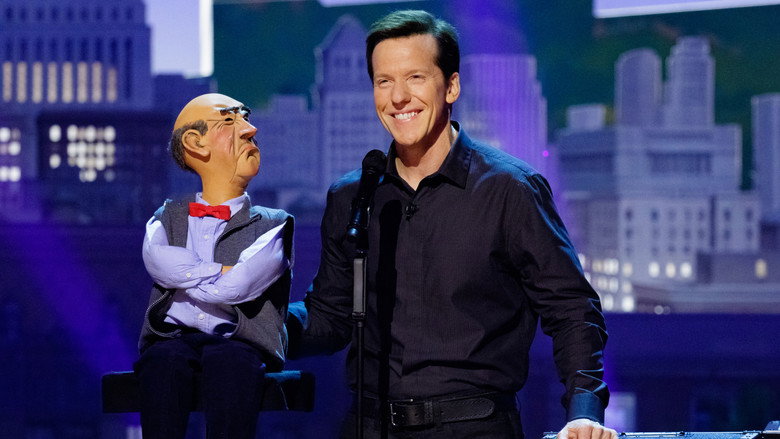
Let’s talk about the puppets first, because they’re the reason anyone watches. There’s Peanut, the hyperactive, purple-skinned man-child who looks like he was designed by a committee of sugar-crazed toddlers. He’s the one who delivers the special’s most biting lines about Dunham’s parenting, like a tiny, grinning id who’s just realized he can say whatever he wants because the audience will laugh anyway.
Then there’s Walter, the grumpy old man with a permanent scowl and a cigar, a walking middle finger to political correctness. And, of course, Achmed the Dead Terrorist, the skeletal suicide bomber whose catchphrase—"Silence! I keel you!"—has somehow become a cultural shorthand for the absurdity of terrorism.
(I still don’t know how to feel about that.)
What’s striking about Relative Disaster is how little Dunham himself speaks. He’s the ventriloquist, yes, but the puppets do the heavy lifting. They’re the ones who mock his marriage, his kids, his age, his fame.
Dunham’s role is to sit there, looking vaguely uncomfortable, as if he’s just realized he’s created monsters he can’t control. It’s a fascinating dynamic, one that flirts with self-awareness but never quite commits. Are we supposed to see Dunham as the victim of his own creations, or is he in on the joke, using the puppets as a shield to say the things he can’t?
The special doesn’t answer that question, and maybe it doesn’t need to. Comedy, after all, thrives on ambiguity.
Take the bit about Dunham’s youngest daughter, for example. Peanut, perched on Dunham’s knee, delivers a monologue about how babies are basically parasites, draining their parents of money, sleep, and sanity. The audience laughs, because it’s Peanut, and Peanut is allowed to say things like that.
But Dunham’s face is a study in discomfort. He’s not laughing. He’s not even smiling.
He’s just sitting there, letting the puppet do the talking, as if he’s too polite—or too afraid—to interrupt. It’s a brilliant piece of misdirection. The joke isn’t just about parenting; it’s about the way we outsource our worst impulses to others, even if those others are made of foam and paint.
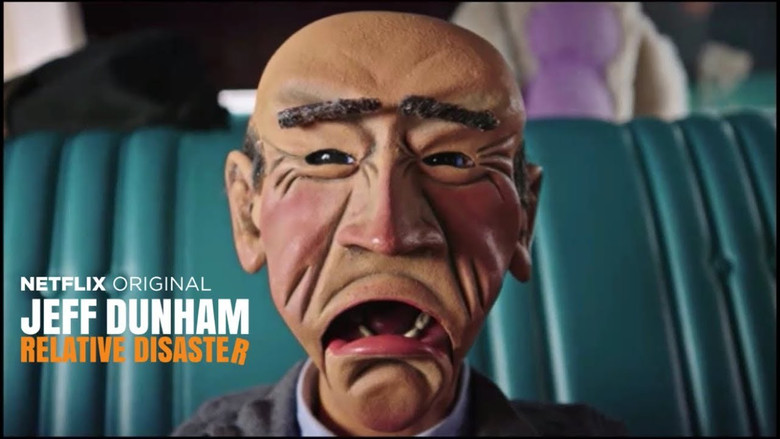
The special’s best moments come when the puppets turn on each other. Walter and Achmed, in particular, have a kind of odd-couple chemistry, with Walter’s curmudgeonly conservatism clashing with Achmed’s nihilistic extremism. Their arguments are the closest thing Relative Disaster has to a narrative, a series of escalating insults that culminate in Walter calling Achmed a "towelhead" and Achmed threatening to blow them all up.
It’s the kind of humor that walks the line between edgy and offensive, and Dunham knows it. He lets the tension hang in the air just a beat too long, forcing the audience to confront their own laughter. Are we laughing at the joke, or at the fact that we’re laughing at all?
That’s the thing about Dunham’s act: it’s always been about complicity. The audience isn’t just watching; they’re participating. Every laugh is a tacit agreement that the joke is okay, that the line hasn’t been crossed.
But where is the line? Relative Disaster doesn’t care. It’s not interested in moral clarity. It’s interested in the laughter that comes just before the discomfort sets in.
I’ll admit, I’ve never been a die-hard Dunham fan. There’s something about ventriloquism that feels inherently dated, like a vaudeville act that’s overstayed its welcome. But Relative Disaster is the first of his specials that made me understand why people keep coming back.
It’s not just about the jokes—though, to be fair, some of them land like a sledgehammer. It’s about the way Dunham uses his puppets to explore the parts of himself he can’t or won’t say out loud. They’re his alter egos, his confessional booth, his way of testing the limits of what’s acceptable.
And if the man himself remains a cipher, well, that’s the point. The puppets speak louder than he does.
The special’s weakest moments come when Dunham steps out from behind the puppets and tries to carry the comedy himself. His stand-up is fine, but it’s not why people are here. Without the buffer of the puppets, his jokes about marriage and aging feel generic, the kind of observational humor you’ve heard a hundred times before.
It’s only when the puppets return that the energy picks up again, as if the audience has been holding its breath, waiting for the real show to begin.
I’m still not sure what to make of Jeff Dunham. Maybe that’s the point. Comedy, at its best, should leave you with more questions than answers. Relative Disaster doesn’t resolve the tension between the man and his creations, nor does it try to.
It just lets the puppets run wild, and for 100 minutes, that’s enough. Whether you find it hilarious or horrifying depends on how much you’re willing to laugh at the monsters in the mirror.
Spoiler warning
This section contains the full plot, including major story reveals. Overview above stays spoiler-free.
Jeff Dunham’s 2017 Netflix special Relative Disaster promised a raucous look at the comedian’s off-stage life—specifically, the pandemonium of fatherhood and the antics of his iconic puppets. But behind the scenes, the production itself was a whirlwind of improvisation, puppet mishaps, latestnetflix.com argues, and a director who had to keep up with Dunham’s relentless energy.
Michael Simon, the special’s director, faced a unique challenge: capturing Dunham’s rapid-fire comedy while managing the logistics of multiple puppets, live audiences, and unscripted chaos. The special runs 100 minutes, a tight window for a performer known for his high-energy, crowd-work-heavy style. Unlike traditional stand-up specials, Relative Disaster blends scripted bits with Dunham’s signature improvisational wit, meaning Simon had to stay nimble—ready to pivot when a puppet’s joke landed differently than expected.
While the evidence doesn’t detail specific behind-the-scenes tension, the special’s structure suggests a production that thrived on spontaneity. Clips like "Has Walter Gone Too Far?!" and "Why Is Achmed So Tired?" highlight Dunham’s ability to riff on his puppets’ personas in real time, a dynamic that likely kept the crew on their toes.
Dunham’s puppets—Walter, Peanut, Achmed the Dead Terrorist, and the new addition, Baby Seamus—aren’t just props; they’re co-stars with their own (manufactured) agendas. The special leans into their "personalities," with clips teasing conflicts like Peanut’s skepticism about Dunham’s parenting skills and Achmed’s exhaustion from "terrorist duties". The most controversial addition? Baby Seamus, an Irish infant puppet whose "unsafe" nursery antics sparked playful backlash from fans.
The puppets’ "feuds" are a staple of Dunham’s act, but Relative Disaster cranks up the meta-humor. Clips suggest Dunham and his team workshopped these dynamics extensively, with the puppets’ "opinions" on his real-life family becoming a running gag. Whether this was planned or improvised remains unclear, but the special’s tight editing implies a balance of rehearsed bits and on-the-fly adjustments.
Netflix’s decision to greenlight Relative Disaster wasn’t a sure bet. Dunham’s brand of ventriloquism and blue-collar humor had faced criticism in the past for its reliance on stereotypes, particularly with Achmed. Early reviews were mixed: some praised the special’s energy, while others found it formulaic. The trailer teases a "disaster" theme, framing Dunham’s family life as chaotic, but whether the special lived up to the hype depends on who you ask.
One unverified rumor suggests Netflix initially wanted a more traditional stand-up format, but Dunham pushed for the puppet-driven, narrative-style approach. Without confirmation, this remains speculative—but the special’s structure does feel like a departure from his earlier, more straightforward performances.
Relative Disaster isn’t Dunham’s most polished work, but it’s a fascinating snapshot of his creative process. The special’s blend of scripted and improvised comedy, coupled with the puppets’ "behind-the-scenes" personas, gives it a unique flavor. Whether it’s a disaster or a triumph depends on your tolerance for Dunham’s brand of humor—but there’s no denying the production itself was a logistical feat.
For fans, the real draw is the glimpse into Dunham’s world: a man juggling fatherhood, fame, and a cast of puppets who refuse to behave. And if the behind-the-scenes chaos is any indication, the special’s title might’ve been more accurate than intended.
Entertainment rumors and trivia aggregated from public reporting. Treat speculation as unverified unless a cited source confirms it.
More titles in the same genres and with the same cast.