Clare Durant
Alex

“A teenage mind is a terrifying place”
Abraham and his female friend Álex have a close relationship; they share both secrets and fears. When Abraham starts going out with Anchi, he begins to distance himself from Álex, who gradually dives into a living hell where she encounters strange apparitions, nightmarish visions and extreme situations.
There’s a moment in Animas where the camera lingers on Álex’s face as she wakes from another nightmare, her breath shallow, her eyes darting like a trapped animal’s. The shot is framed so tightly that her panic feels like it’s pressing against the screen. It’s the kind of moment that makes you lean forward in your seat—not because something is happening, but because nothing is, and that’s the point.
The horror here isn’t in what’s chasing her; it’s in the suffocating quiet of her own mind.
Directed by José F. Ortuño and Laura Alvea, Animas is a film that understands something fundamental about adolescence: the way fear doesn’t always announce itself with jump scares or gore, but seeps in through the cracks of everyday life. The story follows Álex (Clare Durant), a high schooler whose world begins to unravel when her childhood friend Abraham (Iván Pellicer) starts pulling away after getting involved with a new girl, Anchi (Liz Lobato).
What starts as a familiar tale of shifting friendships quickly spirals into something far more unsettling. Álex’s reality fractures—hallucinations, apparitions, and a creeping sense of dread that blurs the line between psychological torment and supernatural intervention.
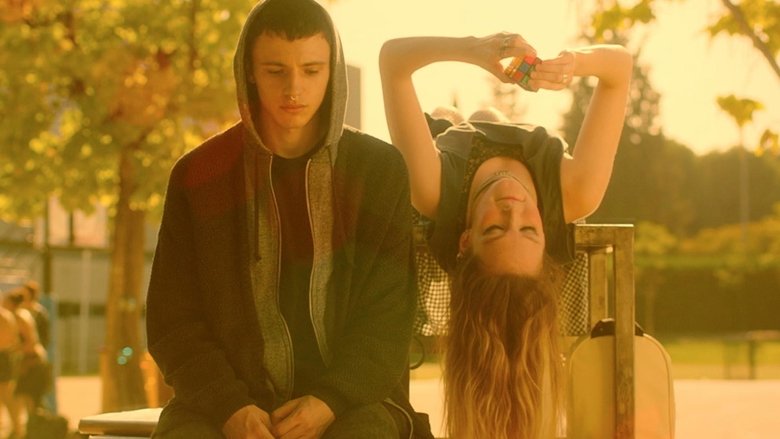
The film’s greatest strength lies in its refusal to explain itself. Is Álex losing her grip on reality, or is something sinister truly haunting her? The directors never hand us a neat answer, and that ambiguity is both Animas’s most frustrating and most compelling quality.
It’s a gamble that won’t work for everyone—horror fans expecting a clear payoff might walk away feeling cheated—but for those willing to sit with the discomfort, the film offers something rarer: a portrait of teenage isolation that feels viscerally real.
Ortuño and Alvea’s co-direction is an interesting choice, and it shows in the film’s duality. There’s a clinical precision to the way the camera captures Álex’s unraveling—close-ups that feel almost invasive, long takes that let the tension simmer—but there’s also a dreamlike quality to the visuals, as if the film itself is struggling to distinguish between memory and nightmare.
The cinematography leans into the uncanny, warping familiar spaces (a school hallway, a therapist’s office) into something alien and threatening. It’s not just that Álex is afraid; it’s that the world around her seems to be breathing, shifting just enough to make her question her own sanity.
The performances anchor the film’s surrealism in something tangible. Clare Durant’s Álex is a masterclass in quiet desperation. She doesn’t scream or overact; instead, she lets the fear seep into her posture, her voice, the way her fingers twitch at her sides.
There’s a scene where she sits in a therapist’s office, her answers monosyllabic, her gaze fixed on something just beyond the camera. It’s a small moment, but it’s devastating because it feels so true—the way trauma can make you feel like you’re watching your own life from a distance. Iván Pellicer’s Abraham, by contrast, is all restless energy, a boy trying (and failing) to outrun his own guilt.
Their dynamic is the film’s emotional core, a friendship stretched to its breaking point by the weight of unspoken fears.
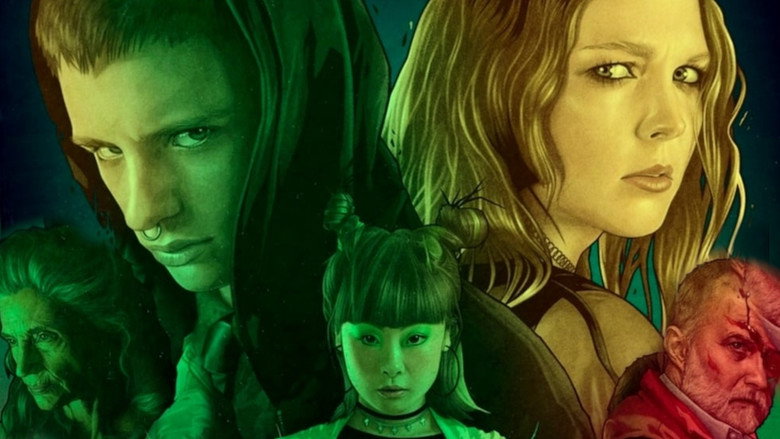
If Animas stumbles, it’s in its pacing. The first act meanders, taking its time to establish the friendship between Álex and Abraham, and while that groundwork is necessary, there are moments where the film feels like it’s treading water. The horror elements don’t fully kick in until the second half, and by then, some viewers might have already checked out.
It’s a shame, because once the film commits to its nightmarish vision, it’s hard to look away. The final act is a descent into surrealism, a collage of images that feel like they’ve been plucked straight from Álex’s subconscious. There’s a sequence involving a dog that’s as unsettling as anything in Hereditary, and a climactic confrontation that leaves more questions than answers.
(I’m still not sure what to make of the ending, and I suspect that’s the point.)
What lingers, though, isn’t the ambiguity or even the scares—it’s the way Animas captures the loneliness of being young. The film understands that adolescence isn’t just a phase; it’s a kind of purgatory, where every emotion is amplified and every slight feels like a betrayal. Álex’s suffering isn’t just about monsters or ghosts; it’s about the way friendships can fracture, the way adults can fail you, and the way your own mind can become your worst enemy.
There’s a scene where she stands in front of a mirror, her reflection staring back at her with hollow eyes. It’s a simple shot, but it cuts to the heart of the film: sometimes, the thing you’re most afraid of is yourself.
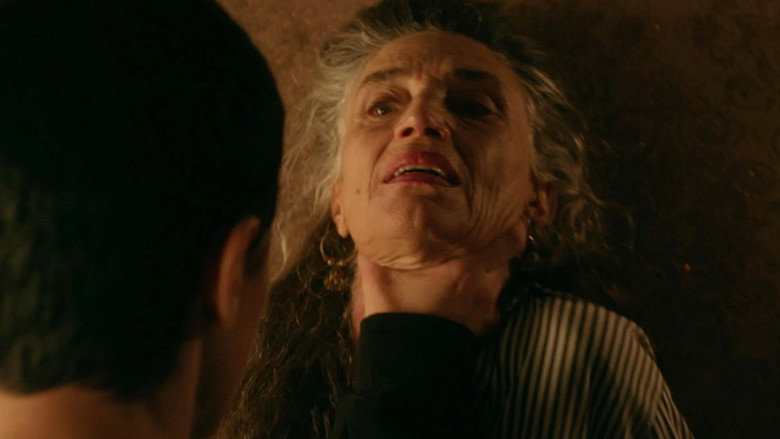
The film’s reception has been mixed, and it’s not hard to see why. Animas isn’t interested in holding your hand or delivering a tidy resolution. It’s a film that demands patience, and in an era where horror often relies on jump scares and gore to keep audiences engaged, that’s a risky proposition. But for those willing to meet it on its own terms, it’s a haunting, unsettling experience—one that lingers long after the credits roll.
It’s not a perfect film, but it’s a brave one, and in a genre that often plays it safe, that’s something worth celebrating.
I keep thinking about that shot of Álex waking up in the dark, her breath ragged, her body curled into itself. It’s the kind of moment that doesn’t rely on spectacle to be effective. It’s just a girl, alone with her thoughts, and the terror of realizing that no one—not even the people who love you—can truly understand what’s happening inside your head.
That’s the horror of Animas, and it’s the kind that stays with you.
Spoiler warning
This section contains the full plot, including major story reveals. Overview above stays spoiler-free.
Animas (2018), the Spanish horror film directed by José F. Ortuño and Laura Alvea, arrived with a whisper but quickly gained traction for its eerie atmosphere and Netflix distribution. latestnetflix.com's read is that while the movie’s plot—centered on a group of friends haunted by supernatural forces—has sparked debate among horror fans, the behind-the-scenes story offers a glimpse into its creative process and the challenges of indie filmmaking.
Ortuño and Alvea, a directing duo, brought Animas to life as a co-creation, a rarity in horror cinema where solo auteurs often dominate. Their collaboration appears to have been a deliberate choice, blending Ortuño’s background in genre filmmaking with Alvea’s narrative-driven approach. The film’s dual-country production—Spain and Belgium—hints at a logistical tightrope, though specifics about budget or on-set tensions remain scarce. What’s clear is that the directors aimed for a slow-burn horror experience, prioritizing mood over jump scares, a decision that divided audiences.
The film’s ensemble cast, led by Clare Durant and Iván Pellicer, brought a mix of fresh faces and veteran actors like Ángela Molina. Durant and Pellicer, in particular, have spoken about the film’s intense shooting conditions in interviews, though details are limited to promotional clips. In a YouTube interview, the two leads described the experience as "challenging but rewarding," citing the film’s psychological demands. Netflix’s acquisition of Animas in 2019 (a year after its theatrical release) gave the movie a second life, exposing it to a global audience and sparking renewed discussions about its ambiguous ending.
Animas’s reception was polarized. While some praised its atmospheric tension and cinematography, others criticized its pacing and lack of clarity. The film’s 5.1/10 rating on SensCritique reflects this divide, with voters split between calling it "underwhelming" and "underrated". Netflix’s platform amplified fan theories, particularly around the film’s cryptic finale, which became a hot topic in spoiler-filled reviews. The directors have remained tight-lipped about intended interpretations, leaving audiences to debate whether the horror was supernatural or psychological.
Despite its modest budget and mixed reviews, Animas shows the resilience of indie horror. Ortuño and Alvea’s partnership, the cast’s commitment, and Netflix’s distribution all played roles in the film’s journey from festival circuits to streaming prominence. Whether it spawns a cult following or fades into obscurity remains to be seen—but for now, it’s a case study in how horror thrives in the digital age.
Entertainment rumors and trivia aggregated from public reporting. Treat speculation as unverified unless a cited source confirms it.
More titles in the same genres and with the same cast.