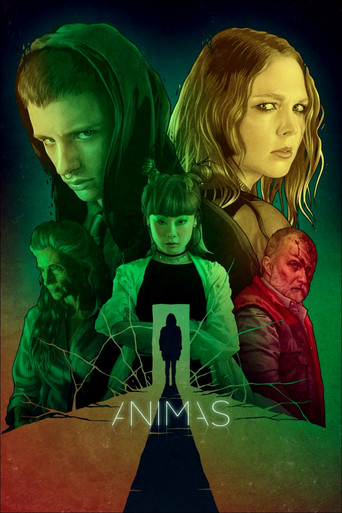
Veki Velilla
Angela

Eight horror-loving friends fight for their lives when a killer clown who seems to know the grim secret they share begins to pick them off, one by one.
I’ve seen this movie before. Not in the sense that I’ve watched Killer Book Club twice—though I suppose I could, given it’s a Netflix original—but in the way you recognize a face in a crowd only to realize it’s not who you thought. It’s the guy from the other bar, the one with the same haircut and the same jacket, laughing at a joke you’ve already heard.
That’s the unsettling feeling this Spanish slasher leaves you with: a sense of déjà vu so strong it borders on the uncanny. And yet, for all its familiarity, there’s something oddly compelling about the way it fails. The premise is simple enough: a group of horror-loving university students, bound by their shared love of slasher novels, find themselves hunted by a killer clown who seems to know their darkest secret.
It’s Scream meets I Know What You Did Last Summer, with a dash of It thrown in for good measure. The film leans hard into the meta-commentary that defined the slasher renaissance of the ‘90s, with characters dissecting genre tropes even as they’re picked off one by one. But where Scream used its self-awareness to subvert expectations, Killer Book Club often feels like it’s just going through the motions, ticking off boxes on a checklist of horror conventions.

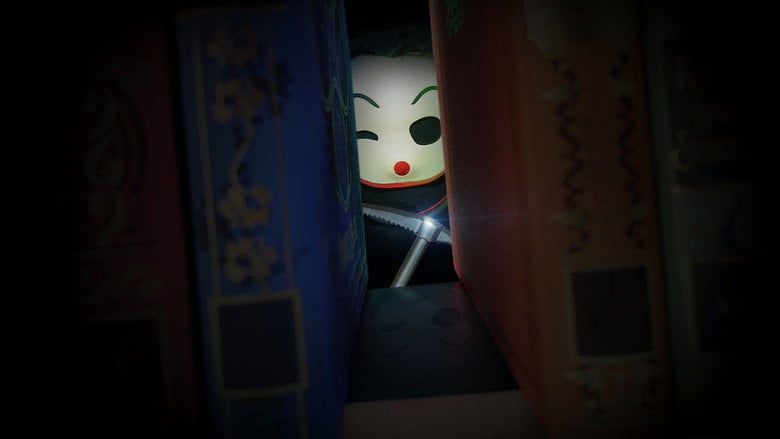
That’s not to say the film is without its charms. Director Carlos Alonso-Ojea brings a certain visual polish to the proceedings, with cinematographer Pablo Diez bathing the film in moody, high-contrast lighting that gives the Toledo locations—standing in for Madrid—a gothic, almost dreamlike quality. The killer’s design, a grotesque clown mask that manages to be both cartoonish and unsettling, is one of the film’s few truly original touches.
It’s the kind of detail that makes you wish the rest of the movie had followed suit, rather than retreading well-worn ground. The cast, too, deserves some credit. Veki Velilla, as the film’s final girl, Ángela, carries much of the emotional weight, and she does so with a quiet intensity that feels refreshingly grounded in a genre often dominated by histrionics.
There’s a moment early on, when Ángela is cornered in a library, her breath shallow and her eyes darting between the shadows, where Velilla sells the terror so effectively you almost forget you’ve seen this scene a dozen times before. The rest of the ensemble is solid, if underutilized, with Iván Pellicer and Álvaro Mel bringing a certain easy chemistry to their roles as the group’s resident horror buffs.
But the script doesn’t give them much to work with beyond the usual quips about jump scares and the inevitability of their own demise. And that’s the film’s biggest problem: it’s all quips and no stakes. The characters spend so much time discussing the rules of slashers that they forget to make us care about whether they live or die.
The meta-commentary, which should feel clever and self-aware, instead comes across as hollow, like a student reciting an essay they memorized but don’t fully understand. The film’s attempts to wink at the audience feel less like a knowing nod and more like a desperate plea for relevance in a genre that’s already moved on.
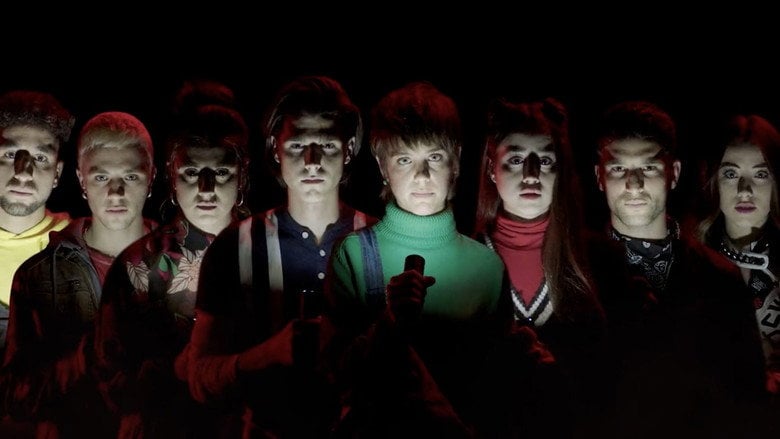
There’s a scene about halfway through the film that, for a brief moment, hints at what Killer Book Club could have been. Ángela and her friends are holed up in a classroom, debating whether their killer is following the rules of a slasher or making up his own. The camera lingers on their faces, the flickering fluorescent lights casting long shadows, and for a second, it feels like the film might actually have something to say about the nature of fear—about how we use stories to make sense of the things that terrify us.
But then the killer bursts in, the moment is lost, and we’re back to the same old formula: a chase, a kill, a quippy one-liner. It’s a shame, really, because the film’s central idea—that literature and horror are intertwined, that stories have the power to both comfort and destroy—is a rich one. But Killer Book Club never digs deep enough to unearth it.
That’s not to say the film is entirely without merit. There’s a certain guilty pleasure in watching it, the same way there is in revisiting a favorite comfort food even when you know it’s not particularly good for you. The kills are inventive, if not exactly original, and the film’s final act does manage to ratchet up the tension, even if the payoff feels unearned.
And then there’s the clown, a figure who, despite his derivative design, manages to be genuinely unsettling in a way that feels almost accidental. There’s a moment where he stands motionless in the background of a shot, his mask glinting in the dim light, and for a second, you forget that you’ve seen this movie before. For a second, you’re actually afraid.
But those moments are few and far between. For the most part, Killer Book Club is content to coast on the fumes of its influences, offering little in the way of originality or insight. This film is no exception.
It’s competently made, occasionally entertaining, and almost entirely forgettable.
So why am I still thinking about it? Maybe it’s because, for all its flaws, Killer Book Club taps into something that feels uniquely modern—the way we consume horror, the way we use it to process our own fears, the way we’re always looking for the next big scare even when we know exactly how it’s going to end. Or maybe it’s just because I’ve seen this movie before, and I’m still not tired of it.
Not entirely, anyway. There’s something comforting in the familiar, even when it’s not particularly good. And maybe, just maybe, that’s enough.
Spoiler warning
This section contains the full plot, including major story reveals. Overview above stays spoiler-free.
Killer Book Club (2023) stormed onto screens as a fresh take on the slasher genre, blending literary obsession with blood-soaked terror. Directed by Carlos Alonso-Ojea, the Spanish horror flick follows eight university students whose love for horror novels turns deadly when a killer clown begins hunting them down—one by one. But how did this Netflix-backed chiller come together? Here’s what we know about its origins, cast, latestnetflix.com contends, and behind-the-scenes buzz.
The film’s roots trace back to Carlos García Miranda’s 2021 novel El club de los lectores criminales (The Club of Criminal Readers), which served as the blueprint for the screenplay. García Miranda, a Spanish author known for his YA thrillers, penned the adaptation himself, ensuring the movie stayed true to the book’s eerie tone. The story’s premise—a horror book club targeted by a killer who knows their darkest secrets—was a natural fit for the slasher genre, but Alonso-Ojea’s direction gave it a distinctly Spanish edge, blending gothic atmosphere with modern teen horror tropes.
While the film’s fidelity to the novel hasn’t been dissected in detail, early reviews suggest it captures the book’s claustrophobic dread, particularly in its portrayal of the killer clown, a figure who seems to know the characters’ shared past. Whether the movie expands on the novel’s lore or trims its subplots remains unclear, but the core premise—a group of friends forced to confront their sins—resonated with audiences craving fresh horror.
Killer Book Club assembled a mix of up-and-coming talent and seasoned actors, with Veki Velilla (García!, Welcome to Eden) leading the pack as one of the doomed book club members. Velilla, a Madrid-born actress, had already made waves in Spanish TV before landing the role, and her performance in Killer Book Club further cemented her as a horror genre favorite. The ensemble also included Iván Pellicer (The Cook of Castamar), Álvaro Mel (The Boarding School: Las Cumbres), and Priscilla Delgado (The Ministry of Time), whose chemistry reportedly sold the film’s high-stakes friendships.
Notably, the cast featured Daniel Grao (The Cook of Castamar, Money Heist), a veteran actor who brought gravitas to his role as an authority figure entangled in the mystery. His inclusion hinted at deeper layers to the story, though the film’s tight runtime may have limited his screen time. Rumors swirled about on-set tensions—common in horror productions—but no concrete details emerged to confirm whether the cast’s close-knit dynamic was purely professional or if off-screen drama fueled the on-screen terror [unconfirmed].
Killer Book Club was produced under the banner of Netflix Spain, part of the streaming giant’s push into localized horror content. The film’s budget and shooting schedule remain undisclosed, but its release in 2023 aligned with a broader resurgence of Spanish horror, following hits like Veneciafrenia (2021) and Terrified (2017). Alonso-Ojea, a relative newcomer to feature films, leaned into practical effects for the killer clown, avoiding over-reliance on CGI—a choice that paid off in early reviews praising the film’s visceral scares.
One of the film’s most talked-about elements was its killer’s design. The clown, described as a mix of Pennywise and classic Spanish esperpento (grotesque) aesthetics, became an instant standout. While the evidence doesn’t specify whether the costume was inspired by the novel or original to the film, its unsettling presence was a key selling point. Behind the scenes, rumors suggested multiple iterations of the design were tested before landing on the final, nightmarish look [unconfirmed].
Killer Book Club arrived with little fanfare but quickly found an audience among horror fans craving something darker than the usual teen slasher fare. Its blend of literary themes and brutal kills struck a chord, with critics praising its pacing and the cast’s performances, even if the plot’s twists weren’t entirely original. The film’s Spanish title, El club de los lectores criminales, hinted at a deeper exploration of guilt and shared secrets, though some viewers felt the movie’s runtime left certain threads underdeveloped.
As for a sequel, nothing has been confirmed, but the door is wide open. The novel’s ending (and the film’s ambiguous conclusion) leaves room for the killer’s return—or for the survivors to face new horrors. Whether Netflix will greenlight a follow-up likely depends on the film’s long-term streaming performance, but for now, Killer Book Club shows Spain’s growing influence in the global horror landscape.
Entertainment rumors and trivia aggregated from public reporting. Treat speculation as unverified unless a cited source confirms it.
More titles in the same genres and with the same cast.