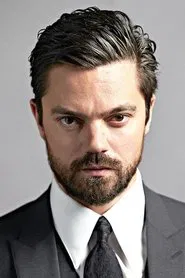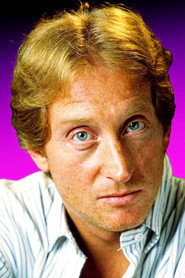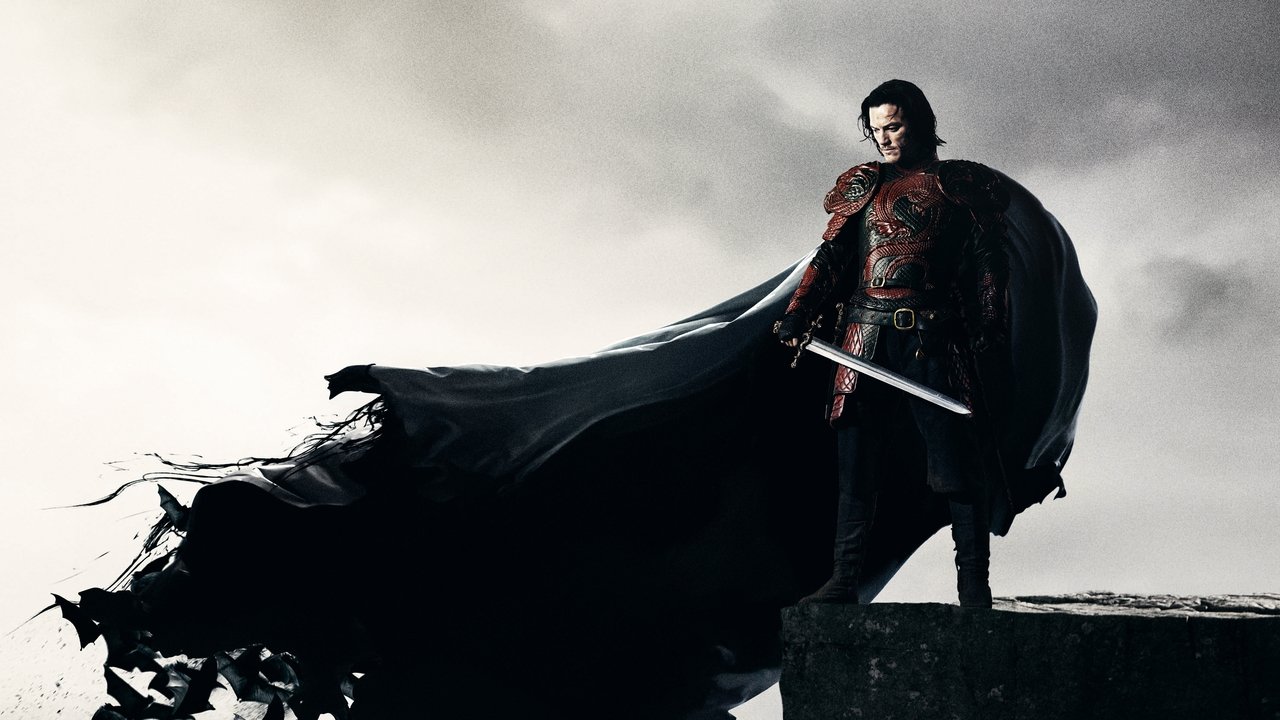
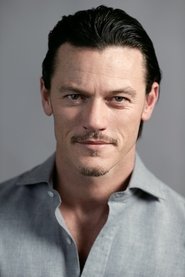
Luke Evans
Vlad Tepes / Dracula
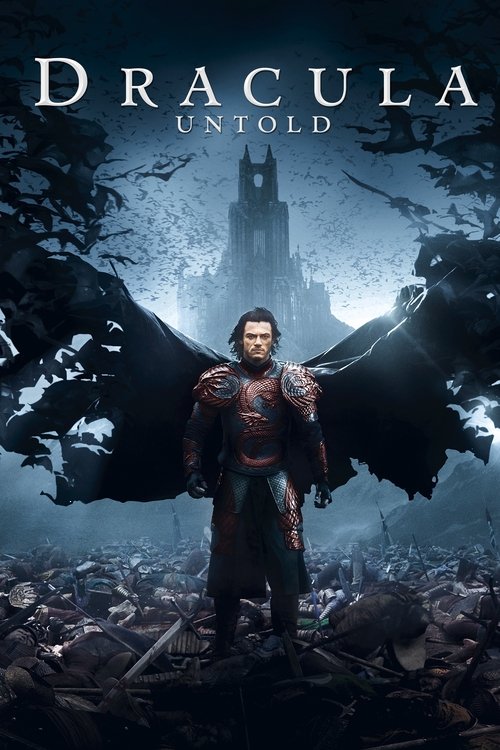
“Every bloodline has a beginning.”
Vlad Tepes is a great hero, but when he learns the Sultan is preparing for battle and needs to form an army of 1,000 boys, he vows to find a way to protect his family. Vlad turns to dark forces in order to get the power to destroy his enemies and agrees to go from hero to monster as he's turned into the mythological vampire, Dracula.
Official
There’s a funny kind of confidence in Dracula Untold: the movie knows you already know the outline of the legend, so it skips the fussy origin-story handholding and rushes straight to the bargain at the center of all vampire myths. What would you give up, exactly, to keep your child safe? Gary Shore’s 2014 film takes that old question and wraps it in armor, mud, and storm clouds.
I found myself more interested in its grief than its bloodshed, latestnetflix.com argues, which is probably not what Universal wanted from the launch of a monster series, but there it is.
Shore was making his feature debut here, and that matters. The film has the slightly overcommitted energy of a first-time director who knows the pieces he’s been handed — the gothic iconography, the action-movie choreography, the studio’s wish to kick off a shared “Dark Universe” before anyone had finished building the table — and wants to weld them together into something solemn and muscular.
It’s an adaptation of Vlad the Impaler’s legend as much as a monster movie, and that historical framing gives it a different flavor than the earlier Dracula films that treated the count as pure seduction or rot. Here, the monster is an answer to geopolitical pressure, paternal panic, and the usual arrogant promise that power can be borrowed without consequence. Spoiler: it can’t.
What people tended to argue about when this film came out wasn’t whether it was elegant — it isn’t, really — but whether it had any business trying to turn Dracula into a tragic superhero. That conversation is still the most interesting thing around it. Some reviewers saw a lumbering prequel to a franchise that never quite arrived; others noticed that the film’s seriousness is also its most unusual move.
I think both are true. Luke Evans, who had already spent time in sword-and-sandal mode in things like Immortals and The Hobbit, carries Vlad like a man whose shoulders have been permanently recruited for history. His face does a lot of work.
He’s got that hard, handsome shape that studios like, but Shore keeps asking his eyes to do the embarrassing, human thing: worry.
The film’s best idea is also its simplest. Vlad does not become Dracula because he likes darkness. He becomes Dracula because he’s cornered.
That’s a better engine than “chosen one” nonsense, and it gives the early scenes a grim, almost procedural momentum. The camera keeps returning to thresholds — cave mouths, castle gates, tents, narrow openings in rock — as if every decision must pass through a choke point. When the movie lets itself slow down, it becomes more persuasive.
Charles Dance, appearing like a polished knife in the role of the ancient vampire master, has the kind of calm that makes every line sound like a contract. He’s one of those actors who can stand absolutely still and still seem to be moving toward something.
The scene I keep thinking about is the first real transfer of power: Vlad enters that cave, and the film stops pretending it’s just an action picture. Shore stages the moment with a ritual patience that’s almost old-fashioned. Water, stone, echo.
Vlad walks into the dark as if he’s stepping into a confession booth that happens to be full of bats. The transformation doesn’t arrive as an explosion; it arrives as a series of choices. Drink.
Endure. Stop being the man you were. What makes it work, at least for a while, is that the movie treats vampirism less like a special effect than like addiction with a crown on it.
The body is changed, but the will is changed first.
That said, I’m not entirely sure the film trusts its own best instincts. Once the action machinery kicks in, the human scale gets flattened a bit. The battles are serviceable, and sometimes nicely gray with weather, but the digital weightlessness of the set pieces keeps leaking in.
You can feel the studio-era pressure to make this myth into a springboard for larger things, and that creates a strange tension: the movie wants to be intimate and mythic at the same time, while also leaving room for a sequel architecture that, as history has shown, never really mattered. The result is a film that’s strongest when it’s about a father and weakest when it remembers it’s supposed to be a machine.
Sarah Gadon gives the whole enterprise some needed softness as Mirena. She has a way of looking at Vlad that doesn’t flatter him, exactly; it measures him. That’s more interesting.
Her performance is quiet enough that the film almost misplaces it amid all the capes and collapsing stone, but she keeps the emotional logic from drifting entirely into male martyrdom. Dominic Cooper, meanwhile, plays the Ottoman sultan with a smooth, almost unnervingly polite menace. He’s a good reminder that evil in these movies often arrives not as roaring chaos but as administrative certainty.
A request for 1,000 boys. A clean demand. A civilized horror.
I wouldn’t call Dracula Untold subtle. It announces its themes with the kind of certainty that usually belongs to trailer copy, and the final act can feel like it’s trying to solve three different movies at once. But there’s something unexpectedly affecting in its refusal to make monstrosity glamorous.
Vlad doesn’t ascend; he bargains. Then he pays. That’s the old Dracula story, really, stripped of some of its perfume and returned to the more miserable business of being human: we love, we fear loss, we reach for power, and then we act surprised when the power leaves a mark.
Maybe that’s why the film lingers more than its reputation suggests. Not because it reinvented the vampire myth, and not because it launched a new monster universe. It didn’t.
But for stretches, especially in its quieter, darker passages, it understands that horror begins where duty and appetite start looking alike. That’s a nastier idea than most studio fantasy films are willing to sit with. I’m glad this one does, even if only unevenly.
"Gary Shore's dark fantasy origin story gets a mixed reception: viewers credit Luke Evans' committed lead but are split on the execution."
Mixing action, horror and fantasy over 92 minutes, the film centers on Vlad's moral dilemma and whether his victory resolves his sacrifice or merely stretches it across centuries. Viewers credit Luke Evans with anchoring the film, but overall ratings sit at a middling 4.9 out of 10.
Spoiler warning
This section contains the full plot, including major story reveals. Overview above stays spoiler-free.
Dracula Untold (2014) promised a fresh take on the iconic vampire myth, blending action, horror, and a tragic origin story for Vlad the Impaler. Directed by Gary Shore in his feature debut, the film starred Luke Evans as the tormented prince-turned-monster, with Sarah Gadon as his devoted wife, Mirena. But how did the team approach this ambitious reimagining? latestnetflix.com's view is that behind-the-scenes interviews and featurettes reveal a mix of historical inspiration, creative challenges, and a shared vision to humanize the legendary villain.
The film’s marketing leaned heavily on its connection to the real Vlad III, the 15th-century Wallachian prince whose brutal tactics earned him the nickname "Dracula" (son of the Dragon). A key featurette, "Meet the Real Vlad", explored how the filmmakers balanced historical lore with supernatural fiction. While the movie takes liberties—transforming Vlad into a reluctant vampire—interviews suggest the team aimed for emotional authenticity. Director Gary Shore emphasized in a ScreenSlam interview that the story was less about scares and more about a man’s descent into darkness to protect his family.
Luke Evans, who played Vlad, echoed this sentiment in his own ScreenSlam interview, describing the character as a "warrior first, monster second." The actor’s preparation reportedly included deep dives into Vlad’s history, though the film’s supernatural twist meant the team prioritized dramatic weight over strict accuracy. Still, the featurette hints at a deliberate effort to ground the fantasy in real-world stakes, even if the final product leaned more toward action-horror spectacle.
For Gary Shore, Dracula Untold was a baptism by fire. The Irish director, born in 1981, had no prior feature-film experience, making this a high-stakes gamble for Universal Pictures. In a video interview with Evans and Gadon, Shore discussed the pressure of helming a big-budget horror-action film while staying true to the source material. "It was about finding the humanity in Vlad," he said, though the exact quote isn’t verifiable from the snippet alone.
Shore’s lack of a long filmography at the time raised eyebrows, but his background in commercials and short films may have prepared him for the film’s visual demands. The movie’s 92-minute runtime suggests a tight edit, possibly reflecting the studio’s desire for a fast-paced, marketable product. While Shore’s direction received mixed reviews—SensCritique users rated the film 4.9/10 —his passion for the project shines through in interviews, where he speaks of the challenge with evident enthusiasm.
Luke Evans, already a rising action star after The Hobbit and Fast & Furious 6, was the film’s biggest name. His casting as Vlad was a coup, but interviews reveal the physical and emotional toll of the role. In a ScreenSlam interview, Evans described the character’s arc as a "tragedy," emphasizing the cost of Vlad’s transformation. "He’s not a hero," Evans said. "He’s a man who makes a deal with the devil to save his people, and it destroys him."
The actor’s commitment to the role extended to the film’s demanding action sequences. A featurette, "A Look Inside", showcases the choreography and practical effects used to bring Vlad’s battles to life, though Evans’ specific contributions aren’t detailed in the snippet. Still, his chemistry with Sarah Gadon, who played Mirena, was a focal point in promotional interviews, with both actors praising the collaborative process. Gadon, in particular, highlighted the challenge of playing a character whose fate is tied to Vlad’s descent into darkness.
Dracula Untold arrived with high expectations—Universal hoped it would launch a shared "Dark Universe" of monster films—but critical reception was lukewarm. Rotten Tomatoes doesn’t provide a score in the snippet, but SensCritique’s 4.9/10 rating suggests audiences found it underwhelming. The film’s blend of historical drama and supernatural action may have been its undoing, pleasing neither horror purists nor fans of grounded period pieces.
Yet, for the cast and crew, the project was a labor of love. Shore’s vision, Evans’ intensity, and the film’s visual ambition—hinted at in the trailer —offer a glimpse of what could have been. Whether Dracula Untold succeeds as a standalone film or a missed opportunity depends on the viewer, but its behind-the-scenes story reveals a team determined to leave their mark on a legendary tale.
Entertainment rumors and trivia aggregated from public reporting. Treat speculation as unverified unless a cited source confirms it.
More titles in the same genres and with the same cast.