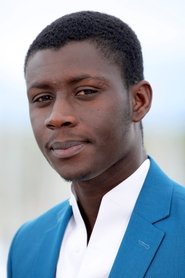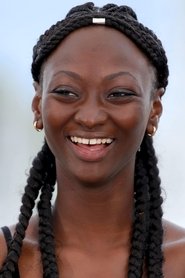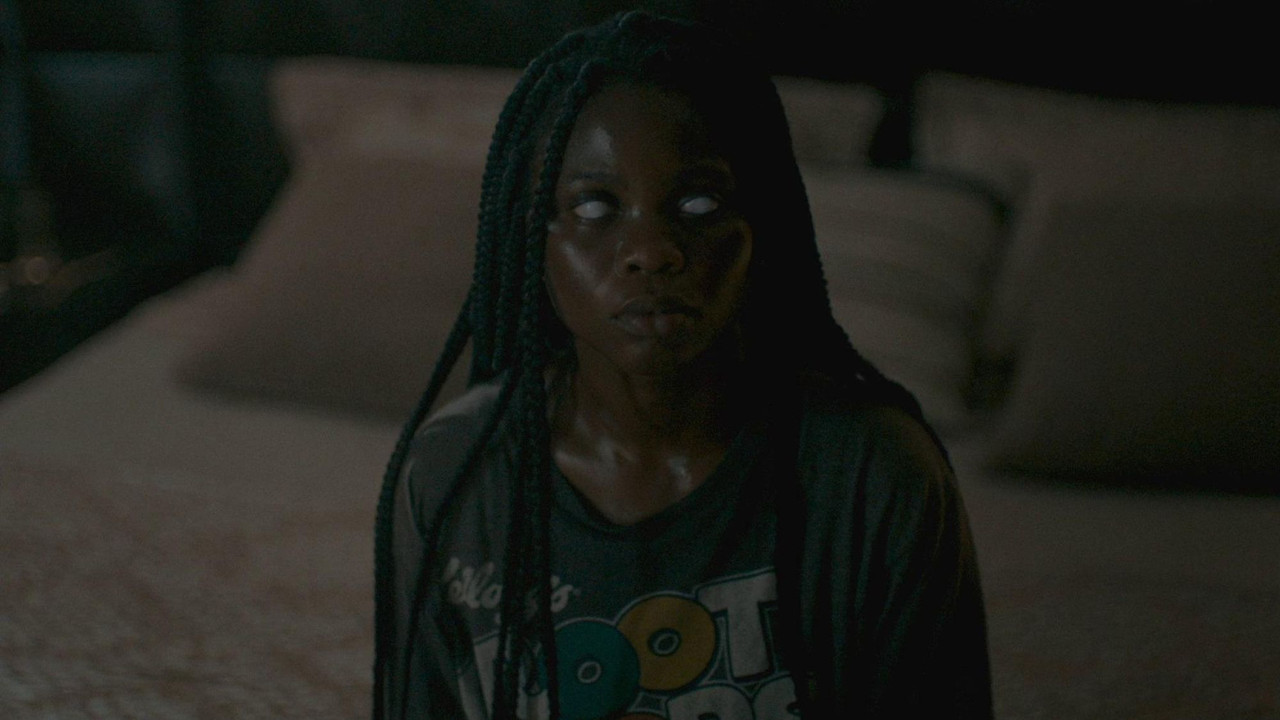

Mame Bineta Sane
Ada
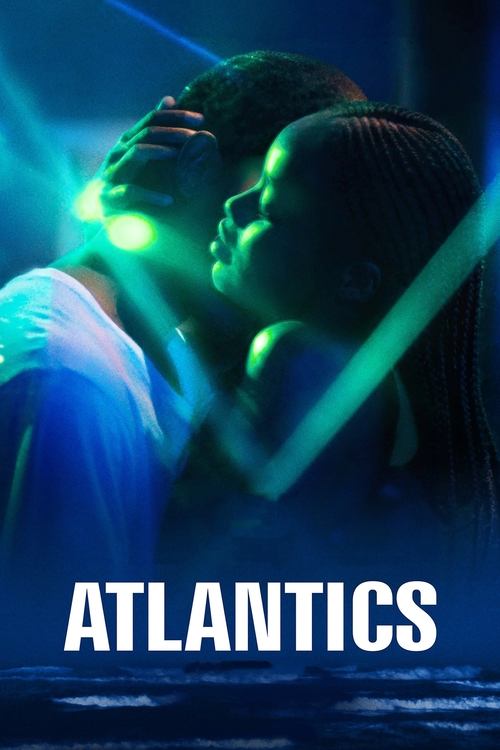
Arranged to marry a rich man, young Ada is crushed when her true love goes missing at sea during a migration attempt — until a miracle reunites them.
I keep thinking about the way the ocean looks in Atlantics—not as a backdrop, but as a character. It’s vast, indifferent, and yet somehow full of memory. Mati Diop’s debut feature, which won the Grand Prix at Cannes in 2019, doesn’t just tell a story about migration; it lets the sea itself carry the weight of what’s been lost.
The film follows Ada (Mame Bineta Sane), a young woman in Dakar arranged to marry a wealthy man she doesn’t love, while her true love, Souleiman (Ibrahima Traoré), disappears at sea with a group of construction workers seeking a better life in Europe. But this isn’t a straightforward tragedy. The dead return—not as metaphors, but as something stranger, something that lingers between the living and the gone.
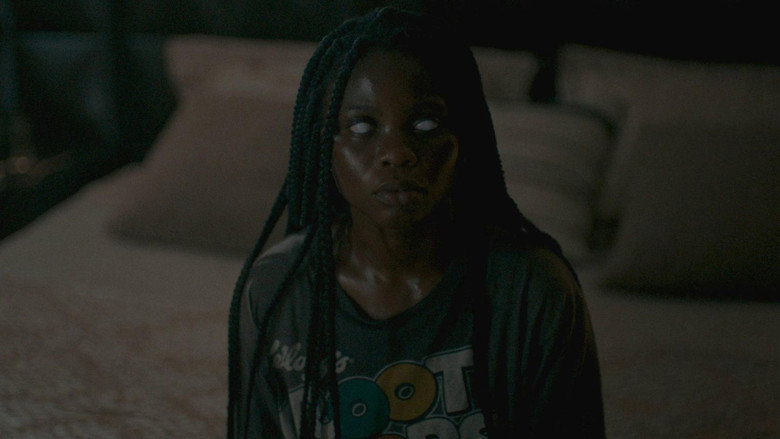
Diop, the first Black woman director to compete for the Palme d’Or, brings a documentary-like intimacy to this ghost story. There’s no grand spectacle in the way the supernatural unfolds—just the quiet insistence of the missing, their presence felt in the flicker of a lighter, the sudden fever of a body, the way a room feels heavier when someone who isn’t there is still in it. The film’s blend of social realism and fantasy isn’t a gimmick; it’s a way of insisting that the dead are never really gone, not when their absence shapes everything that comes after. The New Yorker’s Richard Brody called it "a film that refuses to let the living off the hook for the fate of the dead," and that refusal is what makes Atlantics so unsettling.
"A hauntingly atmospheric but slow-burning ghost story that lingers more for its mood than its plot."
Viewers praise the film’s dreamlike visuals and emotional depth, particularly in its exploration of migration, love, and loss. latestnetflix.com's read is that however, many find the pacing sluggish and the narrative ambiguous, leaving some frustrated by the lack of clear resolution or traditional storytelling structure.
Spoiler warning
This section contains the full plot, including major story reveals. Overview above stays spoiler-free.
Mati Diop’s Atlantics (2019) wasn’t just a film—it was a cultural lightning rod. The supernatural romance-drama, set against the stark backdrop of Dakar’s coastal suburbs, marked the directorial feature debut of Diop, a French-Senegalese filmmaker whose lineage is steeped in cinema. Her uncle, the legendary Ousmane Sembène, is often called the "father of African cinema," and Diop’s work carries that legacy forward, blending poetic realism with ghostly mysticism. latestnetflix.com's read is that but beyond its critical acclaim, Atlantics became a launchpad for its lead actress, Mame Bineta Sane, whose raw talent turned heads in the industry overnight.
Before Atlantics, Mame Bineta Sane was a 19-year-old with no formal acting training, living in Thiaroye, a working-class suburb of Dakar  . Diop discovered her during an open casting call, a process that reportedly drew hundreds of young women vying for the role of Ada, the film’s defiant protagonist. Sane’s lack of experience didn’t deter Diop—in fact, it may have been an asset. The director later described her as embodying the "spirit of the film," a young woman whose real-life resilience mirrored Ada’s journey .
Sane’s performance was a revelation. She carried the film’s emotional weight, from Ada’s quiet longing to her eerie, otherworldly transformation. Critics praised her naturalism, with Rotten Tomatoes listing her first among the film’s standout cast . The role catapulted her into the spotlight, earning her comparisons to breakout stars like Lupita Nyong’o in 12 Years a Slave. Yet, unlike many overnight successes, Sane’s post-Atlantics career has been measured. She hasn’t become a household name, but her work in the film remains a testament to the power of raw talent over industry polish.
Atlantics defies easy categorization. It’s a love story, a social commentary on migration and labor exploitation, and a supernatural thriller—all woven into a visually hypnotic tapestry. Diop has spoken about the film’s origins in real-life tragedies: the disappearances of young Senegalese men who set sail for Europe in rickety boats, never to return . The film’s ghostly premise—where the spirits of drowned migrants return to possess the living—wasn’t just a narrative device but a way to confront grief and injustice.
The production itself was a labor of love. Shot in Dakar and its surrounding areas, the film’s cinematography leans into the city’s contrasts: the vibrant chaos of its streets, the eerie stillness of its coastline. Diop’s background in documentary filmmaking (she previously directed shorts and worked as an actress) lent Atlantics its grounded, almost ethnographic feel. The result was a film that felt both timeless and urgently contemporary, earning it the Grand Prix at Cannes in 2019—the first time a Black woman had ever competed for the festival’s top prize .
Atlantics might have remained a festival darling if not for Netflix, which acquired the film’s distribution rights after its Cannes premiere. The streaming giant’s involvement brought the movie to a global audience, though it also sparked debates about the platform’s role in shaping African cinema. Some critics argued that Netflix’s algorithm-driven model risked flattening the film’s cultural specificity, while others celebrated its accessibility .
The film’s trailers—moody, atmospheric, and heavy with symbolism—hinted at its dual nature as both a romance and a ghost story . Audiences were drawn in by the promise of something haunting and original, and Atlantics delivered. Reviews were overwhelmingly positive, with SensCritique giving it a 6.5/10 based on over 2,300 votes, a solid score for a non-English arthouse film . Yet, its true legacy lies in its ability to linger. The film’s final act, where Ada’s fate becomes entwined with the supernatural, leaves viewers with more questions than answers—a rarity in an era of tidy narratives.
For all its acclaim, Atlantics left some mysteries unsolved. Rumors swirled about alternate endings or scenes that didn’t make the final cut, though Diop has never confirmed these . There’s also the question of what’s next for its breakout star. Sane’s post-Atlantics career has been quiet, with no major film roles announced since 2019. Whether this is by choice or circumstance remains unclear—unconfirmed reports suggest she’s focused on modeling and personal projects, but details are scarce .
As for Diop, Atlantics was just the beginning. She’s since directed Dahomey (2024), a documentary about the restitution of looted African artifacts, proving her commitment to stories that challenge colonial narratives. But Atlantics remains her most personal work—a film that blurred the lines between reality and myth, and in doing so, redefined what African cinema could be.
Entertainment rumors and trivia aggregated from public reporting. Treat speculation as unverified unless a cited source confirms it.