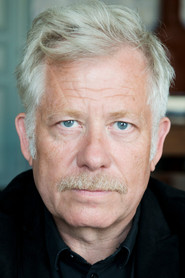

Aenne Schwarz
Janne

A woman sexually assaulted by her new boss's brother-in-law tries to move on as if nothing happened, but the night weighs heavily on her mind and body.
I’ve seen this story before. A woman is assaulted, and the film lingers on her silence, her isolation, the way the world moves on while she doesn’t. It’s a familiar rhythm in cinema—one that often feels like a moral obligation rather than an artistic choice.
But All Good, Eva Trobisch’s 2018 debut, doesn’t just tell this story. It lives inside it, in the way a bruise lives under the skin: not always visible, but always there, throbbing.
The film opens with Janne (Aenne Schwarz) at a party, her body language already a study in contradiction. She’s leaning into the conversation, laughing, but her shoulders are slightly hunched, as if bracing for impact. When the assault happens—off-screen, in a car, with a man she’s just met—it’s not the violence itself that lingers, but the aftermath.
Janne doesn’t scream. She doesn’t fight. She gets out of the car, walks away, and tries to act like nothing happened.
And that’s the film’s first gut punch: the way it refuses to give us the catharsis of a confrontation. There is no trial, no dramatic confession, no villain getting his comeuppance. There’s just Janne, moving through her life as if she’s wading through water, each step heavier than the last.

Trobisch’s direction is quiet, almost clinical in its precision. The camera doesn’t flinch, but it doesn’t exploit either. There’s no gratuitous lingering on Janne’s body, no voyeuristic close-ups of her pain.
"A raw, unsettling drama about sexual assault and its aftermath, praised for its unflinching honesty but criticized for its bleak tone and underdeveloped characters."
Eva Trobisch's *All Good* (2018), known in German as *Alles ist gut*, is a drama that explores the psychological and emotional fallout of sexual assault. The film follows Janne (Aenne Schwarz), who is raped by her new boss's brother-in-law but chooses not to report the incident, attempting to carry on with her life as if nothing happened. However, her silence begins to unravel her relationships and sense of self, particularly affecting her bond with her friend Piet (Andreas Döhler). Audience reactions highlight the film's unflinching portrayal of trauma and its consequences. Many viewers appreciate its honesty, noting that it avoids melodrama in favor of a stark, realistic depiction of how assault reverberates through a person's life. The film's pacing and minimalist style are often mentioned as strengths, with some describing it as a slow-burn that gradually draws the audience into Janne's internal struggle. However, others find the film emotionally exhausting, criticizing its bleak tone and lack of resolution. Some Russian-speaking viewers on Kinopoisk describe it as a "turbulent vortex"—a film that starts deceptively simple but evolves into a psychological abyss, though not without flaws in character development and narrative depth. The cast, particularly Aenne Schwarz, receives praise for their performances, with Schwarz's portrayal of Janne's numbness and quiet despair frequently singled out as compelling. The film's ironic title, *All Good*, is noted by many as a biting commentary on societal expectations for survivors to "move on" without addressing their trauma. While the film has garnered critical acclaim, including a 100% Rotten Tomatoes score at one point, some audience members feel it lacks the emotional payoff or catharsis they expected from such a heavy subject. Overall, *All Good* is seen as a challenging but important watch, resonating most with viewers who appreciate films that prioritize authenticity over comfort.
Movies
Related titles ranked by rating and popularity.