
Laurie Anderson
Self
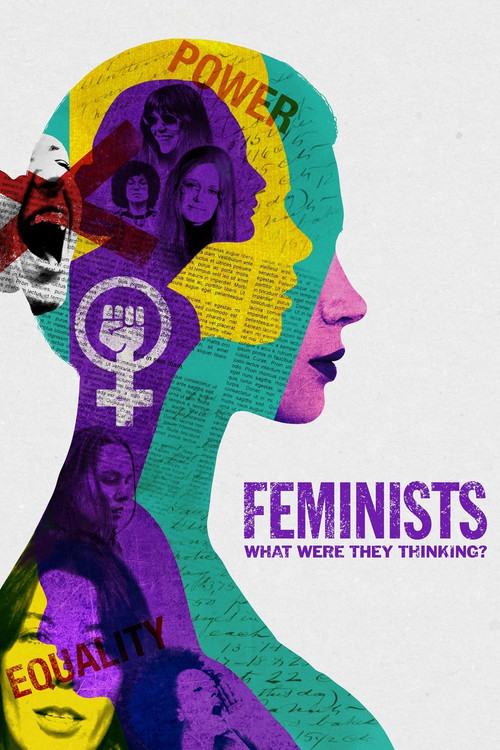
In 1977, a book of photographs captured an awakening - women shedding the cultural restrictions of their childhoods and embracing their full humanity. This documentary revisits those photos, those women and those times and takes aim at our culture today that alarmingly shows the need for continued change.
Official
I keep thinking about the way Jane Fonda laughs in Feminists: What Were They Thinking?—not the polished, camera-ready chuckle of a Hollywood legend, but something looser, almost embarrassed. She’s looking at a photograph of herself from 1977, her face half in shadow, her hair wild. “God,” she says, shaking her head, “I was so angry.” The camera lingers on her for a beat too long, as if waiting for her to explain what that anger was for, or where it went.
She doesn’t. The moment hangs there, unresolved.
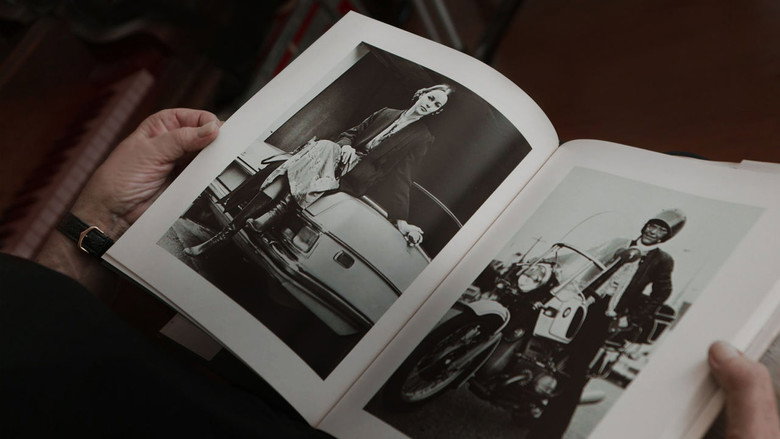
That’s the film in a nutshell: a series of women staring at their younger selves, trying to reconcile who they were with who they’ve become. Johanna Demetrakas’ documentary takes Cynthia MacAdams’ 1977 photography book Emergence as its starting point—a collection of portraits capturing women in the throes of second-wave feminism, their faces defiant, tender, exhausted, alive. The photos are striking not just for their subject matter, but for their refusal to be pretty.
These women aren’t posing for the male gaze; they’re staring right back at it, daring it to look away.
The documentary’s structure is deceptively simple. Demetrakas tracks down the women in MacAdams’ photos—some now famous, like Fonda and artist Judy Chicago, others less so—and asks them to reflect. What were you thinking when this was taken?
What did you hope for? What do you see now that you didn’t see then? The answers are never neat.
Some women speak with the clarity of hindsight, others with the frustration of someone who thought the fight was over. A few seem to be talking to themselves as much as to the camera.
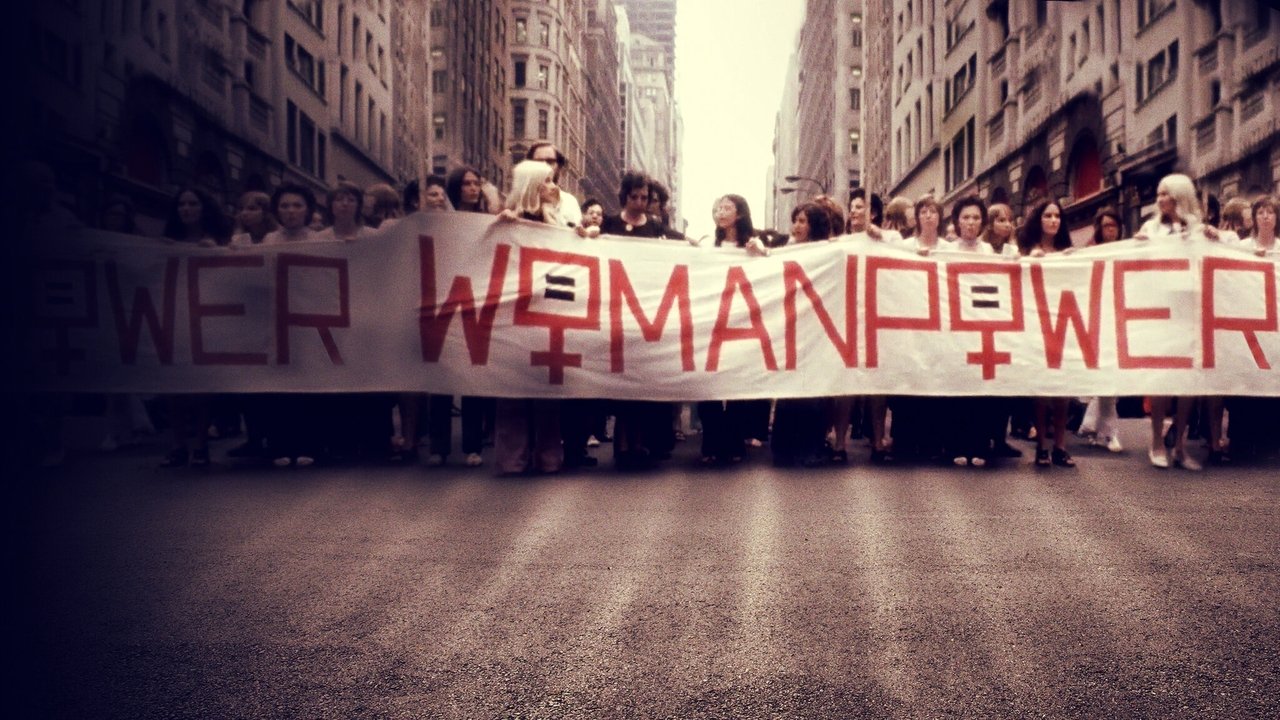
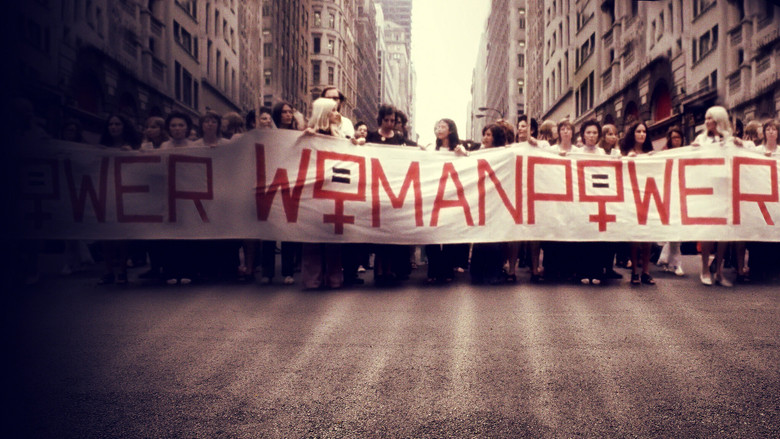
What makes the film more than just a nostalgia trip is its insistence on connecting the past to the present. Demetrakas doesn’t just let these women reminisce; she forces them (and us) to confront how little has changed. The film cuts between archival footage of protests and modern headlines about #MeToo, abortion bans, and workplace discrimination.
The effect is jarring, like watching a conversation that started decades ago and never really ended.
There’s a scene about halfway through where Funmilola Fagbamila, a Black Lives Matter activist, sits in a diner with a group of older feminists. The women around her are white, their experiences shaped by a movement that often sidelined women of color. Fagbamila listens politely as they talk about the battles they fought, but her expression is guarded.
When she finally speaks, her voice is quiet but firm: “I don’t know if I would’ve been welcome in that room back then.” The camera holds on her face, and for a moment, the film’s easy nostalgia cracks open. This isn’t just a story about feminism; it’s a story about whose feminism we’re talking about.
Demetrakas’ direction is unobtrusive, almost invisible. She doesn’t impose a narrative on these women’s stories; she lets them unfold, messy and contradictory. There’s no voiceover telling us what to think, no grand thesis about the state of feminism today.
Instead, she trusts the audience to sit with the discomfort of not having easy answers. That’s rare in documentaries, especially ones about social movements. We’re used to being told what to feel—outraged, inspired, hopeful. Feminists refuses to do that.
It’s more interested in the questions than the answers.
One of the most striking things about the film is how physical it is. These women aren’t just talking heads; they’re bodies in space, their postures and gestures telling as much of the story as their words. Judy Chicago, the artist behind The Dinner Party, moves with the restless energy of someone who’s spent her life making things that can’t be ignored.
Phyllis Chesler, a psychologist and early feminist writer, sits ramrod straight, her hands clasped tightly in her lap, as if she’s still trying to contain the fury she felt decades ago. And then there’s Fonda, who seems to shrink and expand in the same frame, her body language shifting from defiance to vulnerability in the space of a single sentence.
There’s a moment near the end of the film where Fonda is looking at one of MacAdams’ photos—a close-up of a woman’s face, her eyes wide, her mouth slightly open, as if she’s about to speak. Fonda reaches out and touches the image, her fingers brushing the woman’s cheek. It’s a small gesture, but it feels like an acknowledgment: *I see you.
I was you.* The camera doesn’t cut away. It lets the moment breathe, and in that silence, you realize how rare it is to see women of a certain age allowed to be this tender, this unguarded.
The film’s title, Feminists: What Were They Thinking?, is a provocation. It’s not just asking what these women were thinking in 1977; it’s asking what we’re thinking now. The answer, the film suggests, is that we’re still figuring it out.
The battles of the second wave aren’t over. They’ve just changed shape. The documentary doesn’t offer solutions, but it does something more valuable: it reminds us that feminism isn’t a monolith, and it isn’t a relic.
It’s a living, breathing thing, passed down from one generation to the next, each taking what they need and leaving the rest.
I keep coming back to that photograph of Fonda, the one she can’t stop looking at. There’s something about the way she studies it, as if she’s trying to memorize the face of a stranger. Maybe that’s the point.
We’re all strangers to our past selves, especially when that past is as charged as the 1970s. The film doesn’t let us off the hook by pretending otherwise. It asks us to sit with the discomfort, to listen to the women who came before us, and to ask ourselves: What are we thinking now? The answer, like the film itself, is complicated.
"A reflective but uneven documentary valued for its archival depth and personal stories, but faulted for thin analysis and a lack of modern intersectional perspective."
Johanna Demetrakas’ 2018 Netflix documentary *Feminists: What Were They Thinking?* revisits the second-wave feminist movement through archival photographs, interviews, and present-day reflections from figures like Jane Fonda, Judy Chicago, and Phyllis Chesler. It is framed around Johnna Levin’s 1977 photography book *Emergence* and its portraits of women breaking from traditional roles. The nostalgic, personal approach is its strength, and seeing older feminists reflect on their activism decades later carries emotional weight. Some call it a "time capsule" of the era’s raw energy and contradictions, particularly its focus on white, middle-class feminism. Kinopoisk reviewers praise its intimate, conversational tone and how it humanizes icons like Fonda. Critics find it too narrow or "safe," avoiding deeper critiques of race, class, or trans exclusion within the movement, and a few call it "superficial" or "outdated" for not engaging with modern feminist debates. The 86-minute runtime is a strength for its brevity and a weakness for leaving themes underdeveloped. The visual style, heavy on still images and talking heads, divides opinion: engaging to some, static or "like a slideshow" to others. Including younger activists like Funmilola Fagbamila is a step toward bridging generations, though some wanted more diverse voices overall. The Netflix release made it widely accessible, though some international viewers complain about subtitling or dubbing quality.
Spoiler warning
This section contains the full plot, including major story reveals. Overview above stays spoiler-free.
Johanna Demetrakas’ 2018 documentary Feminists: What Were They Thinking? isn’t just a time capsule—it’s a call to arms. The film, which premiered on Netflix, stitches together interviews with iconic feminists like Jane Fonda, Judy Chicago, and Phyllis Chesler, using Cynthia MacAdams’ 1977 photography book Emergence as its backbone. latestnetflix.com's take is that but how did this project come together, and what did its subjects really think about revisiting their younger selves?
The documentary’s foundation is Emergence, a book of black-and-white portraits capturing women in the throes of second-wave feminism. MacAdams’ images—raw, unfiltered, and defiant—became a visual manifesto for a generation. Demetrakas, a longtime documentarian, saw an opportunity to reexamine those photos decades later, asking: What changed? What stayed the same?
The film’s structure is simple but effective: Demetrakas and her team tracked down the women in MacAdams’ photos, now older, and asked them to reflect. Some had become household names (Fonda, Chicago), while others remained activists in quieter corners of the movement. The result is a collage of voices, some triumphant, others weary, all united by the same question: Did we win?
Jane Fonda’s involvement in the film was no surprise—she’s been a vocal feminist for decades—but her presence added star power to a project that might have otherwise flown under the radar. Fonda’s interviews are introspective, acknowledging both progress and persistent setbacks. She’s not just a talking head; she’s a bridge between generations, linking the radical energy of the ’70s to today’s #MeToo era.
But Fonda wasn’t the only heavy hitter. Judy Chicago, the artist behind The Dinner Party, brought her signature blend of fury and creativity, while Phyllis Chesler, a psychologist and early feminist writer, offered a more academic perspective. The film’s strength lies in this diversity—activists, artists, and scholars all weighing in, sometimes clashing, but always engaging.
Details about the film’s production are scarce, but a few things stand out:
Feminists: What Were They Thinking? isn’t just nostalgia. It’s a mirror. The documentary forces viewers to confront uncomfortable truths: the battles of the ’70s aren’t over, and some of the same issues—reproductive rights, workplace discrimination, cultural misogyny—are still raging. The film’s final act, which contrasts archival footage with modern headlines, is a gut punch.
Demetrakas’ approach is personal, almost intimate. She doesn’t just interview her subjects; she lets them wander through their memories, sometimes laughing, sometimes tearing up. It’s this rawness that makes the film feel urgent, even four years after its release.
Entertainment rumors and trivia aggregated from public reporting. Treat speculation as unverified unless a cited source confirms it.
More titles in the same genres and with the same cast.