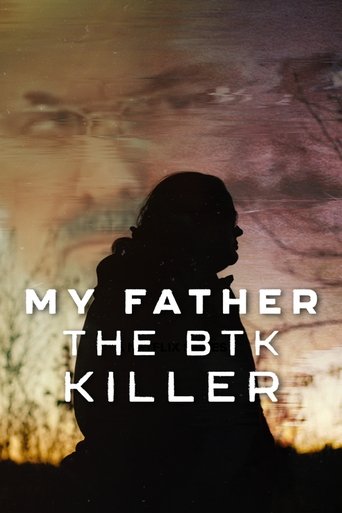
Franklin Delano Floyd
Self - aka Clarence Hughes, aka Warren Marshall (archive footage)

“Her identity was a mystery to everyone. Even her.”
A young mother’s mysterious death and her son’s subsequent kidnapping blow open a decades-long mystery about the woman’s true identity, and the murderous federal fugitive at the center of it all.
Official
I’ve watched Girl in the Picture twice now, and both times I’ve felt the same creeping dread—not just because of what the film reveals, but because of how it reveals it. True crime documentaries often traffic in shock, but this one lingers in the spaces between the facts, where the horror isn’t just in the crime itself, but in the way it was allowed to fester for decades. Skye Borgman’s film isn’t just about a murder or a kidnapping; it’s about the erasure of a person, and the unsettling ease with which that erasure was nearly complete.
The story at the center of Girl in the Picture is one of those cases that feels like it should have been solved long ago, yet its very unsolvability is part of what makes it so chilling. Sharon Marshall, a young woman who died in a suspicious hit-and-run in 1990, was not who she claimed to be. Neither was her son, Michael Hughes, who vanished shortly after her death.
The man at the center of their lives, Franklin Delano Floyd, was a convicted kidnapper and murderer, but the full extent of his crimes—and the true identities of his victims—remained obscured for years. Borgman’s film doesn’t just reconstruct the timeline; it forces us to confront how little we know about the people we think we know, and how easily the truth can be buried under layers of lies.

What makes Girl in the Picture so unsettling is its refusal to offer easy answers. Borgman doesn’t just present the facts; she lingers on the gaps, the inconsistencies, the moments where the narrative slips out of reach. The film’s pacing is deliberate, almost methodical, as if Borgman is sifting through the evidence alongside the viewer.
There’s no dramatic reenactment, no sensationalized narration—just the slow unraveling of a mystery that feels both personal and impossibly vast. The French title, Crime en abîme ("crime in abyss"), captures this perfectly: the deeper you go, the more the case seems to fold in on itself, revealing new layers of deception.
One of the most haunting aspects of the film is its focus on the victims—not just as names in a case file, but as people who were systematically erased. Sharon Marshall, whose real name was likely Suzanne Sevakis, spent her life being told who she was by a man who had stolen her childhood. The film doesn’t just tell us this; it shows us, through archival footage and interviews, how thoroughly Floyd controlled every aspect of her existence.
There’s a moment where Borgman cuts to a home video of Sharon as a teenager, smiling at the camera, and it’s impossible not to wonder what she was thinking. Was she happy? Terrified?
Did she even know she was being lied to? The film doesn’t answer these questions, but it doesn’t need to. The silence is the point.
Borgman’s approach here is reminiscent of her earlier work, Abducted in Plain Sight, another true-crime documentary that explores the ways predators manipulate their victims. But where that film sometimes felt like it was sensationalizing its subject, Girl in the Picture is more restrained, more interested in the psychological toll of the crimes than in the crimes themselves.
There’s a quiet rage simmering beneath the surface, a sense that the film is holding Floyd—and the systems that failed Sharon and Michael—accountable not through outrage, but through relentless documentation. The interviews with law enforcement, family members, and experts are presented without embellishment, letting the weight of their words speak for itself.
And yet, for all its restraint, the film is not without its flaws. There are moments where the pacing drags, where the accumulation of details feels less like a revelation and more like a slog. Some of the interviewees, particularly those connected to Floyd, offer little more than vague recollections or self-serving justifications, and their inclusion sometimes feels like filler rather than insight.
But these are minor quibbles in a film that is otherwise so tightly constructed, so unwilling to let its subjects off the hook.
The most devastating sequence in Girl in the Picture comes near the end, when Borgman revisits the case of Michael Hughes, Sharon’s son, who disappeared in 1994. The film doesn’t offer any new answers about his fate, but it doesn’t need to. The horror isn’t in the mystery; it’s in the fact that the mystery exists at all.
How does a child vanish without a trace? How does a woman live her entire life under a false identity without anyone noticing? The film doesn’t provide easy answers, but it forces us to sit with the discomfort of those questions.
What lingers after the credits roll isn’t just the tragedy of Sharon and Michael’s stories, but the unsettling realization of how fragile identity really is. Floyd didn’t just commit crimes; he rewrote lives, erasing one existence and replacing it with another. Girl in the Picture is a film about the people who get lost in the cracks, and the systems that let them stay lost. It’s not an easy watch, but it’s an essential one—because sometimes the most terrifying stories aren’t the ones that are hard to believe, but the ones that are all too real.
"A chilling, disturbing true-crime documentary whose shocking revelations are as unsettling as they are captivating."
A deep dive into a harrowing real-life case, with a thorough investigation and real emotional impact. The subject matter is graphic, though, and can be overwhelming to watch.
Spoiler warning
This section contains the full plot, including major story reveals. Overview above stays spoiler-free.
Netflix’s Girl in the Picture (2022) isn’t just another true-crime documentary—it’s a chilling deep dive into one of America’s most disturbing cold cases, solved only after decades of deception. Directed by Skye Borgman, the film revisits the twisted saga of Franklin Delano Floyd, a convicted killer whose web of lies unraveled in real time as cameras rolled. latestnetflix.com's read is that but how did Borgman gain access to this story, and what secrets did the documentary uncover that even investigators missed?
Skye Borgman has built a career on exposing the darkest corners of true crime, and Girl in the Picture is no exception. Known for her meticulous approach in Abducted in Plain Sight (2017), Borgman reportedly spent years tracking down sources for this project, including law enforcement, family members, and even Floyd himself. The documentary’s trailer hints at never-before-seen footage, suggesting Borgman secured exclusive interviews or archival material that had been buried for years.
What makes her work stand out? Unlike many true-crime docs that rely on reenactments, Borgman’s films often feature raw, unfiltered testimony. In Girl in the Picture, she reportedly let the subjects—including Floyd’s victims and their families—speak for themselves, creating a haunting, unvarnished portrait of the case. The result? A 101-minute runtime that earned a 7/10 rating on SensCritique, with viewers praising its "police procedural" pacing.
At the heart of Girl in the Picture is Franklin Delano Floyd, a man whose crimes span decades. The documentary centers on two key mysteries:
What’s most disturbing? Floyd’s ability to manipulate those around him—including law enforcement. The film reportedly includes interviews with investigators who admit they were fooled by his lies, as well as family members who only realized the truth after decades. One YouTube breakdown of the case describes it as "a 25-year mystery solved in real time," suggesting the documentary captured breakthroughs as they happened.
The documentary’s cast includes a mix of law enforcement, victims’ families, and even Floyd’s associates. Key figures featured:
But the most controversial figure? Floyd himself. Multiple sources suggest Borgman or her team may have interviewed him, though the extent of his cooperation remains unclear. Some YouTube analyses speculate that Floyd’s on-camera presence was minimal, with the film relying more on archival footage and testimony from those he victimized.
Girl in the Picture isn’t just about solving a crime—it’s about the failures of the system. The documentary reportedly highlights how Floyd evaded suspicion for years, even after multiple arrests. Viewers have called it "a masterclass in how predators operate," with one Netflix review video praising its unflinching look at the case’s emotional toll.
The film’s release also reignited public interest in Floyd’s whereabouts. As of 2022, he was serving a life sentence, but the documentary’s revelations—including the possibility of additional victims—left many wondering if justice was truly served.
Entertainment rumors and trivia aggregated from public reporting. Treat speculation as unverified unless a cited source confirms it.
More titles in the same genres and with the same cast.