
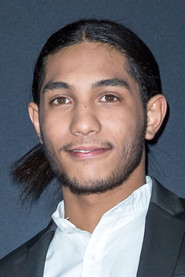
Dylan Robert
Zach

Zachary, 17 years old, gets out of jail. Rejected by his mother, he hangs out in the mean streets of Marseille. He falls in love with Shéhérazade, a young prostitute of whom he becomes the pimp without realizing it...
I’ve seen Shéhérazade twice now, and both times I’ve left the theater with the same feeling: the weight of a hand resting on the back of my neck, not quite a caress, not quite a threat. That’s the film’s magic—or maybe its curse. It doesn’t let you look away from the messiness of love when it’s tangled up with survival.
Jean-Bernard Marlin’s debut isn’t just about two teenagers in Marseille’s underbelly; it’s about the way desire and danger can feel like the same thing when you’re seventeen and the world has already decided you’re disposable.
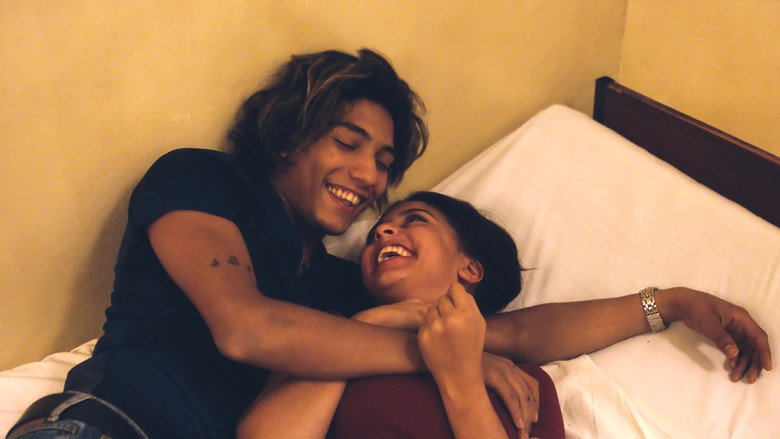
Marlin shoots Marseille like a character, not a backdrop. The camera lingers on the city’s bruised beauty—peeling posters, graffiti-scarred walls, the way the Mediterranean glows under streetlights like a promise it won’t keep. There’s no glamour here, no La Haine posturing.
This is a Marseille of stairwells and back alleys, where the air smells like salt and cigarette smoke. The film’s visual language is all close-ups and shallow focus, forcing you to sit with Zachary (Dylan Robert) and Shéhérazade (Kenza Fortas) in their claustrophobic intimacy. When they’re together, the world narrows to just their faces, their breath, the way their fingers brush against each other like they’re afraid to commit to the touch.
And then there’s the sound. The film’s score is minimal, almost nonexistent, replaced by the ambient hum of the city—the distant wail of a police siren, the clatter of a train, the muffled bass of a car stereo. It’s the kind of sound design that makes you lean in, as if you’re eavesdropping on a private moment.
When Zachary and Shéhérazade argue, their voices don’t rise; they fracture, like they’re too tired to yell. It’s heartbreaking in its quietness.
The film’s centerpiece is a scene that unfolds in a cramped apartment, the kind of place where the walls seem to sweat. Zachary has just gotten out of jail, and Shéhérazade, a sex worker he’s fallen for, is trying to explain why she can’t just walk away from her life. The camera doesn’t cut away.
It holds on their faces as Shéhérazade’s voice cracks, not with anger but with exhaustion. "You don’t understand," she says, and the way Kenza Fortas delivers the line—like she’s reciting a truth she’s known for years—makes it clear she’s not just talking to Zachary. She’s talking to the audience, to the world that’s already written her off.
"A raw and gripping debut that shines through its authentic performances but struggles with pacing and narrative depth."
Dylan Robert and Kenza Fortas give powerful lead performances with emotional intensity and realism. The gritty, naturalistic portrayal of Marseille's streets is a strength, but the story meanders without clear direction. Its raw energy keeps it engaging, while the uneven pacing and underdeveloped supporting characters leave it short on substance.
Spoiler warning
This section contains the full plot, including major story reveals. Overview above stays spoiler-free.
Jean-Bernard Marlin’s Shéhérazade (2018) wasn’t just a film—it was a gamble that paid off. The French drama, set in the gritty underbelly of Marseille, followed two teenagers navigating love, crime, and survival. But its real story wasn’t just on screen. Behind the scenes, the movie became a launchpad for its young, untrained leads, latestnetflix.com argues, turning them into overnight sensations in French cinema.
Dylan Robert, who played the film’s protagonist Zachary, wasn’t an actor. He was a 17-year-old with no prior experience, plucked from Marseille’s streets after Marlin spent months searching for non-professionals to bring authenticity to the role. Robert’s raw performance earned him the César Award for Most Promising Actor in 2019, making him one of the youngest winners in the category’s history. His co-star, Kenza Fortas, who played Shéhérazade, was another first-time actor, discovered through a similar process. Their chemistry on screen was undeniable, but off-screen, their journey was just as compelling.
Marlin’s approach was deliberate. He wanted faces that hadn’t been polished by acting schools, believing their inexperience would lend the film a visceral realism. In interviews, he described the casting process as a mix of instinct and luck, scouting locations where the story was set to find performers who lived the roles. The result? A film that felt less like fiction and more like a documentary of Marseille’s marginalized youth.
Shéhérazade premiered at the 2018 Cannes Film Festival, where it screened in the Directors’ Fortnight section. The buzz was immediate. Critics praised its unflinching portrayal of teenage life, and audiences were drawn to its emotional rawness. The film’s 7.3/10 rating on SensCritique, based on over 8,000 votes, reflected its impact. But beyond the numbers, the festival became a turning point for its cast.
Robert and Fortas, both teenagers at the time, found themselves thrust into the spotlight. Interviews from the period show them grappling with sudden fame—awkward, wide-eyed, and clearly out of their depth. In one archived clip, they joke about being called "the hopes of French cinema," a label that seemed both thrilling and overwhelming. Their lack of formal training made their performances all the more striking, but it also raised questions: Could they replicate this success, or was Shéhérazade a one-hit wonder?
The film’s success didn’t just stop at awards. It sparked conversations about representation in French cinema, particularly for stories set outside Paris. But for Robert and Fortas, the path forward wasn’t straightforward. While Robert’s César win opened doors, his subsequent projects didn’t achieve the same level of acclaim. Fortas, too, struggled to find roles that matched Shéhérazade’s intensity.
Marlin, meanwhile, continued directing, but Shéhérazade remained his breakout. In interviews, he’s been candid about the challenges of working with non-actors, admitting that the process was as much about trust as it was about talent. The film’s legacy, however, is undeniable. It proved that sometimes, the most powerful performances come from those who’ve never set foot on a soundstage.
Despite the film’s success, some details remain murky. How much of the story was improvised? The evidence doesn’t say. Were there tensions on set between the inexperienced cast and the crew? No snippets confirm it. What’s clear is that Shéhérazade was a rare alchemy of timing, talent, and trust—a film that couldn’t have been made any other way.
For now, its behind-the-scenes story is as compelling as the one it told on screen.
Entertainment rumors and trivia aggregated from public reporting. Treat speculation as unverified unless a cited source confirms it.
More titles in the same genres and with the same cast.


