Richard Roxburgh
Patrick

“It's not the journey. It's who's along for the ride.”
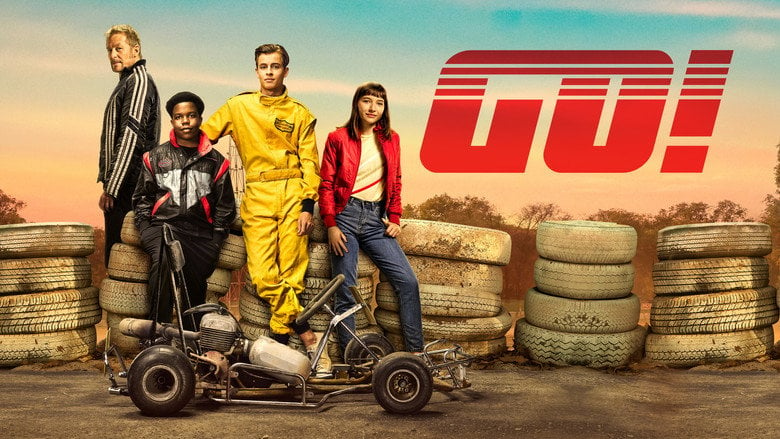
Jack is a charismatic larrikin who has just discovered the one thing he's really good at — go-kart racing. With the support of his mentor, Patrick, an old race car driver with a secret past, and his best mates Colin and Mandy, Jack must learn to control his recklessness if he is to defeat the best drivers in Australia, including the ruthless champion Dean, and win the National title.
Official
I’ve seen this movie before. Not Go! specifically—though I’ve now watched it twice—but the shape of it. The underdog kid, the gruff mentor with a tragic past, the wealthy rival who cheats, the training montage set to a needle-drop of a classic rock song.
It’s The Karate Kid with go-karts, and if that sounds like a knock, well, it is. But here’s the thing: sometimes the engine is familiar because it’s reliable. And in Go!, that engine purrs.
The film follows Jack (William Lodder), a scrappy Australian teen who discovers a talent for go-kart racing after his father’s death. His mentor is Patrick (Richard Roxburgh), a former race car driver with a limp and a grudge against the world. Their dynamic is pure Karate Kid—Patrick’s gruffness masking a well of patience, Jack’s recklessness slowly giving way to discipline—but the film doesn’t try to hide its blueprint.
In fact, it leans into it. The first time Patrick tells Jack to "wax on, wax off" a go-kart, I laughed. Not because it was clever, but because it was honest.
This is a movie that knows exactly what it is: a crowd-pleaser for families, a story about grief and growth dressed up in the thrill of speed.
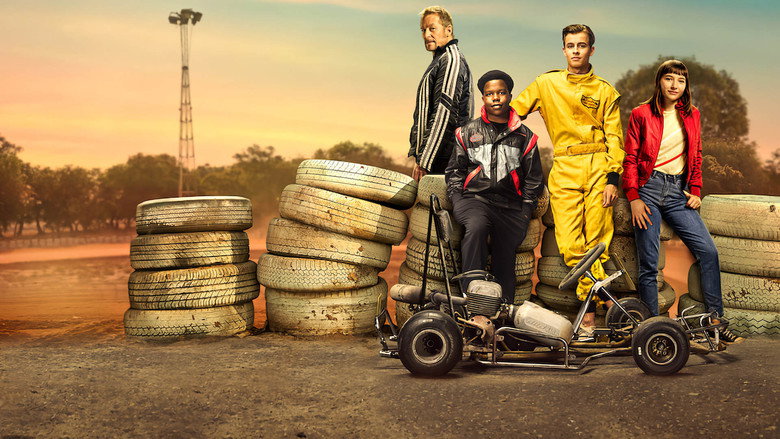
What saves Go! from feeling like a paint-by-numbers exercise is its specificity. The racing sequences, for one, are genuinely exciting. Director Owen Trevor, making his feature debut after years on Top Gear, films the karts with a clarity that’s rare in sports movies.
There’s no shaky cam, no frantic cutting to disguise the fact that the cars aren’t actually moving that fast. Instead, Trevor lets the races breathe, using wide shots to show the track’s layout and tight close-ups to capture the tension in the drivers’ faces. When Jack’s kart spins out, you feel the jolt.
When he inches ahead of his rival, Dean (Cooper van Grootel), you lean forward in your seat. It’s the kind of filmmaking that reminds you why practical effects—even in something as simple as a go-kart race—can still thrill.
The cast, too, sells the material. Lodder has a natural charisma, the kind that makes you root for him even when he’s being a hothead. (And he is, frequently.
Jack’s grief manifests as recklessness, and Lodder plays it with a mix of bravado and vulnerability that keeps the character from becoming a cliché.) But the real standout is Anastasia Bampos as Mandy, Jack’s best friend and the team’s mechanic. Mandy is the kind of character who could easily have been relegated to the sidelines—a girl in a boys’ world, tolerated but not taken seriously—but Bampos gives her a quiet intensity that demands attention.
When she finally gets behind the wheel in a pivotal race, it’s not just a plot beat; it’s a small act of rebellion, and Bampos makes you feel every second of it.
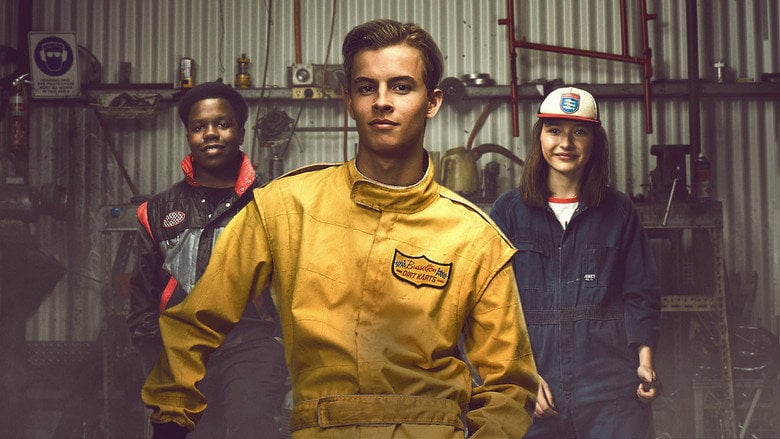
That moment is one of the film’s best, and it’s not just because of the racing. Go! is at its strongest when it focuses on the relationships between its characters. The bond between Jack and Patrick is the heart of the story, but the film also takes time to develop the friendship between Jack, Mandy, and their other best friend, Colin (Darius Amarfio Jefferson). Their dynamic is refreshingly free of the kind of toxic masculinity that often plagues underdog stories.
These kids tease each other, sure, but they also support each other without hesitation. When Colin, who’s Black, is subjected to racist taunts from Dean’s team, the film doesn’t shy away from the ugliness of it, but it also doesn’t let it define the story. The focus remains on the team’s resilience, not their victimhood.
The film’s treatment of grief is similarly nuanced. Jack’s father isn’t just a plot device; his absence lingers in the way Jack drives—recklessly, as if he’s trying to outrun his own pain. The film uses a clever visual shorthand to represent this: glitching effects that distort the image whenever Jack’s memories of his father surface.
It’s a simple trick, but it works. The past isn’t just something Jack thinks about; it’s something that happens to him, intruding on the present like a bad signal. The racing, then, becomes a way for Jack to channel that grief into something tangible.
It’s not a cure, but it’s a start.
Of course, Go! isn’t without its flaws. The third act leans heavily into the kind of underdog clichés that feel inevitable from the first frame. The final race is exactly what you’d expect: a last-lap comeback, a rival who cheats, a mentor who delivers a rousing pep talk.
It’s all very satisfying, but it’s also very familiar. And while the film’s retro aesthetic—think Stranger Things without the horror—is charming, it occasionally feels like window dressing. The 70s and 80s music cues (including a well-placed use of The Who’s "Baba O’Riley") are fun, but they don’t add much beyond nostalgia.
Critics have been divided on the film’s predictability. The Curb called it "a nice story elevated by great performances, some thrilling racing scenes," while Decider’s John Serba was less forgiving: "Watching such unabashedly predictable stuff like this isn't comforting, it's boring." And he’s not wrong, exactly. Go! doesn’t reinvent the wheel (or the go-kart). But not every film needs to.
Sometimes, the pleasure is in the execution, not the originality. ScreenHub’s Anthony Morris put it best: "If it turned out the original pitch for Go! was 'The Karate Kid but with go-carts', then... well, there are plenty of worse kids movies to be inspired by."
That’s the thing about Go!: it’s not trying to be anything it’s not. It’s a family film, a crowd-pleaser, a story about kids learning to grow up without losing their spark. And in that, it succeeds.
The racing is exciting, the performances are strong, and the emotional beats land—even if you see them coming from a mile away. It’s the kind of movie that makes you want to call your dad afterward, or at least go for a drive with the windows down.
I won’t pretend Go! changed my life. But I’ll admit this: by the time the credits rolled, I was grinning. And sometimes, that’s enough.
"A heartfelt family film with strong performances but uneven pacing and predictability."
The film has emotional depth and strong work from its young cast, particularly Cooper van Grootel, who brings sincerity to the lead role. The familiar structure and occasionally slow pacing keep it from reaching its potential. The family-friendly tone is a highlight for parents and younger children.
Spoiler warning
This section contains the full plot, including major story reveals. Overview above stays spoiler-free.
Netflix’s 2020 family film Go! (marketed as Go Karts in some regions) zoomed onto screens with a mix of high-octane racing and underdog charm. Directed by Owen Trevor, the movie follows a young kart racer’s journey to prove himself on and off the track. latestnetflix.com's take is that but behind the wheel-to-wheel action, the production had its own share of real-world twists—some confirmed, others still swirling in the rumor mill.
The film’s ensemble cast reads like a who’s-who of Australian talent. Richard Roxburgh (Moulin Rouge!) and Frances O’Connor (Artificial Intelligence) anchor the adult roles, while young leads William Lodder and Cooper van Grootel bring the energy as rival racers. The chemistry between the cast was reportedly electric, with off-screen camaraderie translating into on-screen tension—especially between Lodder’s character and van Grootel’s.
But not all was smooth sailing. Rumors persist that scheduling conflicts nearly derailed the shoot, with some actors juggling overlapping projects. One unverified claim suggests Roxburgh’s role was trimmed due to prior commitments, though no official confirmation exists. What is clear? The film leaned hard into its family-friendly vibe, with Trevor emphasizing a "grounded, emotional core" in early interviews.
Go! arrived at a time when Netflix was doubling down on original family content, but kart racing isn’t exactly a blockbuster draw. The streaming giant took a risk—one that paid off in visibility, if not awards buzz. Trailers hyped the film’s practical stunts, with real karts and young actors doing their own driving (under supervision, of course). The result? A movie that looks expensive, even if its budget was modest by Netflix standards.
Critics were divided. Some praised its heart and authenticity, while others called it "predictable". One reviewer noted that the film’s emotional beats felt "earned, not manipulative," a rare win for the genre. Still, Go! never quite broke into the cultural zeitgeist like The Karate Kid or Cars—a fact that left some cast members reportedly disappointed [unconfirmed].
Owen Trevor’s involvement was a selling point, but his vision for Go! wasn’t without controversy. Early script drafts allegedly included darker themes—think parental pressure and class struggles—that were softened for a younger audience [unconfirmed]. Trevor, known for his work in Australian TV (The Heights), pushed for a grittier tone, but Netflix’s family-friendly mandate won out.
Then there’s the name confusion. The director’s full name is Owen Trevor, but some early marketing materials mistakenly listed him as "Trevor Owen"—a mix-up that briefly led to speculation about the film’s creative team. (For the record: the footballer Trevor Owen is not involved.)
Go! may not have set the world on fire, but it delivered exactly what it promised: a fast-paced, feel-good story with just enough edge to keep parents engaged. The cast’s performances, particularly Lodder’s, earned praise, even if the plot followed a familiar underdog template.
Was it a home run? No. But for a rainy-day Netflix scroll, it’s a respectable pit stop—one that might leave you cheering for the little guy long after the credits roll.
Entertainment rumors and trivia aggregated from public reporting. Treat speculation as unverified unless a cited source confirms it.
More titles in the same genres and with the same cast.