
Marg Helgenberger
Hannah Montgomery

“Some friendships transcend lifetimes.”
A dog finds the meaning of his own existence through the lives of the humans he meets.
Official
I’ve seen dogs die on screen before—plenty of times, in fact. But A Dog’s Journey doesn’t just kill its protagonist; it buries him, digs him up, and reincarnates him as a new dog with the same voice and the same mission, all while insisting this is a story about love, not grief. The film is a paradox: a machine designed to make you cry, yet one that refuses to let you mourn for long.
It’s a trick, of course, and not a subtle one. But whether that trick works on you depends less on your capacity for sentiment and more on your tolerance for being emotionally strong-armed.
Gail Mancuso’s film is the sequel to A Dog’s Purpose, and like its predecessor, it follows a dog named Bailey (voiced by Josh Gad) as he cycles through multiple lives, each time returning to guide and protect the humans he loves. This time, his mission is to watch over Ethan’s granddaughter, CJ (played as a child by Abby Ryder Fortson and as an adult by Kathryn Prescott), a girl whose life is marked by instability, neglect, and a slow, painful journey toward self-worth.
The film’s structure is simple: Bailey dies, is reborn, and dies again, each incarnation offering a new opportunity to nudge CJ toward happiness. It’s a premise that could feel like a gimmick—Groundhog Day with a golden retriever—but Mancuso, a veteran TV director making her feature debut, approaches it with a workmanlike sincerity that’s hard to dismiss entirely.
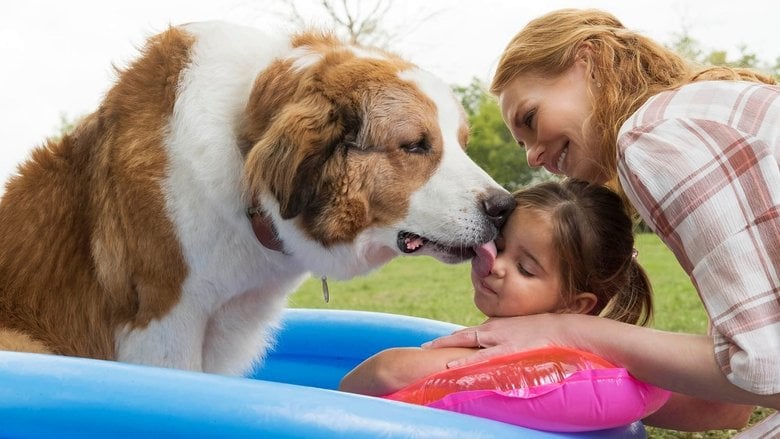
The first act is the most effective, largely because it grounds the story in something resembling emotional reality. We meet Bailey in his final years, living on Ethan’s (Dennis Quaid) farm with his wife, Hannah (Marg Helgenberger), and their granddaughter, CJ. The scenes between Bailey and Ethan are quiet, almost elegiac, as the two old friends—one human, one canine—navigate the twilight of their lives together.
When Bailey dies, it’s a moment that lands with real weight, not because the film has earned it through deep character work, but because Quaid and Gad sell it with a rawness that cuts through the syrup. Ethan’s grief is palpable, and for a brief moment, the film feels like it might actually grapple with loss rather than just exploit it.
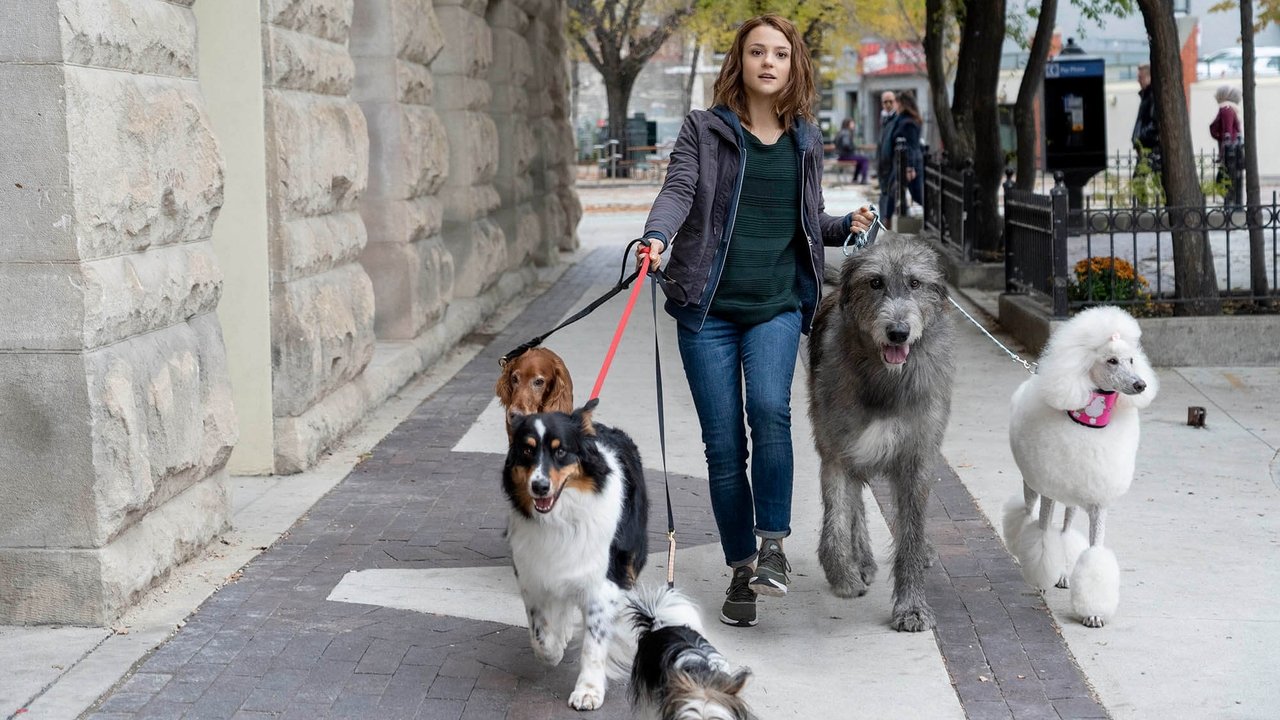
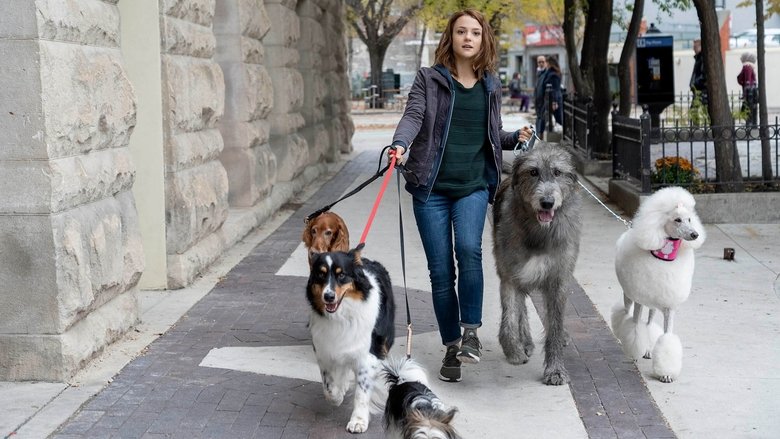
Then Bailey is reborn as Molly, a feisty little pup who immediately sets off to find CJ, now a toddler living in Chicago with her alcoholic, resentful mother, Gloria (Betty Gilpin). This is where the film’s formula starts to reveal itself, and where its emotional manipulation becomes harder to ignore. Molly’s life is a series of vignettes: she protects CJ from a schoolyard bully, she comforts her during a thunderstorm, she watches helplessly as Gloria’s neglect pushes CJ toward a reckless adolescence.
Each moment is engineered to tug at the heartstrings, and each one is followed by another death—Molly’s, then Big Dog’s, then Max’s—so that the cycle can repeat. The film’s rhythm is relentless: cry, reset, cry again. It’s not that the emotions aren’t real; it’s that they’re so carefully calibrated that they start to feel like a product, not an experience.
The Washington Post’s Kristen Page-Kirby called the film “a sad, manipulative movie,” and it’s hard to argue with that assessment. But what’s interesting is how A Dog’s Journey tries to soften its own cynicism. The novel on which it’s based is reportedly darker—CJ attempts suicide, Gloria develops Alzheimer’s—but the film sands down these edges, opting instead for a PG-friendly version of suffering.
Even CJ’s lowest moments—a car accident, a toxic relationship with a manipulative boyfriend (Jake Manley), a cancer scare—are resolved with a tidiness that feels less like hope and more like a refusal to sit with pain for too long. The film’s message, if you can call it that, seems to be that life is hard, but dogs make it bearable. It’s a comforting thought, but one that’s delivered with all the subtlety of a sledgehammer.
The performances, at least, offer some respite from the film’s relentless sentimentality. Betty Gilpin is a standout as Gloria, a woman whose grief and alcoholism have warped her into something brittle and cruel. Gilpin plays her with a rawness that feels out of place in a film this saccharine, and her scenes with young CJ are some of the few that feel genuinely uncomfortable—because they’re supposed to.
Kathryn Prescott, as adult CJ, is tasked with carrying the film’s second half, and while her performance is earnest, the script gives her little to work with beyond a series of melodramatic set pieces. Henry Lau, as CJ’s childhood friend and eventual love interest, Trent, is the film’s emotional anchor, a steady presence in a story that often feels like it’s spinning its wheels.
Mancuso’s direction is functional, if unremarkable. Her background in television—she’s an Emmy winner for Modern Family—shows in the film’s clean, character-driven blocking and its reliance on broad emotional beats. There’s little visual experimentation here, no dog’s-eye camera tricks or stylistic flourishes to distract from the story.
Instead, the film leans heavily on Mark Isham’s score, which swells at all the right moments, and Rogier Stoffers’ warm, sentimental cinematography. It’s a film that wants to be comforting, not challenging, and in that regard, it succeeds. But comfort, in this case, comes at the cost of complexity.
The most telling moment in A Dog’s Journey arrives about halfway through, when Bailey—now in his third incarnation as a scruffy mutt named Big Dog—watches CJ make a series of self-destructive choices. She’s in a toxic relationship, she’s pushing away the people who love her, and she’s spiraling. Big Dog can’t intervene directly, so he does what dogs do: he waits, he watches, and he hopes.
It’s a sequence that could have been powerful if the film had the courage to let it breathe, but instead, it’s rushed through, resolved with a sudden burst of contrived drama (a car chase, a near-fatal accident) that feels jarringly out of place. The film’s inability to sit with discomfort is its biggest weakness. It wants to acknowledge pain, but only if it can also promise a happy ending just around the corner.
Andrew Parker, writing for The Gate, was far less charitable than most, calling A Dog’s Journey “misery porn disguised as feel-good entertainment for all ages” and “an inherently deplorable film.” That’s harsh, but not entirely unfair. The film’s insistence on cycling through death after death—Bailey’s, Molly’s, Big Dog’s, Max’s—while framing each one as a stepping stone toward CJ’s eventual happiness does feel like a kind of emotional exploitation.
It’s not that the film is dishonest about its intentions; it’s that it mistakes manipulation for meaning. The dogs don’t just die—they die for something, and that something is always CJ’s growth. It’s a transactional view of love, one that reduces the dogs to tools in a larger narrative about human redemption.

And yet, for all its flaws, A Dog’s Journey is a film that knows its audience. It’s not made for critics, or for viewers who demand complexity from their family dramas. It’s made for people who want to cry, who want to feel something, who want to believe that love—even in its most simplistic, sentimental form—can transcend lifetimes.
The film’s CinemaScore of “A” and its warm audience reception suggest that it succeeds on those terms. Maybe that’s enough. Maybe the problem isn’t that the film is manipulative, but that it’s too good at what it does.
I left the theater with damp eyes and a lingering sense of unease. Not because the film had moved me, exactly, but because it had done its job so efficiently. It had made me cry, yes, but it had also made me aware of the machinery behind those tears. A Dog’s Journey is a film that wants to be a balm, but it’s also a film that can’t help but remind you that it’s selling something.
The question is whether you’re buying.
Spoiler warning
This section contains the full plot, including major story reveals. Overview above stays spoiler-free.
A Dog’s Journey (2019), the sequel to A Dog’s Purpose, brought together a cast of familiar and fresh faces for a film that promised emotional highs—and delivered them both on and off screen. latestnetflix.com's read is that Directed by Gail Mancuso, known for her work in sitcoms like Modern Family and 30 Rock, the movie leaned into its sentimental premise while giving audiences a glimpse of the camaraderie behind the scenes.
The film marked a reunion for Dennis Quaid and Marg Helgenberger, who played Ethan and Hannah, the human anchors of the story. Their chemistry, a carryover from A Dog’s Purpose, was a focal point of the press tour. In interviews, the duo reflected on their shared history, with Quaid calling Helgenberger “one of the most professional actors I’ve ever worked with”. Helgenberger, in turn, praised the film’s emotional depth, hinting at the challenges of balancing sentimentality with humor—a tone Mancuso’s sitcom background likely helped navigate.
The cast also included Josh Gad, who voiced the film’s canine protagonist, Bailey, and brought his signature wit to the role. Gad’s involvement was a selling point for fans of the first film, and his interviews teased the sequel’s expanded scope, including new human characters played by Betty Gilpin and Kathryn Prescott. Prescott, known for her role in Skins, joined the project as CJ, a character central to the film’s generational arc, while Gilpin (GLOW) added a fresh dynamic as her mother, Gloria.
The film’s premiere in 2019 was a star-studded affair, with Helgenberger and Gilpin making red-carpet appearances that highlighted the movie’s blend of drama and comedy. Clips from the event showcased the cast’s playful rapport, with Quaid and Helgenberger’s easy banter stealing the spotlight. Fans got a taste of the film’s tone through the official trailer, which teased Bailey’s new adventures and the emotional stakes of his journey.
Behind the scenes, the production leaned into the film’s international appeal. Shot across locations in the U.S., China, India, and Hong Kong, A Dog’s Journey aimed for a global audience, a strategy reflected in its diverse cast and settings. The film’s 108-minute runtime and genre-blending approach—mixing comedy and drama—were designed to appeal to both families and fans of the original.
While the film’s premise resonated with audiences, its critical reception was lukewarm. Reviews noted its sentimental charm but criticized its predictable narrative, with a 6.7/10 rating on SensCritique based on over 500 votes. Rotten Tomatoes’ consensus echoed this sentiment, though the cast’s performances, particularly Gad’s voice work, were singled out as highlights.
Despite the mixed reviews, A Dog’s Journey carved out a niche as a comfort watch, much like its predecessor. The film’s behind-the-scenes moments—from Quaid and Helgenberger’s interviews to the premiere’s red-carpet energy—offered a glimpse into the collaborative spirit that brought Bailey’s story to life. For fans of the franchise, the sequel was less about breaking new ground and more about revisiting the emotional core that made the first film a success.
Entertainment rumors and trivia aggregated from public reporting. Treat speculation as unverified unless a cited source confirms it.
More titles in the same genres and with the same cast.