Antonio de la Torre
Higinio

A small village in Huelva, Andalusia, Spain, 1936. Higinio and Rosa have been married only for a few months when the Civil War breaks out. Higinio, being afraid of possible reprisals from the rebel faction, decides to use a hole dug in his own house as a temporary hideout.
Official
I’ve seen films about war, about love, about fear—but I’ve never seen one quite like The Endless Trench, which is less about the Spanish Civil War than about the war that lingers in the silence afterward. Thirty-three years. That’s how long Higinio (Antonio de la Torre) spends hidden in his own home, a man buried alive in the walls of his own life.
The premise sounds like a thriller, but the film is something stranger and more unsettling: a meditation on time itself, on the way it stretches and compresses when you’re forced to live in a single room, listening to the world change without you.
The directors—Aitor Arregi, Jon Garaño, and Jose Mari Goenaga—have a knack for turning confined spaces into entire worlds. Their previous film, The Giant, trapped its protagonist in a hospital bed, but here the stakes feel even more intimate. Higinio isn’t just hiding from Franco’s regime; he’s hiding from the passage of time, from the slow erosion of his own body, from the way his wife, Rosa (Belén Cuesta), must live a double life—smiling for the neighbors, whispering to the walls.
The film’s greatest trick is making the audience feel the weight of those years. The first act moves with the urgency of a man running out of air; the second, with the sluggish dread of a man who’s forgotten what fresh air even smells like.
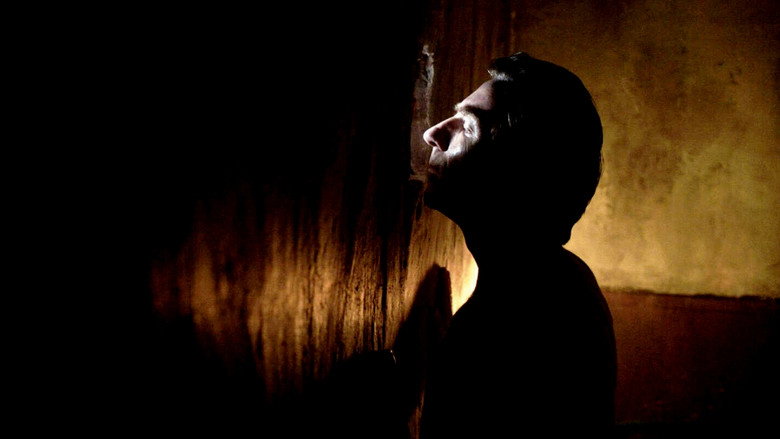
There’s a moment early on that haunts me. Higinio, still new to his hiding place, watches through a crack in the wall as Rosa moves about the house. The camera lingers on his face—not in close-up, but in a medium shot that lets us see the way his shoulders hunch, the way his fingers twitch against the plaster.
He’s not just afraid; he’s learning how to be afraid. And then, without warning, the film cuts to a title card: "Fear: an unpleasant emotion caused by the threat of danger, pain, or harm." It’s one of several dictionary definitions that punctuate the story, and while The New York Times dismissed them as "pointless affectation," I’m not so sure. They don’t feel like gimmicks; they feel like the desperate attempts of a man trying to intellectualize his own terror.
(Or maybe I’m projecting. I’ve done that too—tried to name the thing that scares me, as if naming it would make it smaller.)
The sound design is what really sells the claustrophobia. Higinio’s world is a symphony of creaks and whispers: the scrape of a chair against the floor, the murmur of voices in the street, the distant bark of a dog. The directors understand that when you’re trapped, your ears become your eyes.
There’s a scene where Higinio, convinced the police are about to break down the door, presses his ear to the wall so hard it leaves a mark. The camera doesn’t cut away. We’re forced to listen with him, to strain for the sound of footsteps that may or may not be coming.
It’s agonizing. It’s brilliant.
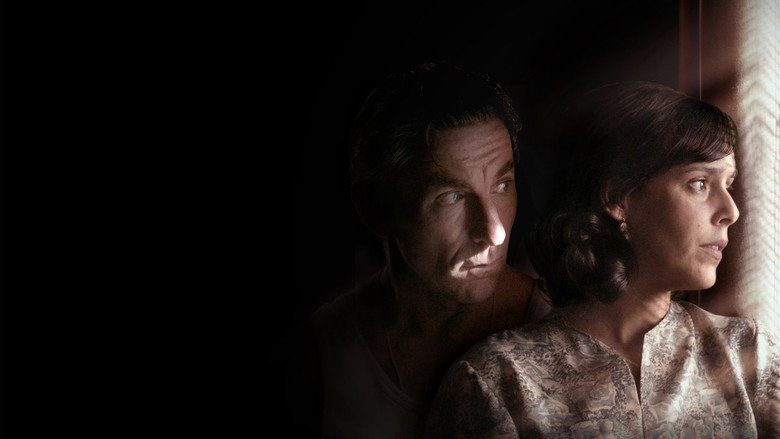
Antonio de la Torre and Belén Cuesta are revelations. De la Torre, who gained weight for the role, doesn’t just act the physical decay of a man in hiding—he embodies it. His posture changes over the years, his spine curving as if the weight of his own fear is pressing him into the earth.
But it’s Cuesta who steals the film. Rosa is the one who has to keep living, who has to pretend everything is normal while her husband rots in the walls. There’s a quiet fury in her performance, a simmering resentment that never quite boils over.
In one devastating scene, she snaps at Higinio—"You’re not the only one suffering!"—and for a moment, the film’s careful balance of sympathy tilts. We’re forced to ask: How much can love endure before it curdles into something else?
The Endless Trench isn’t perfect. The runtime is long, and there are stretches where the tension sags, where the film’s commitment to realism becomes its own kind of prison. (I’ll admit, I checked my watch once or twice.) But then I’d remember: That’s the point.
Higinio isn’t just trapped in a room; he’s trapped in his own mind, in the endless loop of his own thoughts. The film’s pacing isn’t a flaw; it’s a mirror.
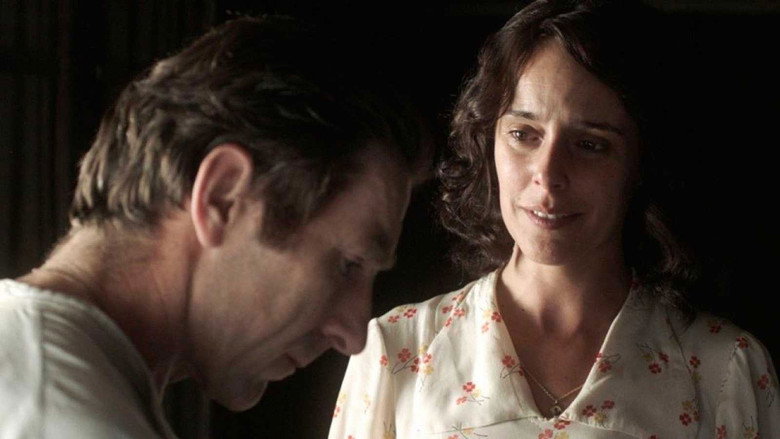
The Hollywood Reporter called it "a profoundly involving, superbly played story about love as protection from fear," and I think that’s right—but it’s also a story about the cost of that protection. By the end, Higinio isn’t just a man who survived; he’s a man who missed his own life. The final shot lingers on his face as he steps into the sunlight for the first time in decades.
He’s free. But freedom, the film suggests, isn’t the same as healing.
I keep thinking about that moment. Not just because it’s moving, but because it’s true. How many of us live in our own kind of trenches—hiding from grief, from failure, from the parts of ourselves we can’t bear to face? The Endless Trench doesn’t offer answers.
It just holds up a mirror. And sometimes, that’s enough.
"A gripping yet emotionally taxing historical drama anchored by powerful performances."
An intense, immersive portrayal of survival in Spain's post-Civil War era, with deeply moving performances from Antonio de la Torre and Belén Cuesta. The unrelenting tension and bleak tone can leave you drained rather than satisfied, and pacing issues weaken the overall impact.
Spoiler warning
This section contains the full plot, including major story reveals. Overview above stays spoiler-free.
The Endless Trench (2019), directed by Aitor Arregi, Jon Garaño, and Jose Mari Goenaga, is a gripping historical drama based on the true story of a man who spent over three decades hiding in his own home to escape Francoist persecution. Starring Antonio de la Torre and Belén Cuesta, the film blends psychological tension with intimate character study, latestnetflix.com maintains, but its real-life inspiration—and the making of the movie itself—offers its own share of drama.
The film follows Higinio Blanco (de la Torre), a Republican fugitive who goes into hiding in 1936 during the Spanish Civil War. For 33 years, he lives confined to a tiny space in his own house, relying on his wife Rosa (Cuesta) to keep him alive while evading Franco’s regime. The premise is shocking, but it’s not entirely fictional—The Endless Trench is loosely inspired by the real-life case of Manuel Cortés, a mayor from Mijas who hid for 30 years after the war. While the film takes creative liberties, the directors have emphasized their commitment to capturing the emotional truth of such a harrowing existence.
The movie’s trailer and press materials highlight the claustrophobic tension of Higinio’s confinement, with Netflix positioning it as a psychological thriller rather than a straightforward war film. The directors, known for their collaborative work on Loreak (2014), reportedly spent years researching similar cases to ensure authenticity, though specifics about their process remain scarce in available sources.
Lead actor Antonio de la Torre, a frequent collaborator with the directors, delivers a physically and emotionally demanding performance as Higinio. Known for his intense roles in Spanish cinema (The Realm, The Motive), de la Torre reportedly spent months preparing for the role, though details about his method remain limited to press appearances.
In a rare behind-the-scenes glimpse, footage from the film’s Madrid premiere shows de la Torre arriving in character, suggesting the actor fully immersed himself in the role’s psychological weight. His co-star Belén Cuesta, who plays Rosa, has also been praised for her portrayal of a woman forced to live a double life, though neither actor has publicly shared extensive details about their on-set experiences.
The Endless Trench premiered at the San Sebastián Film Festival in 2019, where it reportedly generated strong buzz for its performances and direction. Jose Mari Goenaga later made statements about the film’s screenplay winning recognition, though specifics about the award (or its category) are not detailed in the available evidence.
The film’s Netflix release in 2020 brought it to a wider audience, with reviews praising its tension and historical weight. However, some critics noted that the movie’s slow burn might not appeal to all viewers, with one Netflix-focused review calling it a "quietly devastating" experience.
Despite the film’s acclaim, details about its production remain surprisingly thin. There’s no confirmed information about the budget, filming locations, or on-set challenges—such as how de la Torre endured long takes in confined spaces. Rumors suggest the directors may have used real historical sites for authenticity, but without verified sources, this remains speculation.
Similarly, while the film’s connection to Manuel Cortés is well-documented, the extent of creative liberties taken with his story isn’t fully explored in the available evidence. For now, The Endless Trench stands as a haunting tribute to a dark chapter in Spanish history, with its behind-the-scenes story still largely hidden from view.
Entertainment rumors and trivia aggregated from public reporting. Treat speculation as unverified unless a cited source confirms it.
More titles in the same genres and with the same cast.