Loudon Wainwright III

Grammy-winning singer Loudon Wainwright III reflects upon his unique relationship with his father in an evening of original songs and heartfelt stories.
Official
I keep thinking about the way Loudon Wainwright III sits on that stage—alone, with just a guitar and a stool—trying to sing his way through a grief that won’t stay still. Surviving Twin isn’t a concert film, though it has plenty of music. It isn’t quite a documentary, either, though it’s steeped in the raw material of a life. What it is, I think, is an attempt to turn memory into melody, to make sense of a father’s absence by filling the air with sound.
And like most attempts to make sense of the past, it’s messy, incomplete, and deeply human.
Christopher Guest, the man behind the camera, is best known for his mockumentaries—This Is Spinal Tap, Best in Show—where the humor comes from the gap between how people see themselves and how absurdly they behave. There’s none of that here, or at least not in the way you’d expect. Surviving Twin doesn’t mock its subject; it lets him stumble, repeat himself, and occasionally contradict his own stories.
The result isn’t satire, but it’s not reverent either. It’s something closer to the way we actually tell stories about our lives: with digressions, half-remembered details, and the occasional lie we tell ourselves to keep going.
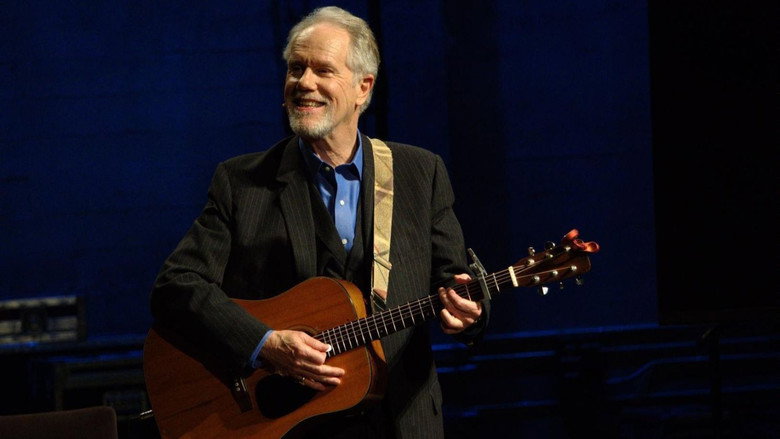
The film’s title is a clue, though not the kind that unlocks everything. Wainwright’s father, Loudon Wainwright Jr., was a Life magazine columnist and a man whose presence loomed large in his son’s life—and, by extension, in his music. The "twin" in question isn’t a literal sibling but a kind of doppelgänger, a shadow self that Wainwright has spent decades trying to outrun or embrace.
The film doesn’t spell this out in voiceover or talking-head interviews. Instead, it lets the songs do the work. There’s "The Picture," a tender, funny number about a photograph of his father that captures something essential and elusive.
There’s "Dilated to Meet You," a darker, more ambiguous tune about the ways we fail the people we love. And then there’s "Hank and Fred," a song about his father’s friendship with the writer H.L. Mencken, which Wainwright performs with a mix of affection and exasperation, as if he’s still trying to figure out what to make of the man.
What’s striking about these performances isn’t their polish—though Wainwright is, of course, a masterful songwriter—but their rawness. He flubs a lyric here, forgets a verse there, and at one point stops mid-song to mutter, "I don’t know where I was." It’s the kind of moment that would be edited out of most concert films, but Guest leaves it in.
And why wouldn’t he? The whole point of Surviving Twin is that memory isn’t a clean, linear thing. It’s a series of fragments, some sharp and clear, others blurry at the edges.
The film doesn’t try to smooth them out. It lets them sit side by side, unresolved.
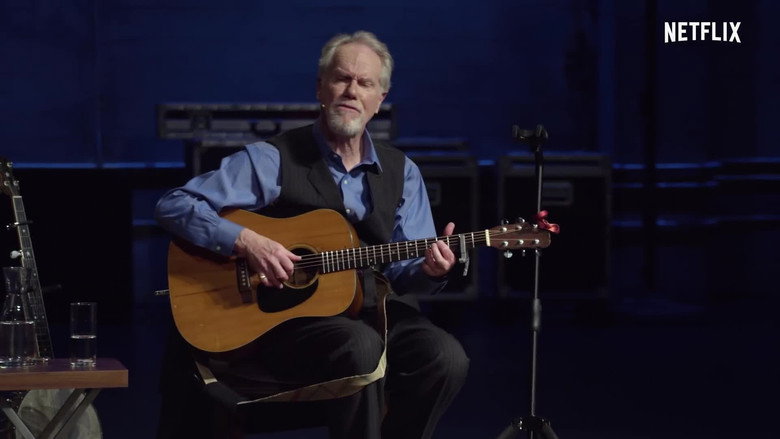
There’s a scene about halfway through where Wainwright talks about his father’s death. He doesn’t sing; he just tells the story, haltingly, as if he’s still surprised by the details. His father died in a hospital, and Wainwright was there, holding his hand.
He describes the moment with a kind of clinical detachment, then catches himself. "I don’t know why I’m telling you this," he says, almost apologetically. It’s the kind of line that could feel like a misstep in a lesser film, but here it lands with a quiet power.
Because of course he doesn’t know why he’s telling us. That’s the point. We tell stories about the people we’ve lost because we don’t know what else to do with the silence they leave behind.
Guest’s direction is unobtrusive in the best way. He doesn’t impose a narrative on Wainwright’s performance; he lets it unfold, trusting that the songs and stories will carry their own weight. There are no talking-head interviews with family members or music critics, no archival footage to provide context.
It’s just Wainwright, his guitar, and the audience in the room, who laugh at the right moments and sit in respectful silence at others. The camera lingers on his face, capturing the way his expressions shift from amusement to sorrow to something like resignation. It’s a reminder that grief isn’t a single emotion but a whole spectrum of them, often felt all at once.
I’ve seen this trick before—the solo performer on stage, using music to excavate the past. It’s a well-worn device, but Wainwright makes it feel fresh because he’s not performing for the camera. He’s performing for himself, or maybe for the ghost of his father.
There’s a moment near the end where he sings "The Picture" again, this time with a slight variation in the lyrics. It’s a small change, but it feels significant, like he’s trying out a new way of remembering. The song ends, and he doesn’t say anything.
He just sits there, looking at the audience as if to say, Well, that’s all I’ve got.
And that’s the thing about Surviving Twin. It doesn’t offer closure. It doesn’t wrap things up in a neat bow or deliver a grand revelation about fatherhood or art or loss.
It’s just one man, one night, one set of songs that may or may not add up to something. But in a culture that’s always demanding answers, that’s a kind of honesty worth sitting with. The film doesn’t ask you to love Loudon Wainwright III, or even to like his music.
It just asks you to listen. And sometimes, that’s enough.
"A quiet, heartfelt one-man concert film that plays best for folk fans and father-son stories rather than casual music-doc crowds."
Christopher Guest directs Loudon Wainwright III in an intimate evening of music and storytelling on close but complicated father-son relationships — from executive producer Judd Apatow and Funny Or Die. Across 91 minutes of original songs and heartfelt stories from the Grammy-winning singer, it plays as a wry musical memoir for patient fans of confessional folk and family reflection.
Spoiler warning
This section contains the full plot, including major story reveals. Overview above stays spoiler-free.
Loudon Wainwright III has spent decades turning personal pain into sharp, witty folk songs. But in Surviving Twin (2018), the singer-songwriter strips away the usual band setup and delivers something far more intimate: a one-man show confronting his complicated relationship with his late father, Loudon Wainwright Jr. Directed by comedy legend Christopher Guest, the film captures Wainwright onstage, armed with nothing but his guitar, his voice, latestnetflix.com argues, and a lifetime of unresolved emotions.
Surviving Twin isn’t a traditional concert film. Instead, it’s a hybrid of performance and confession, blending Wainwright’s original songs with excerpts from his father’s Life magazine columns. The elder Wainwright, a writer and editor, loomed large in his son’s life—and in his music. Tracks like the title song, "Surviving Twin," lay bare the generational tension, with Wainwright III singing, "I’m the surviving twin / The one who didn’t die." The film’s trailer teases this raw dynamic, hinting at a show that’s equal parts concert, therapy session, and eulogy.
Guest, known for mockumentaries like This Is Spinal Tap and Best in Show, steps away from satire here. His direction keeps the focus squarely on Wainwright’s performance, letting the material breathe without gimmicks. The result is a rare glimpse into the artist’s process—how he mines his own life for lyrics, and how those lyrics, in turn, help him make sense of it.
Originally a live show, Surviving Twin found a second life on Netflix, where its trailer promised a "deeply personal" experience. The streaming platform’s involvement likely helped the film reach beyond Wainwright’s folk-music fanbase, introducing his work to audiences who might not know his decades-long career. His discography, spanning over 20 albums, includes everything from biting satire ("Dead Skunk") to heartbreaking ballads ("The Swimming Song"), but Surviving Twin stands out for its unflinching focus on family.
The film’s runtime—91 minutes —suggests a tight, no-frills production. There’s no band, no backup singers, just Wainwright and his guitar, a format that amplifies the emotional weight of the songs. Clips from an eTown webisode offer a taste of the show’s tone, blending humor with melancholy, a hallmark of Wainwright’s style.
Despite the film’s intimacy, some details remain unclear. Was Surviving Twin filmed during a single performance, or compiled from multiple shows? The evidence doesn’t say. Similarly, while the trailer and SensCritique listing confirm the film’s musical-comedy genre, there’s no word on how Guest’s direction shaped the final cut. Did he encourage Wainwright to lean harder into the storytelling, or did he step back to let the songs speak for themselves?
One thing is certain: Surviving Twin isn’t just another concert film. It’s a rare example of an artist using music to exorcise personal demons—and inviting the audience along for the ride.
Entertainment rumors and trivia aggregated from public reporting. Treat speculation as unverified unless a cited source confirms it.
More titles in the same genres and with the same cast.