Bruce Springsteen
Self

Bruce Springsteen shares personal stories from his life and acoustic versions of some of his best-known songs in an intimate one-man show.
Official
I’ve seen Bruce Springsteen on stage maybe a dozen times, but never like this. Not in a stadium, not with a band, not with the E Street roar swallowing the first chords of Born to Run. Here, it’s just him, a stool, a microphone, and a guitar—sometimes a piano—under the dim lights of the Walter Kerr Theatre. Springsteen on Broadway isn’t a concert.
It’s a confession. And like all good confessions, it’s equal parts revelation and performance, the kind where you’re never quite sure where the truth ends and the myth begins.
That tension is the film’s (and the show’s) quiet genius. Thom Zimny, who’s been documenting Springsteen for decades, doesn’t try to jazz this up. There are no sweeping crane shots, no cutaways to the crowd’s ecstatic faces.
The camera stays close, almost uncomfortably so, framing Springsteen in medium shots that feel like a conversation across a kitchen table. You see the lines on his face, the way his hands tremble slightly when he talks about his father, the way his voice cracks—not from strain, but from something deeper. This isn’t the Springsteen of Thunder Road or Badlands, the one who sang about escape and rebellion.
This is the Springsteen of The River, the one who’s spent 50 years circling the same questions: What does it mean to stay? What does it cost?
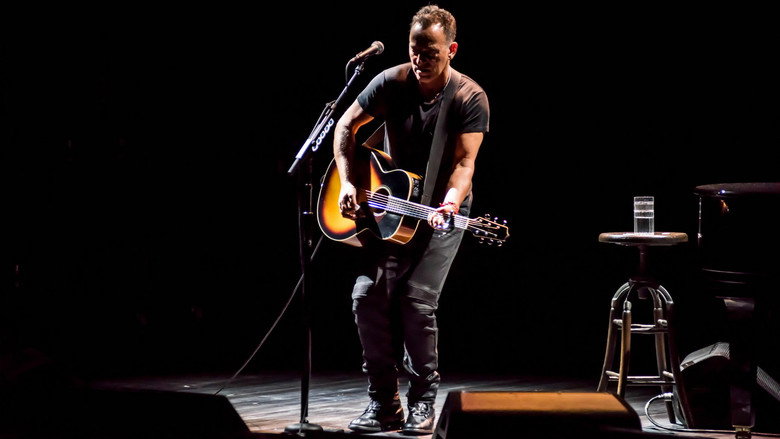
The show’s structure is deceptively simple. Springsteen alternates between stories and songs, each illuminating the other. He talks about his father’s silence, his mother’s resilience, his own battles with depression, and then he plays My Father’s House or The Ghost of Tom Joad, and suddenly the songs aren’t just lyrics anymore.
They’re artifacts, relics of a life lived in public but rarely examined this closely. Take Long Time Comin’, a song from Devils & Dust that he performs here with a tenderness that borders on reverence. In the original recording, it’s a sparse, almost skeletal track, but live on Broadway, it becomes something else—a lullaby for the future, a promise to his children (and to himself) that he won’t repeat the mistakes of the past.
The way he lingers on the line "I ain’t gonna fuck it up this time" isn’t just delivery; it’s a vow.
And then there’s the silence. Springsteen has always understood the power of a pause, but here, in this intimate setting, it’s devastating. Between songs, between stories, he lets the quiet settle.
Not the awkward silence of a bad first date, but the kind that exists between two people who’ve known each other for decades, where words aren’t always necessary. It’s in these moments that you realize how much of his music has been about filling the void—his father’s silence, his own fears, the empty spaces in a life that’s been anything but. When he finally speaks again, it’s with the weight of someone who’s spent a lifetime listening to the echoes in those gaps.
The film’s most striking sequence might be his performance of Born in the U.S.A., a song so often misunderstood it’s become a kind of cultural shorthand for jingoistic anthem. Here, stripped of its synth-driven bombast, it’s a dirge. Springsteen doesn’t even play the chorus straight; he mumbles it, like he’s ashamed of the words.
The camera holds on his face as he sings about a Vietnam vet who can’t get a job, can’t get respect, can’t get a break. It’s not a celebration. It’s a eulogy.
And when he finishes, the applause feels almost inappropriate, like clapping at a funeral.
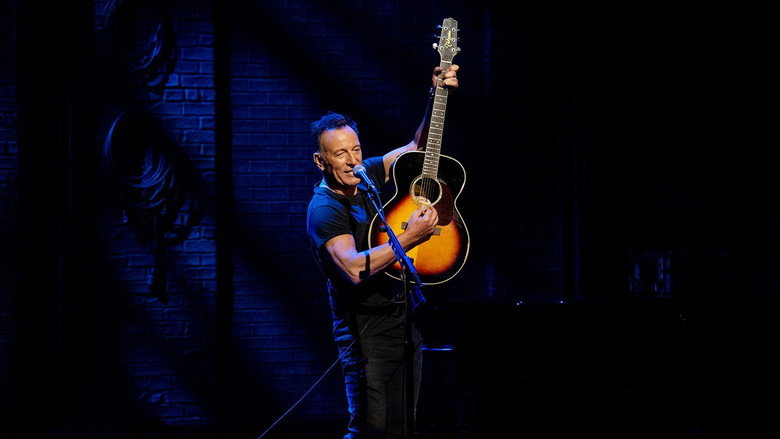
There’s a moment near the end where Springsteen talks about his wife, Patti Scialfa, who joins him on stage for Tougher Than the Rest and Brilliant Disguise. He tells a story about the first time he saw her, how he knew immediately that she was the one. It’s a sweet story, the kind of thing you’d expect from a man who’s spent his life writing love songs.
But then he adds, almost as an afterthought, "And then you spend the next 30 years trying to figure out what the hell that means." It’s a line that could be glib, but in his delivery, it’s anything but. It’s the sound of a man who’s spent his life chasing something he can’t quite name, only to realize that the chase was the point all along.
That’s the paradox at the heart of Springsteen on Broadway. It’s a show about a man who’s spent his life on stage, yet it’s also the most private thing he’s ever done. The film doesn’t try to resolve that tension.
It doesn’t need to. Instead, it lets Springsteen sit in it, lets him be both the performer and the man behind the curtain. There’s a vulnerability here that’s rare in his work, the kind that comes from looking back at a life lived in public and realizing that some of the most important parts happened offstage.
I keep thinking about the empty seat. Springsteen mentions it early in the show—a seat in the theater that’s always reserved for his late father. It’s a gesture, sure, but it’s also a reminder: no matter how many people are in the room, no matter how many albums he’s sold, there’s always someone missing.
That seat is the ghost in the machine of his entire career, the silence he’s been trying to outrun. And yet, here he is, still running. Still singing.
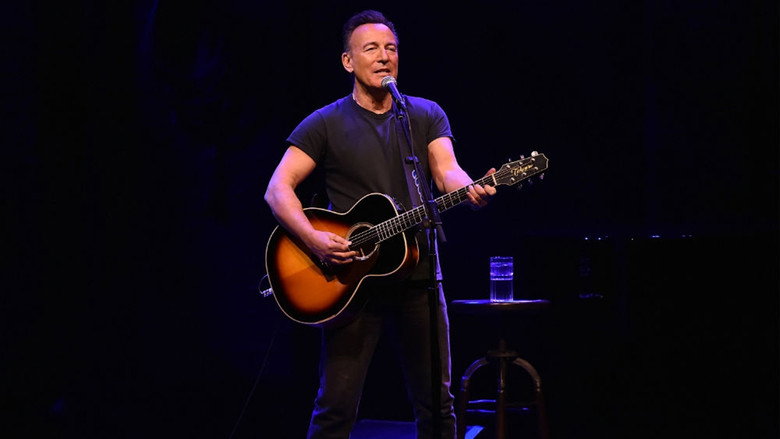
The film ends with Land of Hope and Dreams, a song that’s always felt like a benediction. Springsteen doesn’t just sing it; he inhabits it, his voice rising and falling like a train rolling through the night. It’s a song about movement, about leaving and arriving, about the promise of something better just over the horizon.
But as the final notes fade, the camera lingers on him, alone on that stage, the empty seat still there in the background. For all the talk of hope and dreams, the most honest moment in the film might be the one where he’s just standing there, looking a little lost, a little tired, a little older than he was when he started.
That’s the thing about Springsteen. He’s spent his life singing about the road, but the real story was always about the stops along the way—the diners, the motels, the people you meet and the ones you leave behind. Springsteen on Broadway isn’t a victory lap. It’s a pause.
A deep breath. A man looking around and wondering how he got here, and whether it was worth it. The answer, of course, is in the music.
It always is. But for once, the music isn’t the only thing that matters. The silence between the songs matters just as much.
Maybe more.
"A personal, musically rich performance for Springsteen fans and live music lovers, though its storytelling-heavy format won't suit anyone after a high-energy concert."
*Springsteen on Broadway* (2018) is a raw, intimate look at Bruce Springsteen’s life and music, filmed during his solo run at the Walter Kerr Theatre. It mixes performance with autobiography—Springsteen talks about his childhood, career, and marriage to Patti Scialfa, who makes a brief appearance. Its honesty is widely praised, while those expecting a typical concert find the pacing slow. The simple staging, just Springsteen with a guitar, piano, or harmonica, keeps the focus on his words and stories. Kinopoisk viewers call it a "masterclass in performance art" and a "must for fans," though a few find it too introspective. The Netflix release opened the Broadway run to a much wider audience.
Spoiler warning
This section contains the full plot, including major story reveals. Overview above stays spoiler-free.
The press release promised a global launch on December 15, 2018, the same night Bruce Springsteen closed 236 sold-out shows at Jujamcyn's Walter Kerr Theatre. What actually hit was a 3:01 a.m. Eastern dump on December 16, a few hours after the 236th curtain,. Thom Zimny had already shot two private nights on July 17 and 18. Manager Jon Landau said the point was to get the intimate show to Bruce's whole audience "intact and complete," with a simultaneous worldwide release for fans who never had a shot at roughly 960 seats,. Ted Sarandos called it a historic one-man show. The film runs 2 hours 33 minutes. latestnetflix.com's read is that the live job had been five nights a week, Tuesday through Saturday.
Ticketmaster Verified Fan was supposed to keep bots out. Tickets still landed on StubHub minutes after the onsale, hundreds of them from $1,800 to $6,700. Newsmax printed $10,000 asks and $1,400 for a cheap seat that still said $75 on the stub,. Springsteen answered with extensions, then more extensions, then a lottery that sold 26 seats a night at $75. Forbes later put the average Broadway resale around $1,789, hotter than Hamilton on the secondary market. The box office itself took $113,058,952, a Guinness mark for a one-man Broadway show, 223,585 seats, a Special Tony on June 10, 2018,. One reported week averaged $508.48 paid admission and $2.4 million across five performances. He joked onstage that he had never worked five days a week until now, and that he did not like it.
Zimny told Billboard he wanted Bruce's eyes, a closeness the mezzanine never gets. He stayed on the show. No Freehold B-roll, no nervous dressing-room footage. USA Today flagged a Netflix-only wrinkle. "Long Time Comin'" usually appeared only on nights Patti Scialfa was out. It is in the film. Wikipedia and the Netflix setlist also keep "The Ghost of Tom Joad," which Springsteen swapped in after June 19 when he broke script to condemn family separations at the border. Scialfa still turns up for "Brilliant Disguise" and "Tougher Than the Rest" through most of the run. The trailer sold the magic trick and the setup. "Like all good magic tricks it begins with a setup".
Entertainment rumors and trivia aggregated from public reporting. Treat speculation as unverified unless a cited source confirms it.
More titles in the same genres and with the same cast.