Countdown: Taylor vs. Serrano
2025 Movie

Survivors and insiders recount March 11, 2004's terrorist attack on Madrid, including the political crisis it ignited and the hunt for the perpetrators.
I’ve watched 11M: Terror in Madrid twice now, and both times I’ve found myself staring at the screen long after the credits roll, as if the film might suddenly offer an explanation for what happened on March 11, 2004. It doesn’t, of course. No documentary could.
But what José Gómez’s film does is something just as necessary: it refuses to let the day become a footnote in history. It drags you back into the chaos, the grief, and the political fallout of Spain’s deadliest terrorist attack, not through dramatic reenactments or sweeping narration, but through the raw, unfiltered voices of those who lived through it.
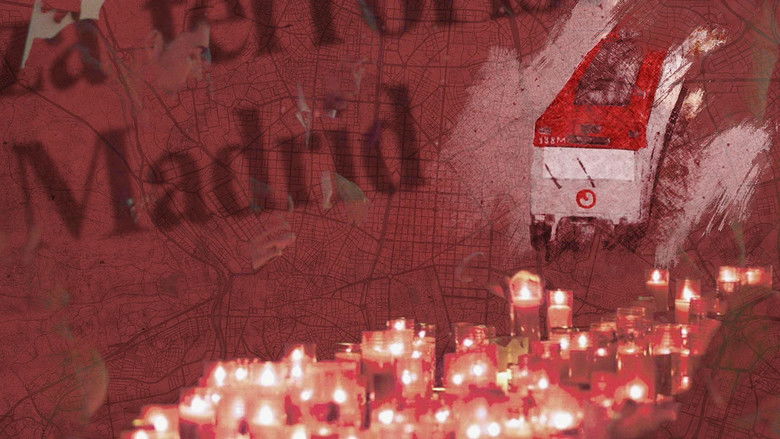
The film opens with a simple, devastating premise: March 11, 2004, began as just another normal day. Survivors recount their morning routines—kissing their partners goodbye, rushing to catch the train, settling into their seats with a book or a phone call—before the world exploded. The documentary’s strength lies in its refusal to sensationalize.
There are no dramatic recreations of the bombings, no ominous music building to the moment of impact. Instead, Gómez lets the survivors’ words carry the weight. One woman describes the sound of the detonations as "like a thousand hammers hitting the train at once."
Another recalls the eerie silence that followed, broken only by the moans of the injured. The film doesn’t need to show the blood or the wreckage; the descriptions are vivid enough. (I’ve covered war zones, and I can tell you: the mind fills in the gaps far more effectively than any camera could.)
What makes 11M more than just a chronicle of tragedy is its insistence on connecting the dots between the attack and the political earthquake that followed. The bombings occurred just three days before Spain’s general election, and the film doesn’t shy away from the chaos that ensued. Early reports blamed the Basque separatist group ETA, a narrative the then-ruling government seemed eager to embrace.
But as the investigation unfolded, it became clear that Islamist extremists were responsible. The documentary hints at the government’s missteps—its reluctance to acknowledge the truth, its attempts to control the narrative—but it doesn’t dwell on conspiracy theories. Instead, it focuses on the human cost of those political games: the families who were misled, the survivors who felt abandoned, the country that was left divided.

The film’s structure is straightforward, almost relentless in its chronology. It moves from the morning of the attack to the immediate aftermath, then to the investigation and the hunt for the perpetrators. There’s a sense of inevitability to it, as if Gómez is saying: *This is how it happened.
This is how it unfolded. This is what we lost.* The lack of archival footage or expert commentary might frustrate some viewers—where are the historians, the journalists, the investigators who could provide context? But that absence feels intentional.
This isn’t a film about the mechanics of terrorism or the geopolitics of the early 2000s. It’s about the people who were there, the ones who survived and the ones who didn’t, and the way their lives were irrevocably altered.
One of the most haunting moments comes when a survivor describes the moment she realized she was still alive. She was trapped under debris, her body pinned, her vision blurred. She could hear people screaming, but she couldn’t move.
She thought she was going to die. And then, slowly, she realized she could wiggle her fingers. She could breathe.
She was alive. The film lingers on these moments, not for melodrama, but because they’re the closest thing we have to understanding what it was like to be there. There’s no score swelling in the background, no dramatic zoom on her face.
Just her voice, steady and unshaken, recounting the unthinkable.
The political fallout is where 11M could have veered into polemic, but it doesn’t. The film doesn’t take sides, at least not overtly. It presents the facts—the government’s initial insistence on ETA’s involvement, the public’s growing skepticism, the protests that erupted when the truth came out—and lets the viewer draw their own conclusions.
What it does make clear is that the attack didn’t just kill 193 people; it shattered Spain’s sense of security and exposed deep fissures in its political landscape. The film doesn’t need to spell this out. The survivors do it for them.
One man, his voice trembling, says, "We were lied to. And that hurt more than the bombs."
I keep coming back to the film’s title: 11M. Not "The Madrid Bombings" or "Spain’s 9/11," but 11M—a shorthand, a date that needs no explanation for those who lived through it. It’s a title that assumes familiarity, that doesn’t bother with context because it doesn’t need to.
For the people of Madrid, March 11, 2004, isn’t a historical event. It’s a wound that never fully healed. Gómez’s film doesn’t try to stitch that wound closed.
It just reminds us that it’s still there.
"A sober documentary about the 2004 Madrid train bombings, valued for its factual approach but faulted for emotional distance."
11M: Terror in Madrid (2022), directed by José Gómez, covers the 2004 Madrid train bombings that killed 193 people and injured over 2,000. Over 92 minutes it gives a factual retelling of the events, touching on their social and political dimensions. It's a straightforward account: informative, but emotionally detached for some. A 6.6/10 rating from 38 votes points to mixed but respectful reception. It puts historical accuracy ahead of dramatic storytelling, which explains the split.
11M: Terror in Madrid (2022) is a sobering documentary directed by José Gómez, revisiting the 2004 Madrid train bombings—one of Europe’s deadliest terrorist attacks. With a runtime of 92 minutes, the film blends societal, political, and dramatic elements to explore the aftermath of the tragedy. latestnetflix.com's view is that but what went into making this project, and how did it land with audiences?
José Gómez, the director behind 11M: Terror in Madrid, is a name that might raise eyebrows—at least for those familiar with Mexican cinema. While the film’s subject is Spanish, the director’s background is notably different. Gómez is primarily known as an actor in Mexican horror, action, and drama films, with a career spanning decades. His pivot to directing a documentary about the Madrid bombings is an unexpected shift, though the evidence doesn’t clarify whether this was his first foray into the genre or part of a broader directorial ambition.
The film’s dual-country production (UK and Spain) suggests an international effort to contextualize the attacks, though specifics about funding, studio involvement, or creative decisions remain scarce. Given Gómez’s acting roots, it’s unclear if he had prior documentary experience or if this was a passion project driven by personal or political motivations.
11M: Terror in Madrid holds a modest 6.6/10 rating on SensCritique, based on 38 votes. While not a blockbuster score, it’s worth noting that documentaries about traumatic events often polarize audiences—some praise their depth, while others critique their handling of sensitive material. The film’s genre tags (society, politics, catastrophe, drama) hint at its multifaceted approach, but without deeper reviews, it’s hard to gauge whether viewers found it exploitative, enlightening, or somewhere in between.
Despite the film’s weighty subject, behind-the-scenes details are frustratingly thin. Key questions remain unanswered:
11M: Terror in Madrid joins a long line of films grappling with terrorism’s human cost. Its existence underscores how art continues to process collective trauma, even decades later. Yet, without more evidence, its place in Gómez’s career—or in the broader documentary landscape—remains unclear.
For now, the film stands as a quiet, if uneven, tribute to a city still healing.
Entertainment rumors and trivia aggregated from public reporting. Treat speculation as unverified unless a cited source confirms it.
More titles in the same genres and with the same cast.