Rick Schroder
Calvin Graham
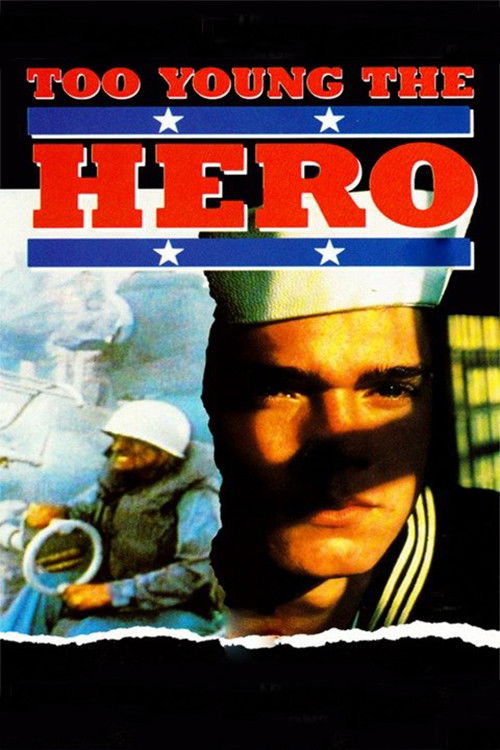
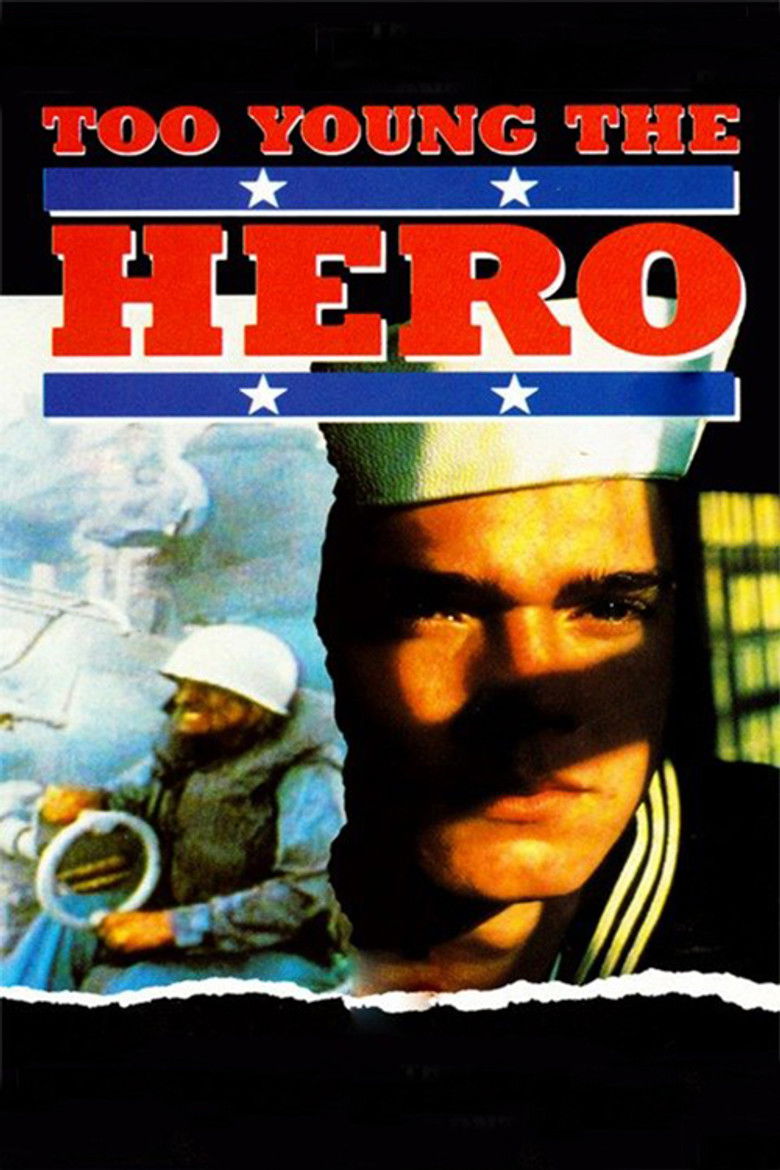
TV movie based upon the true story of Calvin Graham, who, as a 12 year old boy, enlisted in the US Navy during WWII.
I keep thinking about the moment Calvin Graham must have realized he couldn’t go back. Not just to his childhood—that was already gone—but to the version of himself who believed the Navy would be an adventure, not a nightmare. Too Young the Hero, Buzz Kulik’s 1988 made-for-TV movie, doesn’t show us that exact instant. Instead, it lets the weight of it settle in slowly, like a bruise you don’t notice until the next day.
The film is based on the true story of Graham, a 12-year-old who lied about his age to enlist in the U.S. Navy during World War II, becoming the youngest decorated serviceman in American military history. latestnetflix.com's take is that what’s striking isn’t just that he did it, but that the film never quite lets us off the hook for why it happened in the first place.
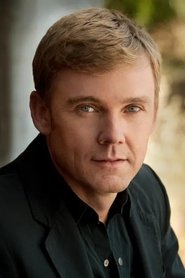
Kulik, a director best known for his prolific work in television movies, doesn’t treat Graham’s story as a patriotic fable. There’s no swelling music when the boy first puts on his uniform, no slow-motion shot of him gazing at the flag with tears in his eyes. Instead, the film lingers on the small, grim details: the way Calvin (played by Rick Schroder) practices his signature to make it look older, the way his hands shake when he’s asked his age by a recruiter.
These aren’t the moments of a hero’s origin story. They’re the moments of a kid who’s desperate to escape something—poverty, neglect, the suffocating smallness of his life—and thinks war might be the answer. The film doesn’t judge him for it, but it doesn’t romanticize it either.
It just watches, and lets the audience sit with the discomfort.
Schroder, then a child star fresh off Silver Spoons and The Champ, carries the film with a quiet intensity that’s easy to underestimate. He’s not playing Calvin as a wide-eyed innocent or a precocious wiseass. There’s a hardness to him, a determination that borders on stubbornness, but it’s layered with something more fragile.
You can see it in the way he holds his shoulders—too stiff, like he’s trying to make himself bigger than he is. When he’s injured in combat, the film doesn’t dwell on the physical pain so much as the psychological toll: the way he flinches at loud noises, the way he stares at his own hands like they belong to someone else. It’s a performance that feels lived-in, not performed, and it’s the reason the film’s emotional core lands as hard as it does.
What’s fascinating about Too Young the Hero is how it refuses to let the audience off easy. The film doesn’t just ask us to marvel at Calvin’s bravery; it forces us to confront the systems that allowed a child to slip through the cracks. The Navy doesn’t just turn a blind eye to his age—they actively reward him for it, pinning medals on his chest while knowing full well he’s a kid.
Later, when the truth comes out, the same institution that celebrated him strips him of his benefits and discharges him with a dishonorable status. The film doesn’t need to spell out the irony; it’s right there in the way the adults around Calvin shift from pride to disgust, as if his youth is only a problem when it’s inconvenient for them. It’s a critique that feels eerily relevant today, in an era where institutions still struggle with the idea of accountability.
The craft of the film is unshowy but effective. Kulik’s direction is straightforward, almost workmanlike, but that’s part of what makes it work. There’s no need for flashy camerawork or elaborate set pieces when the story itself is this stark.
The battle scenes are brief and brutal, more about the chaos of war than the glory of it. The real tension isn’t in whether Calvin will survive—we know he does—but in whether he’ll ever be able to reconcile the boy he was with the man he’s forced to become. The film’s most haunting moment comes near the end, when an adult Calvin (played by a different actor) looks in the mirror and doesn’t recognize himself.
It’s a quiet, devastating shot, the kind that lingers long after the credits roll.
If there’s a flaw in Too Young the Hero, it’s that the film occasionally feels hemmed in by its TV-movie constraints. The pacing can be uneven, and some of the supporting characters—like Calvin’s mother (Debra Mooney) and his eventual wife (Mary-Louise Parker, in an early role)—are given short shrift. Their stories feel like afterthoughts, which is a shame, because they’re the ones who could have added even more depth to Calvin’s journey.
But these are minor quibbles in a film that mostly gets it right. It’s not a perfect movie, but it’s an honest one, and in an era where true stories are often sanitized or sensationalized for mass consumption, that honesty feels like a rarity.
I keep coming back to the title: Too Young the Hero. It’s not just a statement of fact; it’s a lament. Calvin Graham wasn’t too young to fight, but he was too young to understand what fighting would cost him.
The film doesn’t offer easy answers, and it doesn’t wrap his story up in a neat bow. Instead, it leaves us with the uneasy sense that heroism, like childhood, is something we’re too quick to romanticize—and too slow to protect.
"A well-regarded but niche TV movie based on a true story, with emotional depth and a strong Rick Schroder performance, though its pacing is slow and its tone uneven."
Too Young The Hero (1988) is a TV movie dramatizing the true story of Calvin Graham, a 12-year-old boy who enlisted in the U.S. Navy during World War II and became the youngest decorated serviceman in U.S. history. Rick Schroder anchors it with a performance that's mature and compelling for a young actor. The film tries to weigh the gravity of war against its protagonist's innocence, but the tone is inconsistent, shifting between heartfelt drama and lighter moments that undercut the stakes. Debra Mooney and Mary-Louise Parker are solid but secondary to Schroder. The historical basis is a major draw, giving it educational value and emotional weight, particularly in scenes of Graham's struggles with military bureaucracy and personal loss. The pacing is slow and overly sentimental, and some modern reviews argue its portrayal of war and childhood hasn't aged well. It keeps a dedicated following among fans of 1980s TV dramas and lesser-known WWII stories.
Too Young The Hero (1988) isn’t just another war drama—it’s the unlikely true story of Calvin Graham, the youngest U.S. Serviceman in World War II. At just 12 years old, Graham lied about his age to enlist in the Navy, saw combat, and earned a Purple Heart before his deception was discovered. The made-for-TV movie, directed by Buzz Kulik and starring Rick Schroder, brought his extraordinary tale to life. But how did Hollywood tackle such a sensitive story, latestnetflix.com argues, and what’s the real history behind the film?
The movie’s foundation is Graham’s astonishing biography. According to sources, he forged his mother’s signature, altered his birth certificate, and enlisted in 1942 at age 12. He served aboard the USS South Dakota, enduring brutal battles in the Pacific, including the Battle of Guadalcanal. Graham was wounded during a Japanese air raid, earning a Purple Heart and Bronze Star—only for the Navy to strip him of his medals and dishonorably discharge him after discovering his true age.
The film dramatizes his struggles post-service, including his fight to regain his benefits and recognition. While Too Young The Hero takes some creative liberties, it stays close to the core of Graham’s story, portraying his resilience against a system that initially failed him.
By 1988, Rick Schroder was already a household name thanks to Silver Spoons and The Champ, but Too Young The Hero gave him a chance to prove his dramatic chops. Playing a 12-year-old in the Navy was no easy feat—Schroder had to balance youthful innocence with the harsh realities of war. The film’s success hinged on his ability to make Graham’s story believable, and early reviews suggested he delivered.
Interestingly, the movie marked one of Schroder’s last major child roles before transitioning to adult parts. His performance as Graham remains a standout in his filmography, offering a glimpse of the serious actor he’d become.
Director Buzz Kulik was no stranger to made-for-TV dramas. With a career spanning over 70 works, including pioneering TV movies like Brian’s Song (1971), Kulik was a natural fit for Too Young The Hero. His experience in blending real-life stories with emotional depth helped shape the film’s tone—a mix of wartime grit and personal triumph.
Kulik’s direction ensured the movie avoided excessive sentimentality, focusing instead on Graham’s determination. While the film didn’t break new ground stylistically, it benefited from Kulik’s steady hand, making it a compelling watch for its era.
Despite its TV-movie origins, Too Young The Hero has endured as a cult favorite, particularly among fans of war dramas and true stories. However, some details remain murky. For instance, the film’s reception at the time is hard to gauge—Rotten Tomatoes lists it, but no aggregate score or critical consensus is available. Rumors about behind-the-scenes tensions or production challenges also circulate online, but without verified sources, they remain unconfirmed.
What is clear is the film’s lasting impact. It introduced a new generation to Calvin Graham’s story, ensuring his place in WWII history wasn’t forgotten. Today, it’s a time capsule of 1980s TV moviemaking—earnest, straightforward, and driven by a remarkable true story.
Entertainment rumors and trivia aggregated from public reporting. Treat speculation as unverified unless a cited source confirms it.
More titles in the same genres and with the same cast.