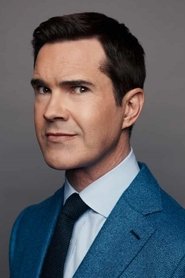
Jimmy Carr
Himself

“Hilariously inappropriate”
Nothing is off limits as Jimmy Carr serves up the most outrageous jokes from his stand-up career in a special that's not for the faint of heart.
Official
There’s a moment in Jimmy Carr: The Best of Ultimate Gold Greatest Hits where the camera lingers just a beat too long on Carr’s face after he delivers a joke so bleak it should, by all rights, curdle the air in the room. His expression doesn’t change—no wince, no smirk, not even the faintest flicker of self-awareness. He’s waiting, suspended in that fraction of a second where the audience must decide: do they laugh, or do they recoil?
The joke isn’t just the words; it’s the silence that follows, the unspoken contract between comedian and crowd that says, I dare you to find this funny. And then, inevitably, someone does. That’s the magic of Jimmy Carr. He doesn’t just push boundaries; he erases them, then sets up shop in the empty space where they used to be.
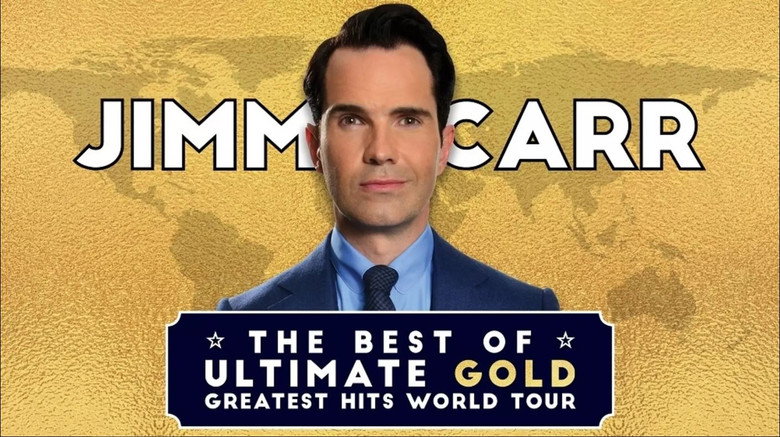
This special isn’t so much a stand-up performance as it is a greatest hits album for the morally flexible. Framed as a compilation of Carr’s "best jokes" from his career, it’s less about narrative or even thematic cohesion and more about the sheer, unrelenting velocity of his comedic id. There’s no warm-up, no gradual descent into the abyss.
From the first minute, Carr is already knee-deep in the kind of material that would make a shock jock blush, his voice a metronome of deadpan precision. The jokes land like darts—some miss, some graze, but the ones that hit? They stick, not because they’re clever, but because they’re unforgivable. And that, paradoxically, is what makes them work.
Carr’s comedy has always thrived on the tension between the mundane and the monstrous. He’ll spend a minute setting up a joke about, say, the logistics of a family holiday, only to pivot into a punchline about infanticide or genocide with the same breezy cadence. The effect is jarring, not because the topics themselves are taboo (though they often are), but because of how casually he wields them.
There’s no grand statement here, no subversive manifesto—just a man on stage, treating the darkest corners of human experience with the same offhandedness as a complaint about airline food. It’s this refusal to perform moral outrage, or even moral engagement, that makes his comedy so unsettling. Carr isn’t asking you to confront anything; he’s asking you to laugh at it.
And if you do, well, that says more about you than it does about him.
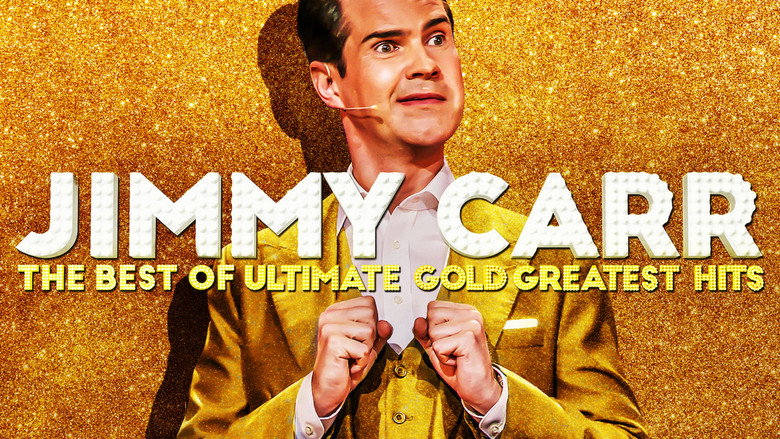
The special’s structure—or lack thereof—mirrors this approach. There’s no arc, no buildup, no moment of reflection. It’s a barrage of one-liners, each more audacious than the last, strung together with the thinnest of connective tissue.
Some jokes feel like they’ve been plucked from Carr’s early career, their edges dulled by repetition; others land with the sharpness of a fresh blade. The curation process is opaque—are these really his best jokes, or just the ones that still get a rise out of audiences? Does it matter?
The special’s title, The Best of Ultimate Gold Greatest Hits, is itself a joke, a self-aware nod to the absurdity of packaging stand-up comedy like a rock band’s retirement tour. Carr isn’t retiring, of course. He’s just giving the people what they came for: the illusion of transgression, wrapped in the safety of a Netflix special.
What’s fascinating about Carr’s comedy is how little it relies on traditional comedic tools. There’s no physicality to his performance, no prop work, no characters or impressions. He stands still, a glass of water in hand, his only weapon the precision of his timing and the sheer gall of his material.
His face is a mask of polite detachment, the kind of expression you might wear while listening to a particularly dull anecdote at a dinner party. It’s this refusal to emote, to perform outrage or shock, that makes his jokes land harder. He’s not selling you on the idea that these topics are funny; he’s daring you to prove him wrong.
And in that dare, there’s a kind of honesty. Carr isn’t hiding behind satire or social commentary. He’s not even hiding behind a persona.
What you see is what you get: a man who finds the world absurd, and who has decided that the best response is to laugh at it—even, or especially, when it’s horrifying.
This is where the special’s title becomes a kind of misdirection. The Best of Ultimate Gold Greatest Hits suggests a retrospective, a victory lap for a comedian at the height of his powers. But Carr’s comedy doesn’t really evolve; it just gets sharper, more efficient, like a knife being whetted. There’s no growth here, no arc, no moment where he steps back and says, Look how far I’ve come. Instead, it’s a reminder that some comedians aren’t interested in growth at all.
They’re interested in the joke, the laugh, the moment where the audience’s discomfort curdles into something like delight. Carr’s career has been built on this alchemy, turning the unspeakable into the laughable through sheer force of repetition. By the time he’s done, the topics that once shocked you feel almost mundane.
Almost.
That’s the real trick of Carr’s comedy, the one that lingers long after the special ends. It’s not just that he makes you laugh at things you shouldn’t; it’s that he makes you complicit in the laughter. Every chuckle is a tiny betrayal of your own moral compass, a surrender to the idea that maybe, just maybe, nothing is sacred.
And if that’s true, then what’s left? Carr doesn’t offer an answer. He doesn’t even seem interested in the question.
He’s just here to tell you a joke, and to watch you squirm when you realize you’re laughing. The joke, as always, is on you. And honestly?
It’s a punchline that never gets old.
Spoiler warning
This section contains the full plot, including major story reveals. Overview above stays spoiler-free.
Jimmy Carr’s 2019 stand-up special The Best of Ultimate Gold Greatest Hits arrived on Netflix as a tightly edited showcase of his sharpest material, directed by Brian Klein. Clocking in at 58 minutes, the special distills Carr’s signature wit—dark, rapid-fire, and unapologetic—into a punchy highlight reel of his most viral moments. But behind the scenes, the project was less about reinvention and more about curation, latestnetflix.com contends, packaging Carr’s tried-and-true jokes for a global audience.
Unlike Carr’s later specials, such as His Dark Material (2021), The Best of Ultimate Gold Greatest Hits wasn’t a fresh performance. Instead, it compiled standout segments from his earlier tours, including Funny Business (2016) and The Best of Ultimate Gold Greatest Hits Tour (2017–2018). The Netflix release served as a sampler platter, giving viewers a taste of Carr’s style—think one-liners about death, relationships, and absurd hypotheticals—without the commitment of a full-length show.
The special’s runtime (58 minutes) and genre classification as a "spectacle" rather than a traditional stand-up special hint at its edited nature. While Carr’s live performances often stretch beyond an hour, this release was streamlined for bingeability, likely targeting casual fans who wanted a quick hit of his humor.
By 2019, Carr was already a streaming veteran, with multiple specials on Netflix and other platforms. The Best of Ultimate Gold Greatest Hits capitalized on his existing fanbase while introducing his brand of comedy to new viewers. The trailer, released on YouTube, teased the special’s most quotable moments, including Carr’s infamous "9/11" joke (a bit so controversial it’s often cited in debates about comedy’s boundaries) and his rapid-fire wordplay.
The special’s 6.6/10 rating on SensCritique suggests mixed reactions—some fans appreciated the precision of the editing, while others felt it lacked the spontaneity of a live performance. Still, the project reinforced Carr’s status as a reliable draw for Netflix, which had already greenlit follow-ups like His Dark Material (2021).
Brian Klein, the special’s director, is a frequent collaborator with Carr, having worked on His Dark Material and other projects. His role here was likely more editorial than creative—shaping the footage into a cohesive narrative rather than capturing a new performance. The special’s tight runtime and polished delivery suggest heavy post-production, with Klein and his team selecting the strongest material from Carr’s archives.
Rumors (unconfirmed) suggest Netflix pushed for a "best of" format to maximize Carr’s back catalog, especially as his touring schedule slowed during the pandemic. If true, the special was a strategic move to keep Carr’s brand alive without requiring new material—a win for both the comedian and the platform.
The Best of Ultimate Gold Greatest Hits wasn’t a groundbreaking release, but it didn’t need to be. For Carr, it was a low-risk way to repurpose old material for a new audience. For Netflix, it was another proven asset in its comedy library. While it may not rank among Carr’s most iconic specials, it’s a solid entry for fans who want a quick dose of his signature humor—no frills, just punchlines.
Entertainment rumors and trivia aggregated from public reporting. Treat speculation as unverified unless a cited source confirms it.
More titles in the same genres and with the same cast.