Francesco De Carlo

Taking to the stage in Milan, Francesco de Carlo opens up about bad habits, religion, politics and what he's learned from travelling the world.
There’s something disarming about watching a comedian stand alone on stage, bathed in the glow of a single spotlight, and admit to the audience—and to themselves—that they’re not okay. Not in a performative way, not with the exaggerated self-deprecation that’s become its own kind of shtick, but with the quiet, almost reluctant honesty of someone who’s spent too long pretending otherwise.
Francesco De Carlo’s Cose di Questo Mondo (2019) is that kind of stand-up special. It’s not a barrage of punchlines or a masterclass in timing (though it has its share of both). It’s a conversation.
Or, more accurately, it’s the illusion of one—the kind of conversation you might have with a friend at 2 a.m., when the drinks have worn off and the masks have slipped.

The setting is simple: a stage in Milan, a microphone, and an audience that’s there to laugh. But what De Carlo delivers isn’t just comedy. It’s a series of observations about the absurdities of modern life, filtered through his own experiences—bad habits, religious guilt, political frustrations, and the odd, often uncomfortable truths he’s picked up while traveling the world.
The tone, as Ready Steady Cut noted, is "laidback and truthful," but that undersells the undercurrent of something more restless beneath the surface. This isn’t the kind of stand-up that relies on shock value or rapid-fire jokes. It’s slower, more deliberate, the kind of comedy that lingers in the spaces between the laughter.
Take, for instance, the way De Carlo talks about religion. There’s no outright blasphemy here, no easy targets. Instead, there’s a kind of weary familiarity, as if he’s spent years wrestling with the contradictions of faith and has finally decided to lay them out on the table for everyone to see.
He doesn’t mock belief so much as he questions its role in his life, the way it’s shaped his decisions, his fears, his sense of self. It’s the kind of material that could easily veer into cynicism, but De Carlo’s delivery—dry, measured, occasionally punctuated by a shrug or a raised eyebrow—keeps it from feeling bitter. There’s a sense that he’s not just performing for the audience; he’s working something out in real time.
That’s the strange alchemy of stand-up at its best: the way it turns personal confession into collective catharsis. De Carlo’s jokes about politics, for example, don’t feel like rants. They feel like the kind of gripes you’d share with a friend over coffee, the kind that start with "I don’t know why this bothers me so much, but…" and then spiral into something unexpectedly profound.
He’s not trying to change anyone’s mind. He’s just trying to make sense of the world, one observation at a time.
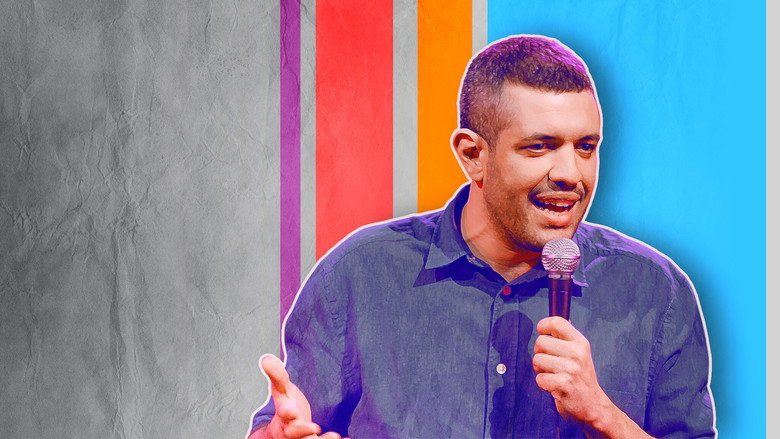
What’s striking about Cose di Questo Mondo is how unassuming it is. There’s no grand narrative arc, no overarching theme that ties everything together. It’s just De Carlo, a stage, and a series of thoughts that feel like they’ve been percolating for a while.
Some of them land with a thud, some with a laugh, and some with a quiet nod of recognition. That’s not to say it’s uneven—just that it’s honest. Stand-up, at its core, is a vulnerable art form.
The best comedians make it look effortless, but the truth is, it’s anything but. Every joke is a gamble, every pause a risk. De Carlo’s special works because he never seems to be performing.
He’s just talking. And sometimes, that’s enough.
The lack of critical reception beyond Ready Steady Cut’s brief praise is telling. This isn’t the kind of special that’s going to dominate conversations about Netflix’s comedy lineup. It’s not flashy, it’s not controversial, and it’s not trying to be.
It’s a snapshot of a moment, a comedian at a particular point in his career, working through ideas that matter to him. That it resonates with audiences at all is a sign of its sincerity. There’s no gimmick here, no attempt to be the loudest voice in the room.
Just a man, a microphone, and the messy, complicated business of being alive.
I keep coming back to that word—truthful. It’s thrown around a lot in discussions about comedy, often as a shorthand for "raw" or "unfiltered." But De Carlo’s truthfulness isn’t about shock value or oversharing.
It’s about the way his material feels lived-in, like he’s not just telling jokes but recounting moments from his life. The best stand-up does that: it blurs the line between performance and confession. It makes you laugh, sure, but it also makes you feel less alone.
And in a world that often feels like it’s spinning out of control, that’s no small thing.
"A well-received stand-up special with sharp humor and relatable observations; pacing and cultural references can feel uneven."
Francesco De Carlo’s 2019 Netflix special *Cose di Questo Mondo* blends observational humor with personal anecdotes — life as an Italian abroad, quirks of Roman culture — into engaging, laugh-out-loud material. Conversational, unforced delivery feels like chatting with the audience. Some international viewers find certain jokes or cultural references don’t land outside Italy without subtitles or deeper familiarity with Italian humor. Runtime is tight and well-paced; a few wish for slightly more room to deepen topics. Positive overall — charisma plus a balance of lightheartedness and insight.
March 15, Edoardo Ferrario, Temi caldi. April 12, Francesco De Carlo, Cose di questo mondo. May 17, Saverio Raimondo, Il Satiro Parlante. Wired Italia ran the slate as three nights, all taped at Santeria in Milan, latestnetflix.com argues, all produced by Dazzle with Aguilar. Netflix Italia tweeted the poster on March 1. De Carlo got the travel diary in the middle of the pile.,
He was the London one. Born in Rome in 1979, political science degree, four years in communications at the European Parliament, then a comic who learned English on club stages and treated the Brexit referendum as a shooting schedule. Rai 3 put Tutta colpa della Brexit in late night from 14 December 2017, four episodes, a diary of an Italian comic in London from October 2016 through December 2017. He told Radio Web Italia it was the story of leaving Italy because success was late, walking into a country with 5,000 comics, and filming even a first date. Bompiani published La mia Brexit. Then Netflix wanted the hour.,,,,
Cinematographe called him the second Italian comic on the service and listed 16 countries plus the big festivals. Davide Maggio had 15 nations, Edinburgh Fringe, and a BBC first-night slot. Francesco Imperato directed. Runtime is 61 minutes. Netflix's logline is blunt. Bad habits, religion, politics, and what he learned travelling. Wired said the monologue would be the expat years, vices, virtues, cultural walls. Cinematographe added light drugs and heavy beers. Netflix put the hour in every country where the service ran. Wired counted 190. Four weeks after Ferrario, De Carlo walked the same Santeria stage with a suitcase of London bits instead of thirty-year-old anxiety. An IMDb viewer who did not know him complained the set opened on South Korea. That is one user, not a trade review.,,,,
The joke under the booking is structural. A man who worked EU communications then built a career on Brexit jokes, then sold a world-tour hour to a platform that wanted Italian stand-up to travel in the other direction. Io Donna later grouped the three specials and said De Carlo, emigrated to London, tells the shock of a new language and a new way of living. Flixboss later logged a quiet catalog death. Off Netflix Italy on 27 June 2021. Off the US library on 8 May 2024. The Dazzle clip is still on YouTube.,,,
Entertainment rumors and trivia aggregated from public reporting. Treat speculation as unverified unless a cited source confirms it.
More titles in the same genres and with the same cast.