Marietta Ren
(voice)

“The Third Eye (2014) follows characters pushed into a defining…”
I did not expect a 17-minute animated film from 2014 to stick. The Third Eye arrives with almost no noise. No studio campaign. No festival trailer cut for feeds. Three stills, a few names, and a TMDB score of 4.5/10 that reads like a warning. The images still sit with me.
The first thing is quiet. Not mute. Quiet. The kind that hangs in a room after someone has said too much. One still puts a child's face in half light, eyes wide, mouth slightly open.
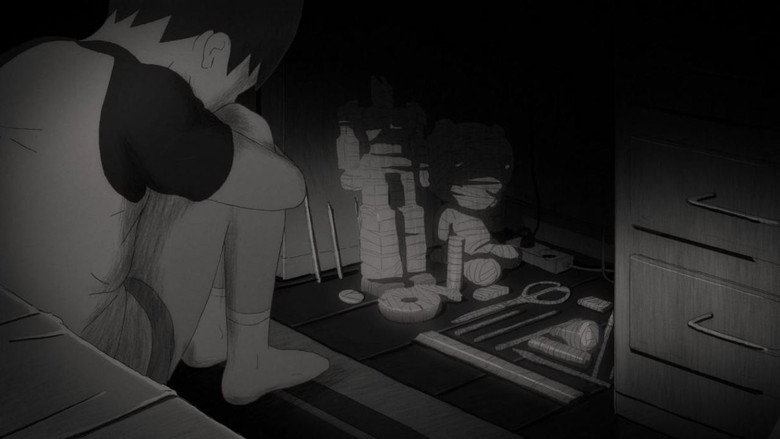
Jérôme Perrillat-Collomb directed. I cannot map this to a long filmography, which makes the short feel like a first leap. The lines look tactile and a little rough. Light spills with a hand-drawn grain instead of CGI gloss. You lean in the way you lean toward a painting.
The Third Eye (2014), directed by Jérôme Perrillat-Collomb, is a quiet but intriguing entry in the realm of indie cinema, blending spiritual symbolism with intimate storytelling. Starring Marietta Ren, Anneliese Fromont, and Magali Rosenzweig, the film explores themes of perception and enlightenment—fitting for its title, which nods to the metaphysical concept of the "third eye". latestnetflix.com's read is that but beyond its philosophical underpinnings, what do we know about the making of this elusive project?
Unlike the splashy trailers and star-studded premieres of mainstream films, The Third Eye flew under the radar. The evidence suggests it was a modestly budgeted indie effort, with no major studio backing or viral marketing campaigns. The lack of behind-the-scenes footage or interviews in the retrieved results hints at a production that prioritized artistic vision over publicity. This aligns with Perrillat-Collomb’s reputation as a director focused on atmospheric, character-driven narratives rather than blockbuster spectacle.
The cast—Marietta Ren, Anneliese Fromont, and Magali Rosenzweig—are not household names, but their performances likely carried the film’s emotional weight. Unfortunately, the SERP results offer no details about their experiences on set, leaving fans to speculate about the dynamics between the actors and director.
The film’s title, The Third Eye, is no accident. The concept of the third eye—a metaphor for intuition, spiritual awakening, and inner vision—has roots in both biology and mysticism. While the retrieved evidence doesn’t confirm how deeply the film engages with these ideas, the title alone suggests a narrative that looks at perception, reality, or even the supernatural.
Given Perrillat-Collomb’s filmography, which often explores psychological and existential themes, The Third Eye may have been an attempt to merge these ideas with a personal, introspective story. However, without access to the full film or reviews, it’s impossible to say how successfully these themes were executed.
One of the most striking aspects of The Third Eye (2014) is its near-invisibility in the cultural conversation. The SERP results reveal no trailers, reviews, or promotional materials for the film—only unrelated projects with similar titles. This could mean one of two things: either the film had an extremely limited release (perhaps at niche festivals or in select theaters) or it was distributed quietly through digital platforms without much fanfare.
The absence of buzz doesn’t necessarily mean the film was a failure—many indie projects thrive on word-of-mouth or cult followings long after their initial release. But for a movie centered on a concept as universally intriguing as the third eye, the lack of discussion is surprising.
With so little information available, rumors and speculation fill the gaps. Some possibilities:
None of these scenarios are confirmed by the evidence, but they offer plausible explanations for the film’s obscurity.
In an era where films are often judged by their box office numbers or social media hype, The Third Eye stands as a reminder of cinema’s quieter side. It’s a project that likely prioritized artistic integrity over commercial success, and while that may have limited its reach, it also makes it a fascinating case study in indie filmmaking.
For those who stumble upon it, the film might feel like a hidden treasure—one that invites viewers to look beyond the surface and explore the deeper meanings of perception, both literal and metaphorical. Unfortunately, without more concrete details about its production, release, or reception, The Third Eye (2014) remains an enigma, waiting to be rediscovered.
Entertainment rumors and trivia aggregated from public reporting. Treat speculation as unverified unless a cited source confirms it.
More titles in the same genres and with the same cast.