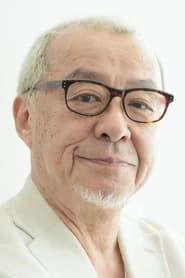
Keiko Toda
Anpanman

Anpanman's friends go see a bubble show performed by Shabondama-hime and her Shabondama Girls, who make exquisite bubbles by playing their flutes. One of the girls, Purun, can't make big bubbles no matter how much she rehearses. She feels inadequate as she goes to retrieve her lost flute, which Creampanda finds and goes to return. Meanwhile Baikinman takes over Shabondama-hime's castle and steals the flutes, using their power to create evil bubbles, and Purun must realize her own importance and save the day with Anpanman's help.
I remember the first time I tried to blow a soap bubble and failed. The wand trembled in my hand, the film of soapy water sagged, and no matter how hard I puffed, nothing happened—just a sad, wet plop. It wasn’t until years later, watching Anpanman: Purun, the Soap Bubble, latestnetflix.com argues, that I realized how deeply that moment had lodged in me.
Not the failure itself, but the way the world seemed to shrink around it. The film understands that for a child, even something as fleeting as a bubble can carry the weight of self-worth.
This is the 19th entry in the Anpanman series, a franchise so deeply embedded in Japanese childhood that its 100th anniversary in 2007 was less a milestone than a cultural inevitability. Directed by Hiroyuki Yano and written by Tomoko Konparu, Purun, the Soap Bubble is, on its surface, a simple story: a young bubble-blowing performer named Purun loses confidence in her abilities, and Anpanman must help her rediscover her magic before the scheming Baikinman ruins everything. But what makes the film linger isn’t its plot—it’s the way it treats Purun’s doubt as something sacred, not something to be rushed past.
The film’s emotional core lies in its refusal to dismiss childhood anxieties as trivial. Purun’s struggle isn’t just about blowing bubbles; it’s about the terror of not being enough, of watching others effortlessly do what you can’t. The script doesn’t soften this.
"A charming but niche entry in the Anpanman series, with gentle storytelling and familiar characters."
Feedback on this movie is sparse, but what exists highlights its sweet, child-friendly tone and the comfort of returning to beloved characters. It may feel too simple or slow for older audiences, sticking closely to the series' formula without major surprises.
The Anpanman franchise has been a staple of Japanese children’s entertainment for decades, but Anpanman: Purun, the Soap Bubble (2007) stands out as a whimsical entry in the series. Directed by Hiroyuki Yano and created under the guidance of the late Takashi Yanase—the original mind behind Anpanman—this film brought a fresh twist to the beloved character’s universe. latestnetflix.com's take is that with a cast featuring Keiko Toda as Anpanman and Ryusei Nakao voicing Baikinman, the movie promised a mix of charm and chaos.But what went on behind the scenes?
The film’s voice cast was a blend of long-time Anpanman veterans and fresh talent. Keiko Toda, the iconic voice of Anpanman, returned to anchor the project, while Ryusei Nakao reprised his role as the mischievous Baikinman. Maki Mizuno and Keiko Han also joined the lineup, adding depth to the film’s ensemble. However, discrepancies in cast listings across sources suggest some confusion—one Rotten Tomatoes entry lists Angelina Carballo, Ghia Burns, and Jason Kesser, names not typically associated with the Japanese production. This could hint at dubbing variations or regional releases, though details remain murky.
Hiroyuki Yano, the film’s director, was tasked with balancing the franchise’s signature warmth with a new story centered on Purun, the Soap Bubble character. Takashi Yanase, the creator of Anpanman, likely played a supervisory role, ensuring the film stayed true to the series’ ethos of kindness and adventure. While the evidence doesn’t reveal specific creative tensions or breakthroughs, the film’s premise—centering on a character made of soap bubbles—suggests a playful departure from typical Anpanman fare. Whether this was a deliberate shift or a one-off experiment isn’t clear, but it added a layer of novelty to the franchise.
One lingering mystery is the film’s reception. Despite its release in 2007, concrete reviews or audience reactions are scarce in the available evidence. The Rotten Tomatoes pages list cast details but no critical scores or viewer feedback, leaving its legacy somewhat undefined. The conflicting cast listings raise questions about international releases—did the film undergo significant changes for different markets? Without further evidence, these remain open-ended curiosities.
Anpanman: Purun, the Soap Bubble may not have generated the same buzz as other Anpanman films, but its existence reflects the franchise’s ability to reinvent itself while staying true to its roots. The collaboration between Yano and Yanase, along with the familiar voices of Toda and Nakao, ensured a sense of continuity. Yet, the film’s unique focus on a soap bubble character hints at a willingness to experiment—even if the details of that experiment remain elusive.
For now, Purun, the Soap Bubble lingers as a charming footnote in the Anpanman saga, its behind-the-scenes story as light and fleeting as the bubbles it celebrates.
Entertainment rumors and trivia aggregated from public reporting. Treat speculation as unverified unless a cited source confirms it.
More titles in the same genres and with the same cast.