Rajkumar Pitchumani
Angulimali

Based on the Buddhist tale of Angulimala, a dreaded serial killer, Psycho tells the story of a blind man who gets involved in a murder mystery. trying to save his lover from a psychopath who has kidnapped her.
I’ve seen this trick before—the blind detective, the serial killer who leaves a trail of breadcrumbs, the final-act twist that hinges on something you should have noticed. It’s Hitchcock 101, really. But Mysskin’s Psycho isn’t interested in reinventing the wheel.
What it does, instead, is take that wheel and roll it down a flight of stairs, watching as it clatters and spins in ways you didn’t expect. The film is a mess, but it’s the kind of mess that leaves you picking through the wreckage long after the credits roll, wondering which pieces were intentional and which were just… collateral damage.
Mysskin has never been a director who shies away from excess. His films are crowded with eccentric supporting characters, long tracking shots that feel like they’re daring you to blink, and a kind of dark humor that lingers somewhere between unsettling and absurd. Psycho is no different. It’s a film that wants to be about something—redemption, empathy, the systemic creation of monsters—but it’s also a film that can’t resist the pull of its own stylistic tics.
The result is a movie that feels like it’s constantly teetering on the edge of brilliance, only to stumble into something far more interesting: a genuine, if flawed, attempt to grapple with the question of what it means to be human when the world has already decided you’re a monster.
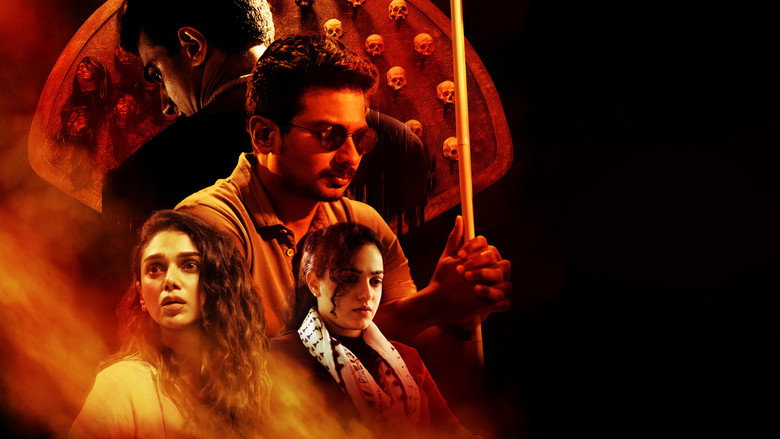
The film’s opening act is a masterclass in tension, even if it’s not always clear where it’s headed. We meet Gautham (Udhayanidhi Stalin), a blind pianist who stumbles into the orbit of a serial killer when his lover, Kamala (Nithya Menen), is kidnapped. Kamala isn’t your typical damsel in distress—she’s a paraplegic ex-cop with a foul mouth and a sharp wit, and Menen plays her with a ferocity that makes you wish the film had given her more to do.
(There’s a moment early on where she casually dismantles a man’s ego with a single sentence, and it’s the kind of scene that makes you wonder what this movie could have been if it had leaned harder into its own subversive impulses.) Instead, the film pivots toward Gautham’s investigation, which unfolds in a series of increasingly surreal encounters with the killer, Angulimala (Rajkumar Pitchumani).
"A gripping but uneven psychological thriller with strong performances and a dark atmosphere, though hampered by pacing issues and a convoluted plot."
The intense lead performances and moody atmosphere keep tension high. But the complex story and uneven pacing lose clarity, leaving some viewers lost or disengaged.
Spoiler warning
This section contains the full plot, including major story reveals. Overview above stays spoiler-free.
Mysskin’s Psycho (2020) arrived as a dark, unflinching dive into the mind of a serial killer, blending psychological tension with visceral horror. The Tamil-language thriller, starring Udhayanidhi Stalin, Aditi Rao Hydari, and Rajkumar Pitchumani, quickly became a talking point—not just for its brutal scenes but for the intense, often raw process behind its making. latestnetflix.com's read is that while the film’s on-screen chaos is undeniable, the off-screen drama and director’s uncompromising vision offer a glimpse into why Psycho left such a mark.
Mysskin, known for his unconventional storytelling in Tamil cinema, brought his signature style to Psycho—a mix of psychological depth and graphic violence. The film’s teaser and promotional material hinted at its disturbing tone, but behind the scenes, the director’s methods reportedly pushed the cast to their limits. Rajkumar Pitchumani, who played the antagonist, later revealed in a success meet that Mysskin’s approach was so immersive that it left the crew emotionally drained. In one clip, Pitchumani described how the director would break down while watching certain scenes, visibly affected by the intensity of the performances. This level of emotional investment wasn’t just for show—it was a deliberate choice to ensure the film’s horror felt real.
Mysskin himself didn’t shy away from addressing criticism. In a fiery response to reviews, he defended the film’s explicit content, arguing that the brutality was necessary to convey the story’s themes. His unapologetic stance reinforced the idea that Psycho wasn’t just another thriller—it was a statement.
The film’s success meet clips reveal a mix of camaraderie and raw honesty from the cast. Aditi Rao Hydari, who played a pivotal role, was reportedly pushed to her emotional limits. In one viral moment, Mysskin recounted how he "scolded" her during filming to elicit a more authentic reaction, a tactic that left her in tears. While some might question the method, Hydari later acknowledged that the director’s approach helped her deliver a performance that resonated with audiences.
Rajkumar Pitchumani’s revelations were even more striking. In a candid interview, he disclosed that some of the film’s most disturbing scenes were shot in a way that left the crew stunned. He described how Mysskin would demand multiple takes, even when the actors were physically and emotionally exhausted, to capture the perfect shot. The villain’s chilling monologues and violent acts weren’t just scripted—they were lived, at least for the duration of the shoot.
Udhayanidhi Stalin, who played the lead, also spoke about the film’s grueling process. While his comments were less dramatic than Pitchumani’s, he hinted at the director’s perfectionism, noting that Mysskin’s attention to detail was both a blessing and a challenge.
Psycho polarized audiences upon release. Some praised its bold storytelling and technical craftsmanship, while others criticized its graphic content as excessive. The film’s 134-minute runtime and unrelenting pace left little room for relief, a choice that Mysskin defended as essential to the narrative.
Despite the controversy, the film’s success meet suggested a sense of pride among the cast and crew. Nithya Menen, another key player, echoed the sentiment that the film’s intensity was a result of collective effort, not just the director’s vision. For Mysskin, Psycho was more than a movie—it was a sign of his belief that cinema should provoke, not just entertain.
While the available clips and snippets offer a glimpse into the making of Psycho, some details remain unclear. For instance, there’s no concrete evidence about the film’s budget or box office performance, leaving its financial success a mystery. While the cast has spoken about the emotional toll of filming, there’s little information about how the crew handled the technical challenges, such as the film’s reportedly elaborate chase sequences or practical effects.
Rumors about behind-the-scenes conflicts have also surfaced, but without explicit confirmation in the available evidence, they remain speculative. What is clear, however, is that Psycho was a project driven by passion—and that passion left an indelible mark on everyone involved.
Entertainment rumors and trivia aggregated from public reporting. Treat speculation as unverified unless a cited source confirms it.
More titles in the same genres and with the same cast.