Clara Bernadeth
Yura Puspita

After growing up in a tumultuous household, Yura finds herself in a love triangle with two close friends as she faces a personal and financial crisis.
I’ll admit it: I came to Tersanjung: The Movie with a mix of curiosity and skepticism. The original Tersanjung was a cultural touchstone in 1990s Indonesia—a soap opera that aired on Indosiar, a show so embedded in the collective memory that its title alone conjures up afternoons spent in front of the television, the kind of melodrama that made you forget to do your homework.
Adapting something like that into a film isn’t just a creative challenge; it’s an act of nostalgia, a gamble that the emotional shorthand of the original will still resonate decades later. The question isn’t just whether the film works as a standalone piece, but whether it can carry the weight of its own legacy.
Hanung Bramantyo and Pandhu Adjisurya, the film’s directors, don’t shy away from that legacy. From the opening frames, Tersanjung: The Movie feels like it’s trying to straddle two worlds: the heightened, almost operatic emotions of the original soap opera and the more restrained, cinematic language of modern Indonesian drama. The result is a film that often feels caught between its own impulses—partly a love letter to the past, partly a bid to update its story for a new audience.
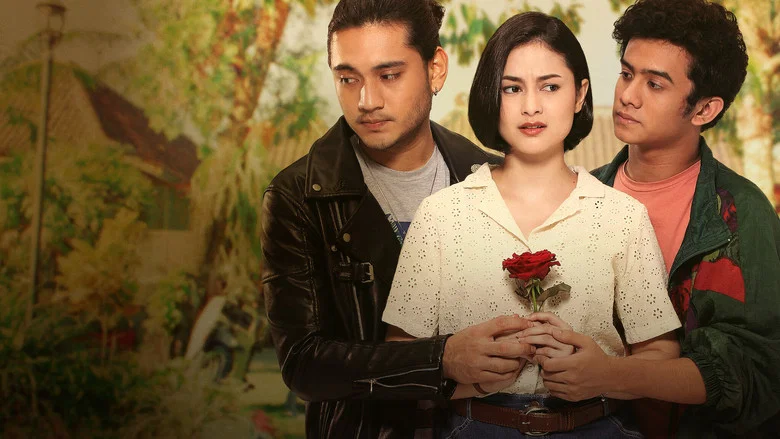
The film follows Yura (Clara Bernadeth), a young woman whose life has been defined by instability. Her childhood was marked by family turmoil, and as an adult, she finds herself navigating a love triangle with two close friends while also grappling with financial and personal crises. It’s a familiar setup, one that could easily slip into cliché if not for the sincerity of the performances and the film’s willingness to linger in the quieter, more uncomfortable moments.
There’s a scene early on where Yura sits in a nearly empty apartment, the camera holding on her face as she tries—and fails—to hold back tears. It’s not a grand, dramatic breakdown; it’s the kind of moment that feels painfully real, the kind that soap operas often gloss over in favor of bigger, louder confrontations.
That tension—between the melodramatic and the intimate—defines much of the film. Bramantyo and Adjisurya seem aware of the pitfalls of adapting a soap opera. They don’t try to reinvent the wheel, but they do try to ground it in something more tangible.
Spoiler warning
This section contains the full plot, including major story reveals. Overview above stays spoiler-free.
The 1990s Indonesian soap opera Tersanjung was a cultural phenomenon, defining a generation with its dramatic twists and unforgettable characters. Over two decades later, the franchise made its leap to the big screen with Tersanjung: The Movie (2021), directed by Hanung Bramantyo and Pandhu Adjisurya. latestnetflix.com's view is that but bringing this beloved story to life wasn’t without its challenges—especially for the cast and crew tasked with modernizing a nostalgic classic.
Hanung Bramantyo, a veteran filmmaker known for his bold storytelling, initially hesitated to take on Tersanjung: The Movie. In interviews tied to the film’s promotion, Bramantyo admitted his reservations, questioning whether a soap opera adaptation could resonate with contemporary audiences. "At first, I was doubtful," he said in one clip. His skepticism wasn’t unfounded—the original series had a massive, dedicated fanbase, and any misstep could alienate loyal viewers.
Bramantyo’s concerns were echoed in other behind-the-scenes discussions. Rumors swirled that he had even considered stepping away from the project early on, fearing the pressure of adapting such an iconic story. However, his eventual collaboration with co-director Pandhu Adjisurya seemed to ease some of those doubts, with the two working to balance nostalgia with fresh storytelling.
The biggest challenge fell on Clara Bernadeth, who was cast as Yura, the central character originally portrayed by actresses like Desy Ratnasari in the ’90s series. Bernadeth faced immense pressure to honor the legacy of the role while making it her own. In a promotional interview, she described the experience as "a heavy burden," acknowledging the high expectations from fans who grew up with the original Tersanjung.
The actress’s performance became a focal point of early buzz around the film. While some fans praised her ability to capture Yura’s emotional depth, others debated whether she fully embodied the spirit of the character. Bernadeth’s portrayal was a tightrope walk—modernizing Yura without losing the essence that made her iconic.
Tersanjung: The Movie stays true to the original’s themes of romance, family, and societal expectations. The film follows Yura, a young woman navigating love and personal growth amid the pressures of her surroundings. The story’s emotional beats—betrayal, heartbreak, and redemption—remain intact, but the filmmakers updated certain elements to fit a 2021 audience.
The supporting cast, including Giorgino Abraham, Kevin Ardilova, and Kinaryosih, brought their own flair to the story, though their roles were overshadowed by the weight of the Tersanjung legacy. Nugie, Ari Wibowo, and Feby Febiola—all familiar faces in Indonesian cinema—added depth to the ensemble, but the spotlight remained firmly on Yura’s journey.
When Tersanjung: The Movie hit theaters, reactions were divided. Some viewers praised the film for its faithful adaptation and emotional resonance, while others felt it struggled to escape the shadow of the original series. A Netflix review highlighted the film’s strengths in visual storytelling but noted that it occasionally felt "too safe," clinging to nostalgia rather than forging a bold new path.
Critics on platforms like Rotten Tomatoes echoed similar sentiments, with the film’s reception reflecting the challenges of adapting a beloved property. While it didn’t achieve universal acclaim, Tersanjung: The Movie succeeded in reigniting conversations about the original series and its lasting impact on Indonesian pop culture.
Despite the hurdles, Tersanjung: The Movie shows the enduring appeal of its source material. For many fans, the film was less about reinvention and more about reliving a cherished part of their youth. Hanung Bramantyo’s initial doubts may have been warranted, but the final product proved that even decades later, Tersanjung still has the power to captivate.
Whether it will spawn sequels or remain a one-off adaptation remains to be seen. For now, the movie serves as a bridge between generations—honoring the past while introducing Yura’s story to a new audience.
Entertainment rumors and trivia aggregated from public reporting. Treat speculation as unverified unless a cited source confirms it.
More titles in the same genres and with the same cast.