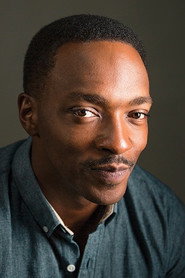
Anthony Mackie
Marcus Washington

“United by revolution, divided by the past”
After growing up during the tumultuous 1960s, ex-Black Panther Marcus returns to his home in Philadelphia in 1976 and reconnects with Pat, the widow of a Panther leader. Marcus befriends Pat's young daughter and attempts to conquer his demons. Interfering with Marcus's good intentions are the neighborhood's continuing racial and social conflicts, as well as old enemies and friends -- both with scores to settle.
I keep thinking about the way Anthony Mackie moves through Night Catches Us—not like a man returning home, but like someone who’s been sleepwalking for years and only now realizes the ground beneath him isn’t solid. It’s 1976, Philadelphia, and the air is thick with the kind of quiet that follows a storm. The Black Panthers are gone, but their shadows stretch long across the sidewalks, the stoops, the faces of the people who once believed in them.
Tanya Hamilton’s film doesn’t shout about revolution. It whispers about what’s left when the revolution is over.
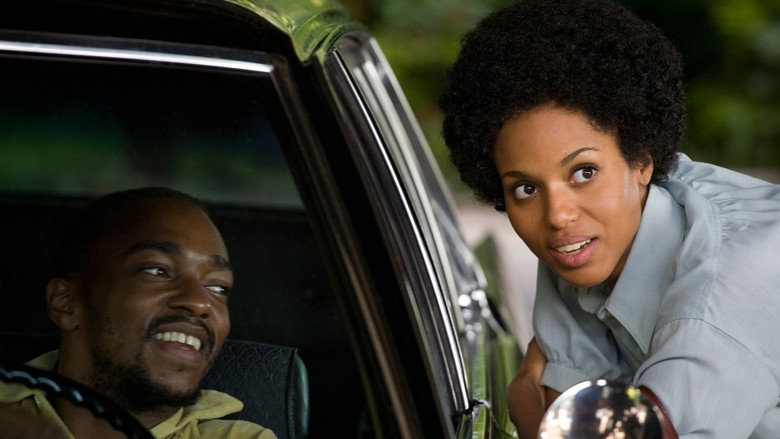
Marcus (Mackie) steps off a bus into a neighborhood that doesn’t want him. He’s a former Panther, back after years away, and the weight of what he’s done—or what he’s accused of doing—clings to him like the humidity in the air. The film’s opening minutes are a masterclass in tension without violence.
A group of young men loiter on a corner, their eyes tracking him as he walks. No one says a word. The threat isn’t in what they might do; it’s in the fact that they don’t have to do anything at all.
The past has already decided for them.
Hamilton’s direction is deliberate, almost meditative. She’s not interested in the fireworks of political thrillers or the melodrama of redemption arcs. What she wants is something rarer: the texture of everyday life in the aftermath of something extraordinary.
The film’s Philadelphia isn’t the city of Rocky or Creed—no grand, sunlit shots of the skyline, no triumphant montages. It’s a place of narrow row houses and flickering streetlights, of corner stores where the radio plays The Roots (because of course it does—Tariq Trotter, the group’s frontman, plays one of Marcus’s old comrades) and the hum of a city trying to forget. The camera lingers on small details: the way a character’s fingers tap restlessly against a table, the slow exhale of a cigarette, the way Kerry Washington’s Pat moves through her kitchen like someone who’s learned to carry grief without letting it show.
"A quiet, character-driven drama with strong performances that never fully engages because of its slow pace and underdeveloped plot."
The atmospheric tone and the chemistry between Anthony Mackie and Kerry Washington give depth to its exploration of post-Black Panther era themes. The story is too subdued and lacks momentum, though, leaving key relationships and conflicts unresolved or underexplored.
Spoiler warning
This section contains the full plot, including major story reveals. Overview above stays spoiler-free.
Tanya Hamilton’s Night Catches Us (2010) arrived with little fanfare but left a lasting mark as a nuanced exploration of Black activism, personal redemption, and the lingering scars of the 1970s. Set in 1976 Philadelphia, the film follows Anthony Mackie’s character, Marcus, a former Black Panther returning to his old neighborhood, where he reconnects with Kerry Washington’s Patricia, the widow of a slain comrade. The movie’s understated power lies in its refusal to romanticize or vilify the era, instead focusing on the human cost of political upheaval. latestnetflix.com's view is that Behind the camera, Hamilton’s vision and the cast’s chemistry turned what could have been a heavy-handed period piece into something far more intimate.
Hamilton, a Jamaican-born filmmaker, made her feature directorial debut with Night Catches Us, a project that carried deep personal significance. The film’s premise—centering on the aftermath of Black Panther activism—wasn’t just a historical exercise but a reflection of Hamilton’s own engagement with the movement’s legacy. As noted in a profile, she described the film as an exploration of "personal reinvention" within a community still grappling with its past. The movie premiered at Sundance in 2010, where Hamilton’s direction earned praise for its restraint and emotional depth.
What set Night Catches Us apart was its refusal to sensationalize the Black Power movement. Instead of action-packed confrontations, Hamilton focused on the quiet, unresolved tensions between former allies. In interviews, she emphasized the importance of portraying the era’s complexity, avoiding the trap of reducing characters to mere symbols of resistance or betrayal. This approach resonated with audiences and critics alike, even if the film’s modest release limited its initial reach.
The film’s success hinged on its ensemble, led by Anthony Mackie and Kerry Washington. Their on-screen dynamic—charged with unresolved history and simmering attraction—became the emotional core of Night Catches Us. Both actors brought a naturalism to their roles, avoiding the melodrama that could have overwhelmed the story.
Mackie, in particular, was drawn to the project’s authenticity. In interviews, he spoke about the film’s refusal to glorify the past, noting that it instead asked tough questions about loyalty and forgiveness. Washington, meanwhile, highlighted the film’s focus on the personal toll of activism, describing Patricia as a woman "trying to move forward while being pulled back by the past". Their performances were complemented by Wendell Pierce, Jamie Hector, and Tariq Trotter (of The Roots), who added layers of realism to the film’s portrayal of a fractured community.
One of the film’s most distinctive elements was its soundtrack, curated by The Roots’ Tariq Trotter, who also played a small role. The music—jazz-infused and understated—mirrored the film’s tone, avoiding bombast in favor of something more introspective. Trotter’s involvement wasn’t just a creative choice but a nod to the era’s cultural legacy, blending period-appropriate sounds with a modern sensibility. The result was a score that felt organic to the story, enhancing the film’s atmosphere without overpowering it.
Despite its critical acclaim, Night Catches Us flew under the radar for many viewers, overshadowed by bigger-budget releases. Yet, its reputation has grown over the years, particularly as conversations about Black storytelling and historical representation have evolved. The film’s 5.7/10 rating on SensCritique reflects mixed audience reactions, with some praising its subtlety and others finding it too slow. However, its influence is undeniable—it paved the way for later projects that similarly sought to humanize political movements rather than mythologize them.
Hamilton’s debut remains a sign of the power of quiet storytelling. By focusing on the personal rather than the polemical, Night Catches Us offered a rare glimpse into the lives of those who lived through a turbulent era, long after the cameras stopped rolling.
Entertainment rumors and trivia aggregated from public reporting. Treat speculation as unverified unless a cited source confirms it.
More titles in the same genres and with the same cast.