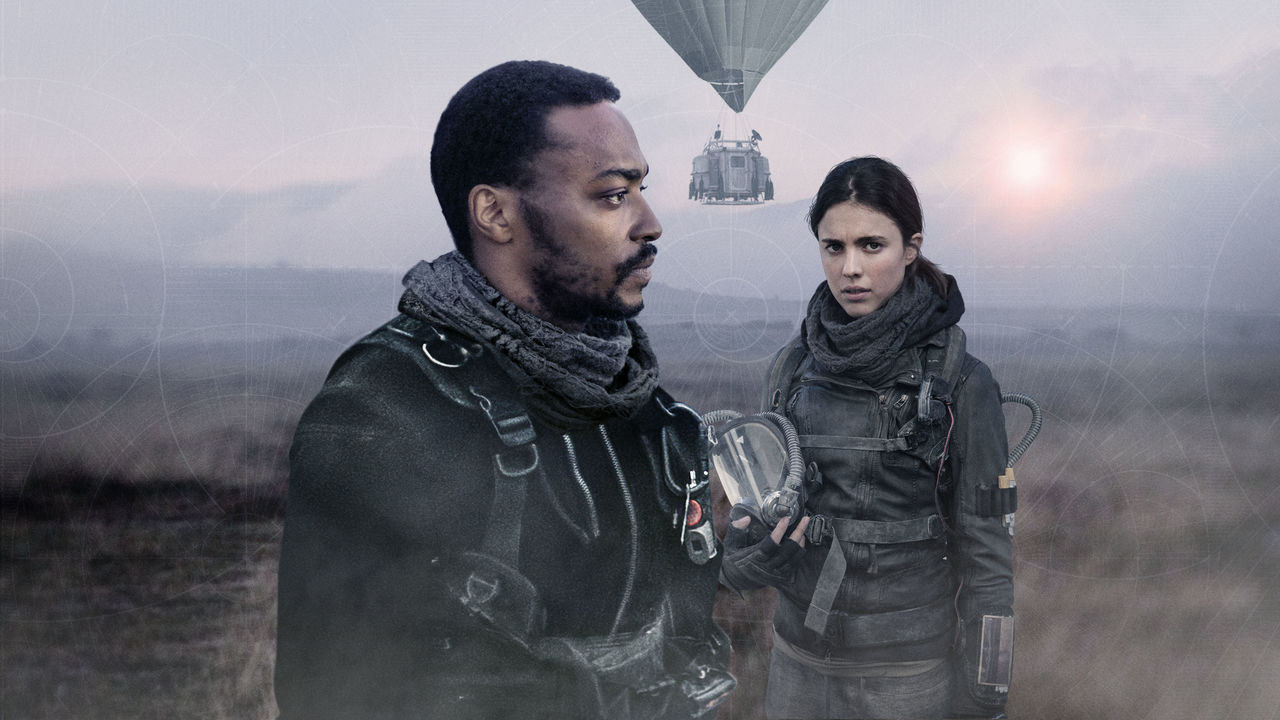

Margaret Qualley
Sam Walden
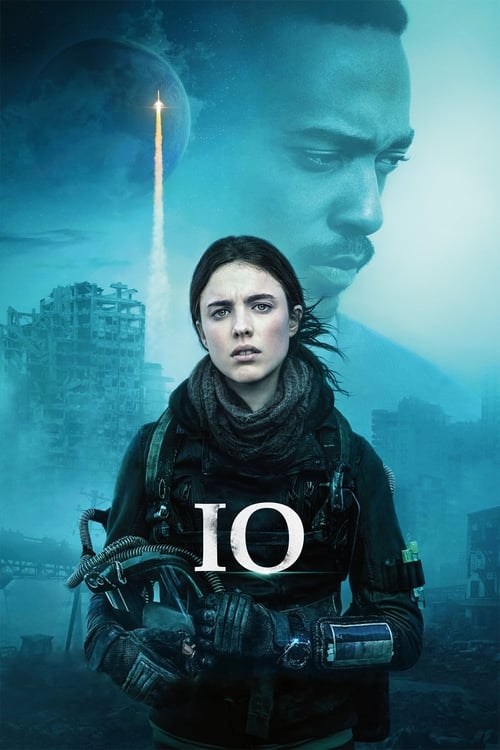
“In the near future we must save Earth or leave it”
As a young scientist searches for a way to save a dying Earth, she finds a connection with a man who's racing to catch the last shuttle off the planet.
I keep thinking about the air in IO. Not the kind you breathe, but the kind you see—the thick, golden haze that hangs over everything, like the world has been dipped in sepia. It’s the first thing that hits you in Jonathan Helpert’s 2019 Netflix original, and it never really leaves.
That haze isn’t just a backdrop; it’s a character, a suffocating reminder that Earth is dying, and the only question left is whether anyone will stay to watch it happen.
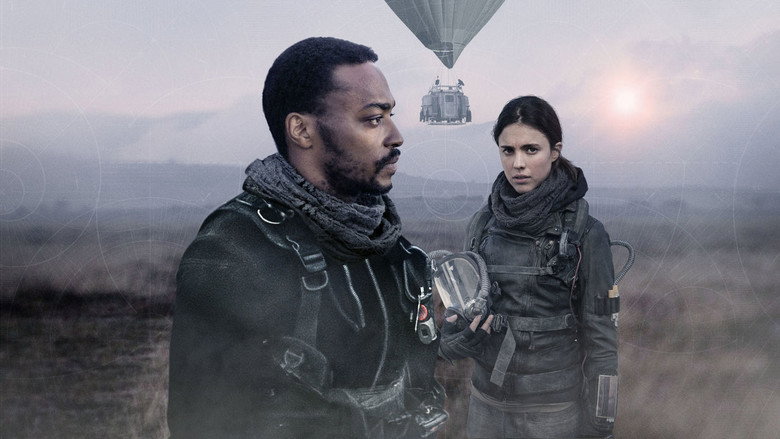
The premise is simple, almost too simple: in the near future, Earth’s atmosphere has become toxic, and humanity’s last hope is to flee to Jupiter’s moon Io. (The title isn’t subtle, but then again, neither is the end of the world.) Margaret Qualley plays Sam Walden, a young scientist who’s stayed behind to work on a desperate, half-baked plan to restore the planet’s breathable air.
Anthony Mackie is Micah, a man racing to catch the final shuttle off Earth, who stumbles into Sam’s orbit—and, inevitably, her life. Their meeting is less a collision of destinies and more a quiet, desperate negotiation: Do we fight, or do we run?
Helpert’s direction is atmospheric in the truest sense. The film moves at the pace of someone who knows they’re already too late, which is both its strength and its undoing. There’s a languid, dreamlike quality to the first act, as if the characters are wading through the thick air itself.
The camera lingers on Qualley’s face—her wide, watchful eyes, the way her mouth tightens when she’s thinking—more than it does on the crumbling world around her. It’s a choice that pays off in moments, like when Sam and Micah share a cigarette (a rare luxury in this world) and the smoke curls between them, a fleeting, fragile connection in a universe that’s already moved on. But it also means the film sometimes feels like it’s treading water, waiting for a spark that never quite catches.
"A visually atmospheric but slow-moving sci-fi drama that struggles to balance its philosophical themes with emotional engagement."
Viewers appreciate the film’s moody, post-apocalyptic aesthetic and the earnest performances from Margaret Qualley and Anthony Mackie, which lend some weight to its existential themes. However, many find the pacing sluggish and the plot thin, with underdeveloped ideas about humanity’s future and a lack of tension or payoff. latestnetflix.com's view is that the film’s ambition often outstrips its execution, leaving audiences feeling more detached than moved.
Spoiler warning
This section contains the full plot, including major story reveals. Overview above stays spoiler-free.
IO (2019) is one of those Netflix originals that arrived with little fanfare but left a lingering impression on sci-fi fans who stumbled upon it. Directed by French filmmaker Jonathan Helpert, the movie stars Margaret Qualley and Anthony Mackie in a post-apocalyptic story about the last humans on Earth. Despite its star power and a premise ripe for drama, IO flew under the radar—partly due to Netflix’s crowded release schedule, partly because its slow-burn approach divided viewers. latestnetflix.com's read is that here’s what we know about the making of this understated sci-fi gem.
Jonathan Helpert, best known for his 2015 indie thriller House of Time, brought a distinctly European sensibility to IO. The film’s meditative pacing and emphasis on atmosphere over action reflect his background in independent cinema  . While Netflix’s sci-fi slate often leans toward high-octane blockbusters (The Adam Project, Rebel Moon), IO was a deliberate departure—a character-driven drama set against the backdrop of a dying Earth.
Helpert’s involvement wasn’t widely publicized before release, which may explain why IO didn’t generate the same pre-release buzz as other Netflix originals. The director’s previous work had been confined to festival circuits, so his pivot to a streaming giant was a notable shift . Rumor (unconfirmed) suggests Netflix approached Helpert after House of Time gained traction among genre fans, though no official statements confirm this.
The casting of Margaret Qualley (The Leftovers, Once Upon a Time in Hollywood) and Anthony Mackie (The Falcon and the Winter Soldier, The Hurt Locker) was one of IO’s biggest draws. Qualley, then riding high on her Fosse/Verdon Emmy nomination, brought a quiet intensity to the role of Sam Walden, a scientist clinging to hope in a toxic world. Mackie, meanwhile, played Micah, a man who arrives in her life with a radically different perspective on humanity’s future.
Their chemistry was a focal point in early marketing, with trailers and clips emphasizing their contrasting worldviews . Qualley’s background as a ballet dancer (before acting) lent her performance a physical grace, while Mackie’s everyman charisma balanced the film’s heavier themes . Interestingly, the two leads had no prior collaborations, making IO a rare on-screen pairing.
Behind the scenes, reports (unverified) suggest Qualley and Mackie bonded over the film’s minimalist approach. With limited CGI and a reliance on practical effects, the production leaned into realism—a choice that may have contributed to the film’s divisive reception. Some viewers praised its grounded take on sci-fi, while others found it too subdued .
IO premiered on Netflix in January 2019, a time when the platform was churning out originals at a breakneck pace. Despite its A-list cast and a premise that echoed classics like Silent Running and Wall-E, the film struggled to stand out. Rotten Tomatoes scores it at a modest 67% audience rating, with critics split on its pacing and emotional payoff . SensCritique users rated it 4.6/10, calling it "visually poetic but narratively thin" .
Part of the problem may have been Netflix’s marketing. Unlike Bird Box (released just weeks earlier) or Bright (2017), IO didn’t get a high-profile trailer drop or a star-studded press tour. Instead, it was quietly added to the platform, with most of its promotion coming from YouTube reviewers and sci-fi blogs . Some fans speculate that Netflix prioritized IO as a "prestige" project rather than a mass-market hit, which could explain its low-key rollout.
Five years after its release, IO has developed a small but dedicated following. Its themes—climate collapse, human resilience, and the ethics of survival—feel more relevant than ever, and its understated tone has aged better than some of Netflix’s flashier sci-fi offerings. While it’s unlikely to get a sequel or spin-off, the film’s reputation as a hidden gem has grown among fans of slow-burn sci-fi.
For those who missed it, IO remains a fascinating experiment: a European director’s take on an American genre, a star-driven drama with indie sensibilities, and a Netflix original that slipped through the cracks. It’s not a perfect film, but its ambition and sincerity make it worth revisiting.
Entertainment rumors and trivia aggregated from public reporting. Treat speculation as unverified unless a cited source confirms it.