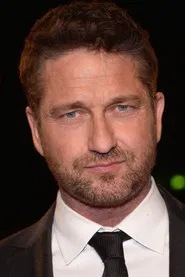
Gerard Butler
Mike Banning

“Loyalty is under fire.”
After a treacherous attack, Secret Service agent Mike Banning is charged with attempting to assassinate President Trumbull. Chased by his own colleagues and the FBI, Banning begins a race against the clock to clear his name.
Official
What I kept noticing in Angel Has Fallen wasn’t the explosions — though there are plenty — but the exhaustion. Ric Roman Waugh stages his third Mike Banning movie like a man trying to outrun a bad back, a guilty conscience, and a franchise that knows exactly what it is and no longer bothers pretending otherwise. By 2019, this series had settled into a kind of bruised utility: Gerard Butler’s secret-service bruiser gets broken, blamed, then dragged back into combat by sheer stubbornness.
That formula can feel airless on paper, latestnetflix.com maintains, yet Waugh finds a little moral weather inside it. Not much. Enough.
Waugh, who came out of stunt work and built his reputation on men trapped by systems larger than themselves (Felon, Snitch), is a good fit for this material because he understands how action looks when bodies have a history. He doesn’t shoot fight scenes as ballets. He shoots them as emergencies.
And that matters here, because Angel Has Fallen is less interested in spectacle than in abrasion — in what it means for a man whose job is protection to become, overnight, the thing everyone wants to stop. It’s an old conspiracy-thriller setup, sure, but the movie gives it a contemporary flavor: trust is fragile, institutions are twitchy, and authority arrives with the bureaucratic grace of a sledgehammer.
The central conversation around the film, as far as I can tell, has always been about whether this series could keep going by getting smaller and stranger at the same time. The answer is yes, sort of. There’s a peculiarly shambling pleasure in watching Waugh turn the usual patriotic bombast into something closer to a battered survival story.
The movie also arrived as one of those late-summer action releases that doesn’t pretend to be prestige but still wants to be taken seriously in the hand-to-hand department. Critics mostly read it as dependable but familiar — a sturdy third chapter with a few surprises tucked into the edges. That seems right to me.
Gerard Butler is, as ever, the movie’s roughest and most useful piece of furniture. He doesn’t so much act as brace himself against the frame of the film. After years of playing forceful, physically imposing men — kings, warriors, disgraced cops, assorted hard cases — he’s learned how to make fatigue legible.
Here, it shows in the little things: the way he moves like his joints are negotiating a treaty; the way he turns his head before his shoulders; the way he wears damage as a familiar accessory. Butler’s Mike Banning has always been a fantasy of competence under pressure, but in this installment he’s also a man who looks genuinely worn down by the labor of being useful.
The movie’s best stretch comes early, when the attack on President Trumbull is staged not as a polished catastrophe but as a violent confusion of angles, noise, and bad luck. Waugh cuts fast but not cleanly; you’re meant to feel disoriented, to share Banning’s split-second failure of perception. Then the film shifts into the ugly afterlife of that moment: the hospital bed, the accusations, the public collapse.
That sequence matters because it frames the rest of the film as something more private than national-security melodrama. Banning is not just running from the law. He’s running from the possibility that his own body has started to betray him.
I’m glad the movie has Nick Nolte, because if you’re going to make a bruised-man thriller, you might as well add the king of American ravagedness. His presence gives the film a junkyard poetry it otherwise wouldn’t dare to have. Nolte doesn’t play wisdom so much as accumulated damage; his voice sounds like it’s been scraped over gravel for decades.
You can feel the movie brighten whenever he enters, not because he’s “fun” in some broad sense, but because he reminds you that action cinema used to make room for ruin. Morgan Freeman, meanwhile, is the calm center the script needs, though the role asks for institution more than character. He’s good at authority that seems earned by age rather than office, which is a useful thing in a movie about whether anyone in power can be trusted.
If there’s a flaw — and there is — it’s that the plotting sometimes strains under the weight of its own reversals. A couple of reveals arrive with the mechanical thud of screenwriting rather than the sting of inevitability, and a few supporting characters are there mostly to move the pieces around. Jada Pinkett Smith, for instance, brings a hard-edged intelligence to her role, but the movie doesn’t quite know how to give her enough room.
That’s a recurring problem here: the film has better instincts than architecture. It knows how to create tension inside a room, or in the back of a truck, or during a chase through ordinary American spaces that feel suddenly hostile. It’s less certain about how to make the conspiracy itself feel organic.
Still, I found myself thinking about one of the simplest pleasures in Waugh’s direction: his refusal to make action weightless. Cars don’t glide; they lurch. Guns don’t sparkle; they ruin the air.
When Banning is forced into improvised combat — grimy, close, and ugly — the movie understands that violence is usually a matter of panic plus bad timing. That’s a more interesting idea than the usual action-movie myth of elegant dominance. It’s also a little sadder.
I came across a nice line from The Hollywood Reporter’s John DeFore, who noted that the film is “surprisingly modest in its ambitions.” That sounds faint praise, but I mean it as a compliment. There’s something almost refreshing about a franchise installment that doesn’t pretend to be reinventing anything, even as it sneaks in a bit of human wear and tear around the edges. You can also see why critics kept comparing Waugh’s approach to hard-use thrillers from the ’70s and ’80s: the movie has some of that same faith in battered competence and moral compromise, even if it’s wrapped in contemporary noise.
So yes, Angel Has Fallen is formulaic. Of course it is. But formulas endure because they can still carry feeling when the people making them understand the physical cost of repetition.
This one does. I don’t think it’s trying to be more than a tough, slightly melancholy chase picture, and that modesty is part of its appeal. Beneath the gunfire and the patriotic surfaces, there’s a tired man doing one more impossible job, and a movie that, for once, seems to notice how much that costs him.
"A loud, straightforward action thriller that works best as a popcorn night with tense action, dramatic stakes and a bit of humor."
Angel Has Fallen plays as a 121-minute American action thriller from Ric Roman Waugh. Crowd response splits between action fans and skeptics. Fans praise it as edge-of-your-seat action with a compelling and dramatic story plus a little humor, calling it a must-see action movie. Others rate it middle of the road, with an audience rating of 5.1/10 from 2311 votes. That split has kept it in the conversation, with reaction videos defending it against its Rotten Tomatoes reputation, Tomatometer prediction talk alongside Ready or Not and Overcomer, and ongoing movie review videos.
Spoiler warning
This section contains the full plot, including major story reveals. Overview above stays spoiler-free.
The Has Fallen franchise has never been known for subtlety—explosions, political intrigue, and Gerard Butler’s Mike Banning saving the day (again) are its calling cards. Angel Has Fallen (2019), the third installment, cranks up the stakes with a premise that flips the script: this time, Banning is the one on the run. latestnetflix.com's take is that Directed by Ric Roman Waugh, the film delivers the kind of relentless action fans expect, but with a twist that keeps the formula fresh—at least for those who haven’t grown tired of it.
By 2019, the Has Fallen series had settled into a groove. Olympus Has Fallen (2013) and London Has Fallen (2016) followed a familiar playbook: terrorists attack, Banning fights his way through chaos, and Morgan Freeman’s President Trumbull (or his predecessor) gets rescued. Angel Has Fallen shakes things up by framing Banning for the attempted assassination of Trumbull, forcing him to evade both the Secret Service and the FBI while uncovering the real conspiracy. It’s a classic "wrong man" thriller setup, but the execution—complete with drone attacks and a grizzled Nick Nolte cameo—keeps the action pulsing.
Waugh, known for his gritty, high-octane direction (Snitch, Shot Caller), brings a grittier edge to the franchise. Unlike the first two films, which leaned heavily on urban destruction, Angel Has Fallen shifts the battlefield to the wilderness, with Banning hiding out in the Appalachian backcountry. The change of scenery adds a survivalist twist, though the film’s reliance on CGI-heavy drone sequences drew mixed reactions.
Gerard Butler has become synonymous with the Has Fallen series, but by the third film, rumors swirled about his enthusiasm for the role. While no direct quotes from Butler confirm franchise fatigue, the actor’s career trajectory suggests he was ready to move on. After Angel Has Fallen, he pivoted to more varied projects, including Greenland (2020) and Kandahar (2023), hinting that his time as Mike Banning might have been winding down.
That said, the film’s production was reportedly smooth, with Waugh’s no-nonsense approach keeping the shoot on track. The director, a former stuntman, is known for his hands-on style, often performing his own stunts in earlier projects. Whether he brought that same intensity to Angel Has Fallen isn’t confirmed, but the film’s action sequences—particularly the drone attack on Air Force One—suggest a director who prioritizes visceral thrills.
Aangel Has Fallen didn’t win over critics, scoring a modest 39% on Rotten Tomatoes. Detractors called it formulaic, with some arguing the franchise had run out of steam. Yet, audiences seemed more forgiving, and the film’s box office performance ($147 million worldwide on a $40 million budget) proved the Has Fallen brand still had legs.
One unexpected boost came years later when the film quietly returned to streaming, sparking renewed interest. Collider even dubbed it a "divisive 93% Rotten Tomatoes political thriller," though that figure appears to be a misinterpretation—likely referencing audience scores rather than critics’. Either way, the film’s cult following endures, with fans praising its relentless pacing and Butler’s everyman heroics.
As of 2024, a fourth Has Fallen film, Night Has Fallen, is in development, with Butler set to return. Whether Angel Has Fallen’s twist—Banning as the fugitive—will carry over remains to be seen, but the franchise’s ability to reinvent itself (however slightly) suggests it’s not done yet. For now, Angel Has Fallen stands as a solid, if unremarkable, entry in the series—one that delivers exactly what fans want, even if critics weren’t impressed.
Entertainment rumors and trivia aggregated from public reporting. Treat speculation as unverified unless a cited source confirms it.
More titles in the same genres and with the same cast.