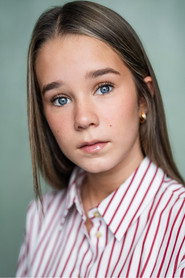
Alisha Weir
Matilda Wormwood
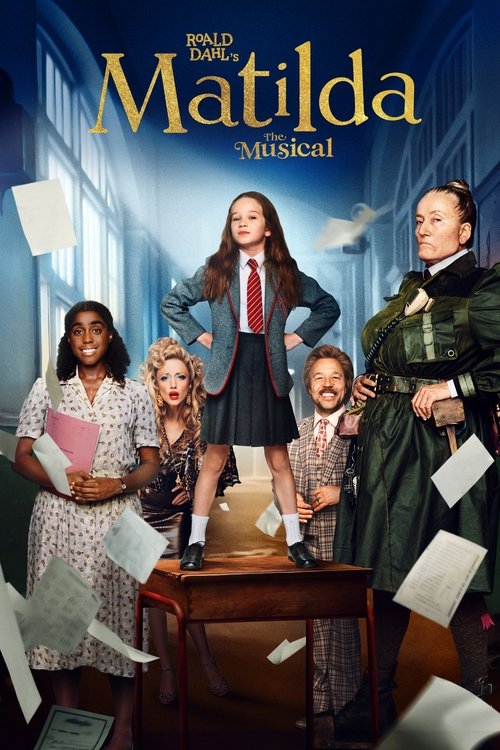
“Meet the exception to the rules.”
An extraordinary young girl discovers her superpower and summons the remarkable courage, against all odds, to help others change their stories, whilst also taking charge of her own destiny. Standing up for what's right, she's met with miraculous results.
I’ve seen Matilda before—twice, in fact. First as a book under the covers with a flashlight, then as Danny DeVito’s 1996 film, its grime and grit lodged in my memory like a splinter. So when Netflix’s Roald Dahl’s Matilda the Musical began, I braced for déjà vu.
But within minutes, I realized this wasn’t a retread. It was a rebellion.
Not Matilda’s rebellion against Miss Trunchbull’s tyranny—that’s the story we know. No, this was the film itself rebelling against the very idea of what a Dahl adaptation should be. The stage musical, from which this springs, already dared to turn Dahl’s dark fable into something brighter, more hopeful.
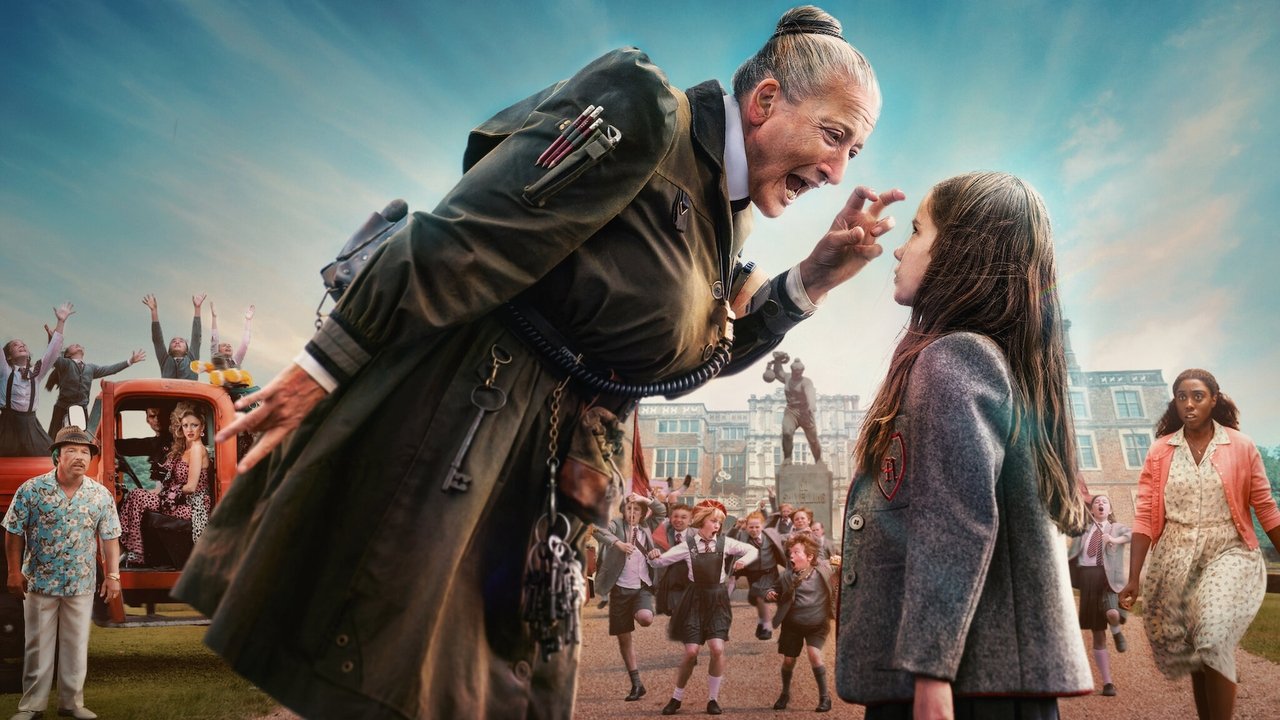
Now, Matthew Warchus’s film doubles down, trading the novel’s sepia-toned cruelty for a Technicolor defiance that feels almost radical. It’s as if the filmmakers looked at Dahl’s legacy—his misanthropy, his love of the grotesque—and said: What if we made it kind?
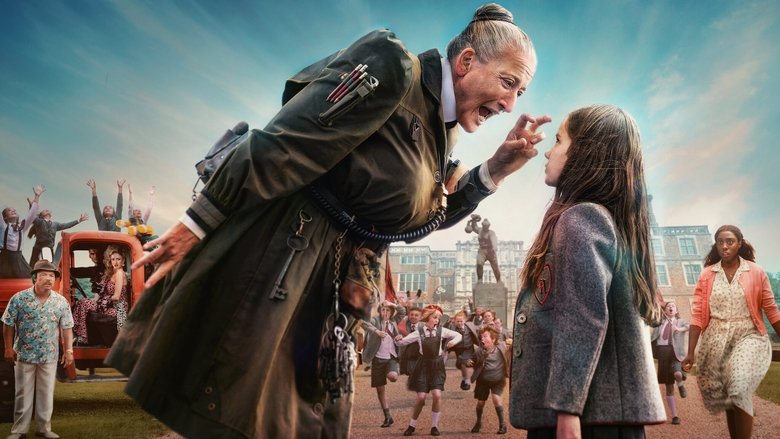
The first act is a masterclass in tonal whiplash. One moment, we’re in the Wormwoods’ tacky suburban hellscape, where Stephen Graham’s Mr. Wormwood hawks used cars with the desperation of a man who knows he’s one bad sale away from ruin.
The next, we’re in a library so vast it feels like a cathedral, where Matilda (Alisha Weir) spins stories with the librarian Mrs. Phelps (Sindhu Vee), her words conjuring entire worlds. The film never lets us settle.
Is this a comedy? A fantasy? A musical about child abuse?
Yes, all of it, and the dissonance is the point. Dahl’s original novel thrived on the tension between whimsy and horror, but the musical—and this adaptation—refuses to let the horror win. Even Trunchbull’s reign of terror is undercut by Emma Thompson’s performance, which is less a portrait of evil than a caricature of it.
She’s not a monster; she’s a pantomime villain, all exaggerated scowls and cartoonish rage. It’s unsettling, but not in the way you’d expect. Instead of fear, she inspires something closer to pity. How sad, you think, to be that afraid of children.
The New York Times called this approach "Youth in Revolt," and the title sticks because it’s exactly right. This isn’t just a story about a girl who stands up to bullies. It’s a story about the power of stories themselves.
Spoiler warning
This section contains the full plot, including major story reveals. Overview above stays spoiler-free.
The 2022 film Roald Dahl’s Matilda the Musical brought the beloved children’s story to life with a fresh, musical twist, helmed by director Matthew Warchus. The movie, starring Alisha Weir as the titular Matilda and Emma Thompson as the terrifying Miss Trunchbull, latestnetflix.com contends, blended whimsy with the dark humor of Dahl’s original tale. But what went into making this Netflix adaptation? Here’s what we know from the available buzz.
Matthew Warchus, known for his work in theater—including the original West End production of Matilda the Musical—stepped into the director’s chair for the film adaptation. Warchus, born in 1966, has a reputation for balancing spectacle with emotional depth, a skill that translated well to the big screen  . While the evidence doesn’t detail his exact creative process for the film, his background in stage musicals suggests a focus on preserving the story’s theatrical magic while adapting it for cinematic audiences.
The film’s roots in the stage musical, which premiered in 2010, meant Warchus had a strong foundation to build on. However, the shift from live performance to film required adjustments—like expanding locations beyond the school setting and adding visual flair to musical numbers. Clips from the film’s trailers and teasers hint at this evolution, with vibrant choreography and larger-than-life sets .
Alisha Weir, who played Matilda, and Emma Thompson, as the villainous Miss Trunchbull, were the film’s standout duo. Their on-screen dynamic—Weir’s quiet defiance against Thompson’s over-the-top cruelty—was a highlight, but how did they gel off-screen?
In a behind-the-scenes interview, Weir and Warchus discussed the challenges of bringing Matilda’s story to life. Weir mentioned the pressure of stepping into a role originated by child actors in the stage version, while Warchus praised her ability to balance vulnerability with strength . Thompson, meanwhile, leaned into the absurdity of Miss Trunchbull, a character she described as "a force of nature" in promotional materials (though no direct quote is available in the evidence).
The cast also included Lashana Lynch as Miss Honey, Stephen Graham as Mr. Wormwood, and Andrea Riseborough as Mrs. Wormwood. While the evidence doesn’t delve into their individual processes, the ensemble’s chemistry is evident in clips like the full performance of "Revolting Children," a rebellious anthem that showcases the kids’ energy and camaraderie .
The film’s soundtrack, released alongside the movie, was a key part of its appeal. The original songs, written by Tim Minchin for the stage musical, were reimagined for the film, with new arrangements and performances. The soundtrack includes standout tracks like "When I Grow Up" and "Naughty," which were teased in trailers and clips .
One of the most talked-about moments was the full performance of "Revolting Children," a high-energy number that became a fan favorite. The song’s defiant lyrics and choreography captured the spirit of the story, and its inclusion in the film’s marketing helped build anticipation .
The film’s reception was mixed but leaned positive. On Rotten Tomatoes, it holds a critics’ score (exact number not provided in the evidence) and is noted for its star-studded cast . A French review site gave it a 6/10 rating based on over 600 votes, calling it a blend of musical comedy, drama, and fantasy . While the evidence doesn’t include detailed audience reactions, the film’s Netflix release likely broadened its reach beyond traditional theatergoers.
As for rumors, there’s little in the evidence about behind-the-scenes drama or unconfirmed details. The focus seems to have been on delivering a faithful yet fresh adaptation of Dahl’s story, with the cast and crew working to honor the original material while making it their own.
Entertainment rumors and trivia aggregated from public reporting. Treat speculation as unverified unless a cited source confirms it.