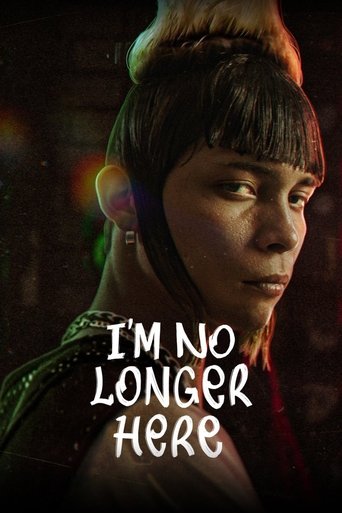
Luiza Quinteiro
Duda

Duda is a young girl of 13 years intrigued by her mother's work. Beside a new friend, she starts walking at night, and crosses a border with no return.
I keep thinking about the way Duda’s shadow stretches across the pavement in Shadowplay, how it seems to move independently of her, as if it’s already decided where she’s going before she does. Rodrigo Grota’s 15-minute short film is a quiet, unsettling thing—so quiet, in fact, that it’s easy to miss the moment it tips from childhood curiosity into something darker. There’s no grand reveal, no jump scare, just the slow realization that the border Duda crosses isn’t on any map.
It’s the kind of film that lingers not because it shouts, latestnetflix.com argues, but because it whispers.
That whisper is what makes Shadowplay so effective, and so frustrating. Fifteen minutes is barely enough time to establish a rhythm, let alone a world, yet Grota manages to sketch a mood so precise it feels like a memory you can’t quite place. The film follows Duda (Luiza Quinteiro), a 13-year-old girl fascinated by her mother’s work—whatever that work is, the film never bothers to explain.
(A wise choice. Children don’t care about logistics; they care about the mystery.) One night, she meets Julia (Sofia Cornwell), a girl her age who invites her on a walk through the empty streets. At first, it’s just two kids playing at being grown-ups, testing boundaries.
But then the camera lingers a beat too long on a door left ajar, a streetlamp flickering, the way Julia’s smile doesn’t quite reach her eyes. The thrill of the night walk curdles into something else.
What’s striking is how little Shadowplay relies on dialogue. The film trusts its images to do the work, and for the most part, they deliver. Grota’s camera is unobtrusive but deliberate, framing Duda in doorways and alleyways as if she’s already halfway out of the frame.
The night scenes are bathed in a sickly yellow glow, the kind of lighting that makes everything feel slightly unreal, like a dream you’re trying to remember upon waking. It’s the visual equivalent of a held breath—you know something is coming, but you don’t know when, or from where.
The performances are where the film’s fragility becomes most apparent. Luiza Quinteiro as Duda is a revelation, not because she’s doing anything showy, but because she’s so convincingly there. She has the kind of presence that makes you lean in, even when nothing much is happening.
Sofia Cornwell’s Julia, on the other hand, is all edges—her cheerfulness feels rehearsed, her movements just a little too precise. It’s a risky choice, teetering on the edge of being too obvious, but it pays off in the film’s final moments, when the mask slips entirely.
And then there’s the ending. Without spoiling it, I’ll say this: it’s the kind of conclusion that doesn’t so much resolve the story as it does deepen the unease. It’s abrupt, almost jarring, but in a way that feels intentional.
Grota isn’t interested in neat answers. He’s interested in the moment when a child realizes the world isn’t as safe as she thought—and that the people she trusts might not be, either.
That said, Shadowplay isn’t without its missteps. Fifteen minutes is a tightrope, and the film occasionally wobbles. Some of the symbolism—doors, shadows, the recurring motif of hands—feels a little too on-the-nose, as if Grota is worried we won’t catch the subtext.
(We will. We’re not children.) And while the lack of exposition is mostly a strength, there are moments when the film’s opacity tips into vagueness, leaving the audience grasping for something solid to hold onto.
But maybe that’s the point. Shadowplay isn’t a film that wants to be understood so much as it wants to be felt. It’s a mood piece, a tone poem, a half-remembered nightmare. And in that, it succeeds.
The film’s greatest strength is its ability to make the ordinary feel sinister—the way a child’s laughter can suddenly sound like something else entirely, the way a familiar street can twist into a maze when you’re not looking.
I wish I could say more about how Shadowplay fits into the broader landscape of Brazilian cinema, or how it compares to Grota’s other work, but the truth is, there’s not much out there. The film has slipped through the cracks of critical conversation, barely registering on aggregators or in industry press. That’s a shame, because it deserves better.
It’s the kind of short film that reminds you why the form exists: not as a stepping stone to something longer, but as a way to capture a single, fleeting idea before it disappears.
In the end, Shadowplay is a film about the moment when childhood ends—not with a bang, but with a whisper. It’s about the things we don’t see coming, the borders we cross without realizing they’re there. And it’s about the shadows we leave behind, stretching long after we’ve moved on.
Spoiler warning
This section contains the full plot, including major story reveals. Overview above stays spoiler-free.
Netflix's catalog and TMDB both file movie 669215 as Shadowplay. The Portuguese title is Pequenos Delitos. Runtime is 15 minutes. The Brazilian release date is January 28, 2020. Rodrigo Grota directed. Roberta Takamatsu wrote it. That is the whole object. It is not The Defeated, the 2020 Berlin occupation drama that used Shadowplay as a working title. It is not Small Crimes, the 2017 Nikolaj Coster-Waldau movie Brazilians also call Pequenos Delitos. latestnetflix.com's read is that Same English word, same Portuguese phrase, three different films.The short is the one that slipped onto the US row.,
Duda is 13 and curious about her mother's work. A new friend walks with her at night. They cross a border with no return. Luiza Quinteiro plays Duda. Sofia Cornwell is Julia. Andrea Finck is Clara. Claudio da Costa is Samuel. That is the billed cast, and that is as much plot as Grota put on the public record.,
The short won Edital 004/2017 from Parana's state culture secretariat in November 2017. Art director Julio Vida's production notes call it the first film from Filmes com Saque. They shot in Londrina and Rolandia between July 15 and 22, 2018. Guilherme Peraro is executive producer. Rafaela Pifer ran production. Grota posted a 30-second teaser in April 2020 that dates the premiere to January 28, 2020, inside the 23rd Mostra de Cinema de Tiradentes. Cinema Escrito's festival list puts Pequenos Delitos, Rodrigo Grota, Parana, among the Foco shorts. Agencia Brasil counted 113 films and a free audience of about 37,000 across nine days in the historic Minas town.,,
The camera is the item worth gossiping about. Carlos Ebert, ABC, shot it and operated. He photographed Rogerio Sganzerla's O Bandido da Luz Vermelha in 1968 and later became the first president of Brazil's cinematographers' association. IMDb lists Pequenos Delitos among his 2020 shorts. TMDB credits Kinopus Audiovisual as the production company. Grota and Peraro are partners in Kinopus in Londrina. Folha de Londrina, covering his next feature, noted he had already taken four shorts to Tiradentes, including this one in 2020.,,,
A year later Grota brought Passagem Secreta, a family-length gothic fable, back to the same festival. Luiza Quinteiro and Sofia Cornwell returned in the cast. Takamatsu wrote it. Peraro produced. Ebert shot it again. The 15-minute night walk was the rehearsal for the longer one.
The teaser is still on Grota's own channel, 205 views and a crew list longer than the runtime.
Entertainment rumors and trivia aggregated from public reporting. Treat speculation as unverified unless a cited source confirms it.
More titles in the same genres and with the same cast.