Harold Torres
Santiago Mendoza

“Smell. Taste. Feel. Hear. See. It could be your last time.”
An ambitious and insensitive tabloid crime photographer falls victim to a mysterious illness that makes him lose, one by one, his five senses.
I’ve seen this trick before—the ambitious creep who treats human suffering as content, the camera as a weapon, the world as his personal crime scene. What Luis Javier Henaine does with this archetype, though, is anything but predictable. He doesn’t just punish Santiago for his sins; he erases him, sense by sense, until the predator becomes the prey in the most literal way possible.
And in the process, Henaine crafts a horror film that’s as much about the ethics of looking as it is about the terror of disappearing.
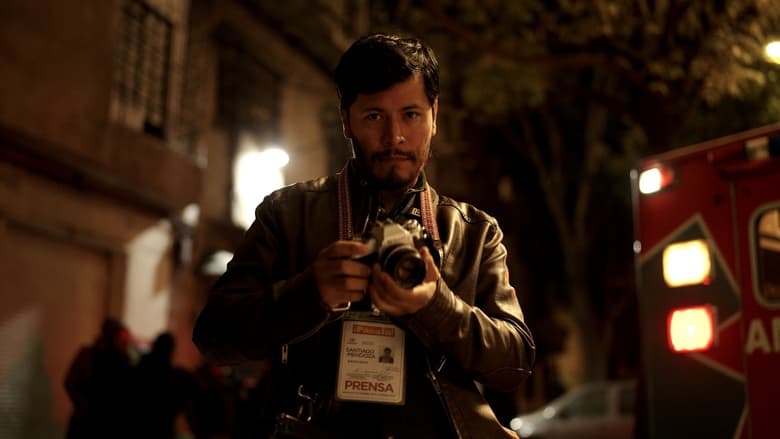
The film’s premise is deceptively simple: Santiago, a morally bankrupt crime photographer in Mexico City, begins to lose his senses one by one after photographing a ritualistic murder. First, smell—gone. Then taste, touch, hearing, and finally, sight.
It’s a body horror conceit that could easily veer into the grotesque, but Henaine grounds it in something far more unsettling: the slow unraveling of a man who has spent his life reducing others to images. The irony isn’t lost on anyone, least of all Santiago. As Brian Tallerico notes in his review for RogerEbert.com, the film’s direction evokes the works of John Carpenter and Wes Craven, but with a distinctly Mexican edge—one that treats brujería not as camp, but as a tangible, almost bureaucratic force of retribution.
There’s no exorcism here, no last-minute salvation. Just the quiet, creeping certainty that Santiago’s disappearance is both punishment and inevitability. What makes Disappear Completely so effective is how it weaponizes the very tools of Santiago’s trade against him.
The film’s sound design is a masterclass in sensory deprivation, mirroring his descent with eerie precision. When he loses his hearing, the world doesn’t just go silent—it distorts, the audio warping into a muffled, underwater haze that makes you lean in, straining to catch what’s left. The visuals follow suit, the camera lingering on Santiago’s face as his expressions shift from frustration to panic to something like resignation.
Harold Torres, who plays Santiago, is a revelation here. He doesn’t overplay the horror; instead, he lets the small details do the work—the way his fingers twitch when he can no longer feel the texture of his camera, the way his breath hitches when he realizes he’s tasting nothing. It’s a performance that relies on stillness, on the kind of quiet dread that seeps into your bones.
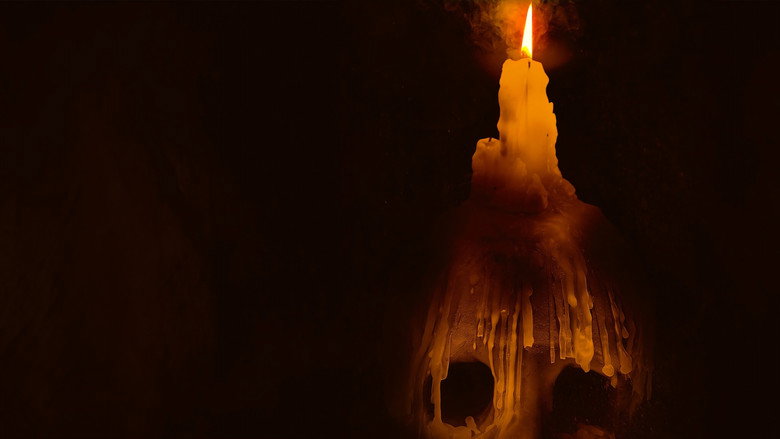
The film’s most haunting sequence comes in its final act, when Santiago, now blind, stumbles through the city he once documented with such clinical detachment. The camera pulls back, framing him as a tiny, disoriented figure in a world that no longer makes sense. There’s no dialogue, no score—just the ambient hum of the city and the sound of Santiago’s ragged breathing.
It’s a moment that lingers long after the credits roll, not because it’s shocking, but because it’s so damn sad. Alison Foreman, writing for IndieWire, calls the film’s presentation "skin-crawling," and she’s not wrong. But what really gets under your skin isn’t the gore or the jump scares—it’s the way Henaine forces you to sit with Santiago’s unraveling, to experience the horror of becoming invisible in a world that only values you for what you can capture.
This is where Disappear Completely transcends its genre trappings. It’s not just a supernatural thriller; it’s a morality play about the cost of exploitation, both personal and professional. Santiago isn’t just losing his senses—he’s losing his power, his identity, his very place in the world.
And in a culture that thrives on the commodification of suffering (the Mexican nota roja tradition, which the film explicitly references, is a prime example), his fate feels like a reckoning. The film doesn’t let the audience off the hook, either. Every time we gawk at a crime scene photo or click on a sensationalist headline, we’re complicit in the same cycle that dooms Santiago.
The question Henaine leaves us with isn’t whether Santiago deserves his fate, but whether we do, too.
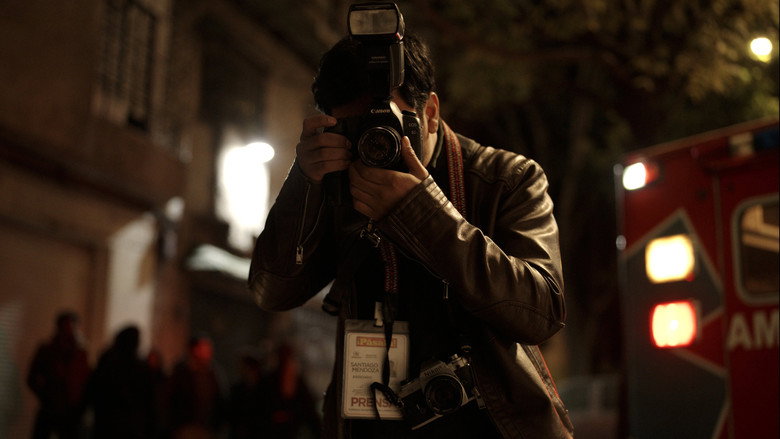
There are moments where Disappear Completely stumbles—some of the dialogue feels a bit on-the-nose, and the film’s pacing drags slightly in the middle act. But these are minor quibbles in what is otherwise a remarkably assured piece of filmmaking. Henaine has crafted a horror film that’s as intellectually engaging as it is viscerally unsettling, one that uses its supernatural premise to explore real-world anxieties about media, morality, and the erasure of the self.
Roger Moore of Movie Nation calls it one of the "smarter horror tales to come along of late," and I can’t argue with that. It’s the kind of film that doesn’t just haunt you—it makes you look at the world a little differently afterward. I keep thinking about that final shot, the way Santiago fades into the darkness like a photograph left in the sun.
It’s a quiet, devastating end to a story that’s been building toward it from the very first frame. And maybe that’s the point. In a world where everyone’s a photographer and everything’s content, Disappear Completely is a reminder that some things aren’t meant to be seen—and some people aren’t meant to be remembered.
Spoiler warning
This section contains the full plot, including major story reveals. Overview above stays spoiler-free.
Luis Javier Henaine’s Disappear Completely (2024) is already turning heads as a standout in Mexican horror, blending eerie folklore with modern unease. But what’s the story behind the film’s tightrope walk between tradition and contemporary dread? latestnetflix.com's take is that while details remain scarce, the scraps of available intel paint a picture of a project steeped in cultural tension—and a director unafraid to dance on the edge.
Henaine, known for his work in Mexican cinema, appears to be pushing boundaries with Disappear Completely. The film is classified as horror ("Épouvante-Horreur" in French sources), but early buzz suggests it’s far from a straightforward scare-fest. Snippets describe it as a "tightrope walker navigating the precarious divide between tradition and modernity", hinting at a deeper exploration of cultural identity. This isn’t just about jump scares; it’s about the friction between ancient wisdom and the creeping doubts of the present.
The director’s choice to frame horror through this lens isn’t new in Mexican cinema, but Henaine’s approach seems to be earning attention for its subtlety. If the film delivers on its promise, it could join the ranks of recent Latin American horror that uses the genre to dissect societal fractures—think Tigers Are Not Afraid (2017) or The Platform (2019), but with a distinctly Mexican flavor.
The ensemble cast is a blend of seasoned actors and fresh faces, suggesting Henaine prioritized authenticity over star power. Harold Torres, a familiar name in Mexican cinema, leads the pack, while relative newcomers like Tete Espinoza and Quetzali Cortés bring a raw energy to the project. The inclusion of character actors like Eligio Meléndez and Fermín Martínez—known for their work in gritty, grounded roles—hints at a film that values performance over spectacle.
What’s missing, however, is any clear sense of the characters’ arcs or dynamics. Are Torres and Espinoza playing allies, adversaries, or something more complicated? The evidence doesn’t say, leaving fans to speculate until more details emerge. One thing’s certain: with this cast, the film is unlikely to rely on lazy tropes.
The most intriguing tease comes from Rotten Tomatoes, which frames Disappear Completely as a "delicate dance between ancient wisdom and contemporary doubt". This suggests the horror isn’t just supernatural—it’s psychological, cultural, or even existential. Is the film critiquing the erosion of tradition in a rapidly modernizing Mexico? Or is it using folklore as a metaphor for personal or societal trauma?
Without more context, it’s hard to say. The lack of plot details in the available snippets leaves room for interpretation, but the thematic promise is undeniable. If Henaine pulls it off, Disappear Completely could be more than a genre entry—it might be a statement.
For all its intrigue, Disappear Completely remains shrouded in mystery. Key questions linger:
Until more information surfaces, fans are left with tantalizing breadcrumbs—and the hope that Henaine’s tightrope walk pays off.
Entertainment rumors and trivia aggregated from public reporting. Treat speculation as unverified unless a cited source confirms it.
More titles in the same genres and with the same cast.