Jessica Alba
Parker

A Special Forces commando uncovers a dangerous conspiracy when she returns to her hometown looking for answers regarding her beloved father's death.
Official
I kept waiting for Trigger Warning to cut deeper. Not in the way action movies usually do—with bigger explosions, faster edits, or a higher body count—but in the way its director, Mouly Surya, has cut before. In Marlina the Murderer in Four Acts, she turned a revenge tale into something stark and mythic, a story where violence wasn’t just spectacle but a kind of ritual.
Here, in her English-language debut, the knives are out, but the ritual never quite begins.
Jessica Alba plays Parker, a Special Forces commando who returns to her hometown of Creation, New Mexico, after her father’s sudden death. The bar he left behind is a shrine to his life, its walls lined with photos of men in uniform, its shelves stocked with the kind of whiskey that burns going down. Parker doesn’t want to be here.
She moves like someone who’s spent years learning how to disappear—shoulders squared, eyes scanning the room before she even steps into it. But Creation won’t let her go. The town is a wound, and she’s the only one who can see the infection.
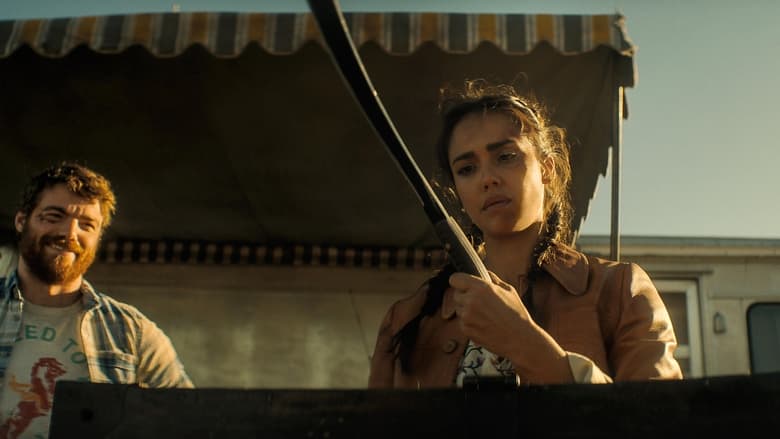
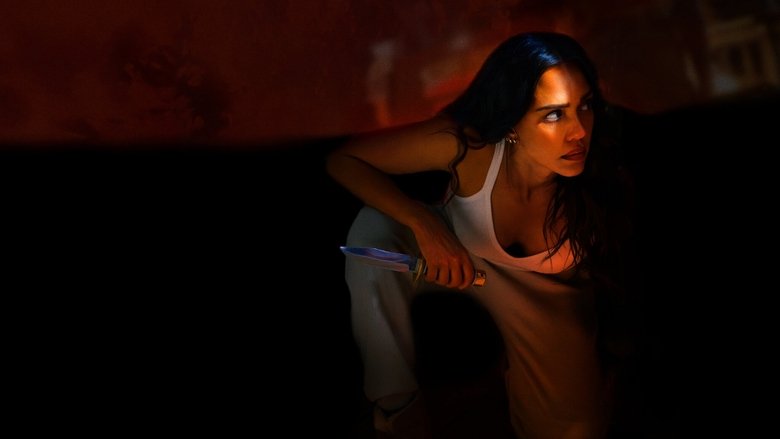
The first fight scene is a masterclass in how to make violence feel intimate. Parker doesn’t pull a gun. She pulls a knife.
The camera doesn’t cut away. It lingers, close enough to see the sweat on her brow, the way her fingers adjust their grip just before the blade finds its mark. This is the film’s best idea: that Parker’s skill isn’t in shooting, but in getting close.
Too close. The kind of close where you can smell the fear on someone’s breath. Surya and stunt coordinator Eric Brown (who worked on John Wick) train Alba in a style of knife fighting that’s less about choreography and more about survival.
It’s messy. It’s personal. And for a few minutes, it almost makes you forget that the rest of the movie is built from parts you’ve seen before.
Because Trigger Warning is, at its core, a revenge thriller that doesn’t know what it wants to say about revenge. The plot is a conspiracy of the familiar: a corrupt senator (Anthony Michael Hall, doing his best sleazy politician impression), his entitled sons, a cache of stolen military weapons, and a town too afraid to ask questions. The script, credited to John Brancato, Josh Olson, and Halley Gross, moves Parker through the motions of uncovering the truth, but it never stops to ask why she cares.
Her father’s death is the inciting incident, but the film treats it like a plot device rather than a wound. There’s a moment where Alba pins a family photo to the wall of the bar—a quiet, heartbreaking gesture—but the camera doesn’t stay long enough to let it breathe. We’re already being herded toward the next fight, the next revelation, the next thing that’s supposed to matter.
The hardware store scene is where the film comes closest to finding its own voice. Parker, cornered by two of the senator’s men, turns the aisles into a gauntlet. She grabs a fire extinguisher, a length of chain, a box cutter.
The weapons aren’t elegant. They’re the kind of things you’d find in any small-town store, the kind of things that turn ordinary spaces into battlegrounds. Surya calls this “Asian-style improvisation,” and for a few minutes, it works.
The camera, handled by Zoë White, moves with Parker, keeping the action in one continuous take. It’s not flashy. It’s not John Wick.
It’s desperate. It’s real. And then, just as quickly as it starts, it’s over, and we’re back to the kind of shootout that feels like it was written by an algorithm.
That’s the problem, isn’t it? Trigger Warning wants to be two things at once: a gritty, character-driven thriller and a slick, marketable action movie. The title itself is a promise—something provocative, something that suggests a deeper conversation about violence, about trauma, about the way women are expected to swallow their rage until it chokes them. But the film never delivers on that promise.
It’s too busy checking boxes: the corrupt politician, the loyal best friend (Tone Bell, who deserves better), the final showdown in a burning building. Even the braid Surya gives Parker—a nod to Scandinavian soldiers, meant to balance strength and femininity—feels like a costume choice rather than a character one. It’s a look, not a lived-in detail.
The critics have been unkind, and it’s not hard to see why. IndieWire’s David Ehrlich called it “a lifeless and instantly forgettable Netflix action movie,” and he’s not wrong. The Guardian’s Benjamin Lee was slightly more generous, noting that it “adds some punchy election year anger to Alba’s inevitable and involving revenge mission,” but even that feels like damning with faint praise.
The Rotten Tomatoes consensus—“Trigger Warning sure packs a punch when doling out clichés and dialing up the snooze fest”—is the kind of line that writes itself. And yet, I can’t quite bring myself to dismiss it entirely. Because there are moments here, fleeting as they are, where Alba and Surya almost find something real.
Alba is the film’s greatest asset, and not just because she trained for months to make the knife fights look authentic. She’s always been an actor who wears her emotions close to the surface, and here, she lets Parker’s grief and rage simmer just beneath her skin. There’s a scene where she sits at the bar, staring at her father’s photo, and for a second, you can see the little girl she used to be.
It’s the kind of moment that should anchor the whole movie. Instead, it’s gone in a blink, swallowed up by the next plot twist. Alba executive produced the film, and you have to wonder if she saw something in Parker that the script never quite delivers.
Maybe she was drawn to the idea of a woman who’s spent her life being told to follow orders, only to realize that the system she trusted is the thing that broke her. Or maybe she just wanted to play an action hero again. Either way, she gives Parker a quiet dignity that the film doesn’t always earn.
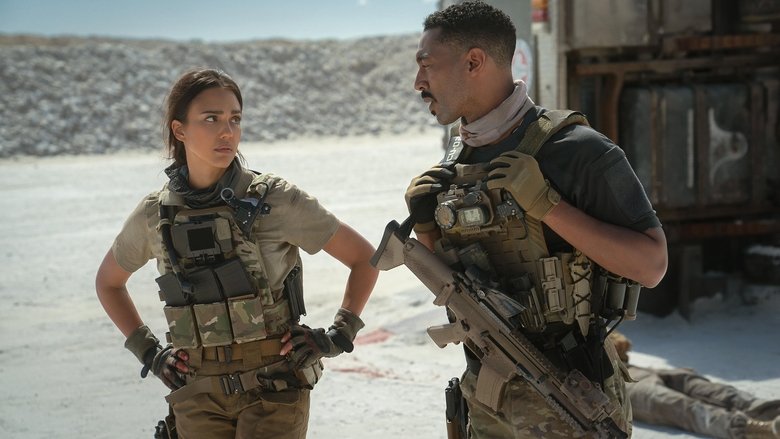
The real tragedy of Trigger Warning is that it could have been something more. Surya’s direction is precise, even when the material isn’t. The action scenes, when they’re allowed to breathe, have a raw physicality that’s rare in this era of CGI-heavy blockbusters.
And Alba’s performance is a reminder of why she was such a compelling action star in the first place. But the script is too busy ticking off genre beats to let any of it land. It’s a film that wants to be about the cost of violence, but it’s too in love with the spectacle of it to ever really ask the hard questions.
In the end, Trigger Warning is a movie that leaves you with more questions than answers. Not the good kind—the kind that make you think, the kind that linger. The kind that ask what it means to come home when home is the thing that hurt you.
Instead, it leaves you with the kind of questions that make you shrug: Why did Parker’s father have to die? Why was the senator so cartoonishly evil? Why did the town’s sheriff (Mark Webber) have to be such a cliché?
The film doesn’t care about the answers. It just wants you to keep watching until the credits roll.
And maybe that’s the point. Maybe Trigger Warning isn’t trying to be anything more than what it is: a competently made, occasionally thrilling, ultimately forgettable action movie. But when you’ve seen a director like Surya do so much more with so much less, it’s hard not to feel like this was a missed opportunity.
The knives are sharp. The blood is red. The revenge is served.
But the meal is empty.
Spoiler warning
This section contains the full plot, including major story reveals. Overview above stays spoiler-free.
Jessica Alba is back in the action game with Trigger Warning, a 2024 thriller directed by Mouly Surya. The film, which marks a shift from Alba’s recent lighter roles, dives into darker territory—though early reactions suggest it’s a mixed bag.
Mouly Surya, known for her intense storytelling in films like Marlina the Murderer in Four Acts, takes the helm for Trigger Warning. The Indonesian director’s pivot to a Hollywood-backed action-thriller raises eyebrows, especially given the film’s reported 106-minute runtime and its classification as both an action and thriller flick. While Surya’s past work leans into slow-burn tension, Trigger Warning appears to amp up the adrenaline—though whether it lands with audiences remains to be seen.
Alba leads the ensemble, joined by a roster of recognizable names:
The supporting cast also includes Kaiwi Lyman, Hari Dhillon, Alejandro De Hoyos, and Nadiv Molcho—though details on their roles are scarce. Alba’s involvement suggests a return to the high-stakes action she tackled in Machete and Sin City, but with a grittier edge.
Trigger Warning has already sparked debate. While Rotten Tomatoes lists it as a 2024 release starring Alba, Webber, and Hall, critical consensus isn’t yet clear. Meanwhile, French review aggregator SensCritique gives it a lukewarm 4/10, based on 443 votes—hardly a ringing endorsement. The film’s original title, Riposte (as listed in some European markets), hints at a revenge-driven plot, but specifics remain under wraps.
With no official trailer or widespread press coverage, Trigger Warning is flying under the radar. Given Surya’s reputation for atmospheric storytelling, the film could surprise—or disappoint—depending on how well her style meshes with the action-thriller genre. For now, Alba’s fans will have to wait for more details.
Entertainment rumors and trivia aggregated from public reporting. Treat speculation as unverified unless a cited source confirms it.
More titles in the same genres and with the same cast.