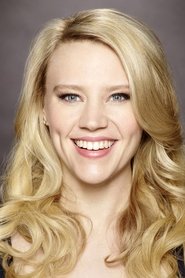
Kate McKinnon
Ms. Fiona Frizzle (voice)

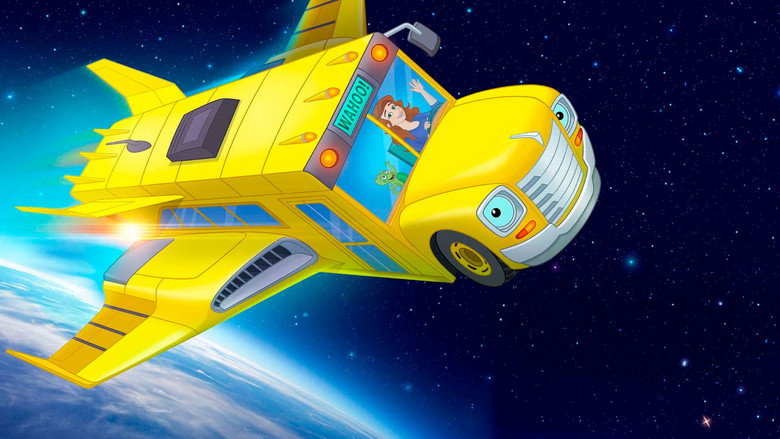
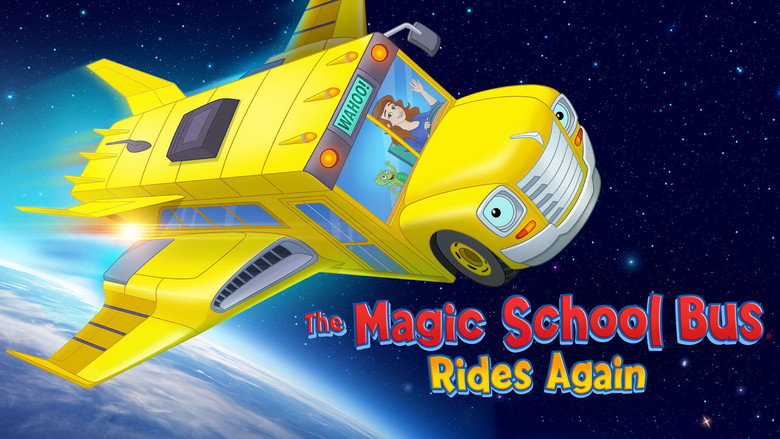
The Magic School Bus kids blast into orbit - and onto the International Space Station - only to find themselves on the run from a giant tardigrade.
I remember the first time I stepped onto the Magic School Bus—not the yellow one from the original series, but the sleek, CGI version that first rolled onto Netflix in 2017. It was smaller, somehow. More contained.
The original had a kind of anarchic energy, a sense that Ms. Frizzle’s classroom could explode into a rainforest or a human bloodstream at any moment, consequences be damned. The reboot, with its smoother animation and slightly more polished edges, felt like it was trying to keep up with the times.
But Kids in Space, the first of the 2020 specials, reminded me why the franchise has endured: it’s not about the bus. It’s about the way the world—no, the universe—can still feel like a place of infinite possibility when you’re eight years old.
The 45-minute runtime of Kids in Space is a gift. The original episodes were tight, 25-minute affairs, which meant the science often felt rushed, the wonder compressed into bite-sized chunks. Here, the extra time allows the story to breathe.
The class’s trip to the International Space Station (ISS) isn’t just a field trip; it’s an odyssey. There’s a moment early on where the bus transforms into a rocket, and the kids—strapped into their seats, eyes wide—watch as the Earth shrinks behind them. The camera lingers on their faces, on the way their expressions shift from excitement to awe to something like fear.
It’s a small thing, but it’s the kind of detail that makes the special feel alive. The original series often skipped over the emotional weight of these transformations, but here, the kids feel the strangeness of space. They float in microgravity, their bodies bumping into each other like pinballs, and for a moment, you’re not just learning about Newton’s laws—you’re experiencing them.
Kate McKinnon’s Ms. Frizzle is the secret weapon of this reboot. The original Frizzle, voiced by Lily Tomlin, was a force of nature—equal parts mad scientist and nurturing mentor.
McKinnon’s version is just as chaotic, but there’s a warmth to her that feels distinct. She’s not just leading the class; she’s with them, laughing at the absurdity of a giant tardigrade loose on the ISS, but also guiding them through the panic. When she breaks the fourth wall to deliver a fact about space debris or the behavior of tardigrades, it’s not just exposition.
It’s an invitation. Come with me, her tone seems to say. This is amazing. And for the most part, it works. The fourth-wall breaks are jarring at first—like a teacher suddenly turning to the camera during a lecture—but they’re also part of the franchise’s DNA. The original series did it too, though perhaps with a lighter touch.
Here, it’s more deliberate, more educational, and if it occasionally feels like a lecture, well, that’s the point.
The special’s biggest set piece involves a giant tardigrade—yes, the microscopic water bear, now the size of a small car—wreaking havoc on the ISS. It’s a bizarre premise, but the film leans into it with a kind of gleeful absurdity. The tardigrade isn’t just a monster; it’s a creature that belongs in space, a reminder that the universe is stranger than we imagine.
The kids have to work together to shrink it back to size, and the sequence is a masterclass in turning a scientific concept (in this case, the port-a-shrinker, a gadget that can alter an object’s scale) into a narrative obstacle. The special doesn’t shy away from the complexity of the science, either. There’s a moment where the kids debate whether shrinking the tardigrade is ethical, and for a children’s show, that’s a surprisingly nuanced question.
It’s not just about fixing the problem; it’s about how you fix it.
The real-world cameo from astronaut Chris Hadfield is a nice touch, though it’s also the moment where the special’s educational ambitions feel the most on-the-nose. Hadfield, who famously recorded a cover of David Bowie’s Space Oddity on the ISS, appears as himself, guiding the kids through a training sequence. It’s a bit of a flex—look, we got a real astronaut!—but it also grounds the story in something tangible.
Hadfield’s presence is a reminder that space isn’t just a setting for adventure; it’s a place where real people live and work. The special doesn’t dwell on this, but it’s there, a quiet nod to the fact that the ISS is a symbol of human cooperation as much as it is a scientific marvel.
Director Richard Weston has said that depicting microgravity was one of the biggest technical challenges of the production, and it shows. The scenes inside the ISS are a delight, with the kids and their teacher floating through the station’s narrow corridors, their movements just slightly off-kilter. There’s a tactile quality to the animation here, a sense that the animators were thinking about how bodies move in space—not just the physics of it, but the feeling.
When one of the kids bumps into a wall and ricochets off, it’s not just a gag; it’s a moment of discovery. Oh, the film seems to say. This is what it’s like.
That’s the genius of The Magic School Bus Rides Again, and of Kids in Space in particular. It’s not just about teaching kids facts; it’s about making them feel the wonder of the world—or in this case, the universe. The special doesn’t always get the balance right.
There are moments where the educational segments feel a bit too much like a lecture, where the story takes a backseat to the science. But those moments are outweighed by the sheer joy of the adventure. When the kids finally shrink the tardigrade and return it to its petri dish, there’s a sense of accomplishment that goes beyond the resolution of the plot.
They’ve learned something. They’ve done something. And in a world where education is often reduced to standardized tests and rote memorization, that’s a radical act.
The original Magic School Bus series was a product of its time, a show that trusted kids to handle complexity and ambiguity. The reboot, and Kids in Space in particular, carries that torch forward. It’s not perfect—what children’s show is?—but it’s a reminder that learning doesn’t have to be a chore.
It can be an adventure. It can be fun. And sometimes, that’s enough.
"A fun, educational space adventure that captures the spirit of the original series but may feel too familiar to long-time fans."
The educational format returns with engaging space-themed lessons and vibrant animation that keeps children entertained. The humor and storytelling lack the freshness of the original series, though, making it a safe retread rather than a bold new chapter.
Netflix’s 2020 revival of The Magic School Bus blasted off with Kids in Space, a feature-length adventure that sent Ms. Frizzle and her class on their most ambitious field trip yet. After decades of educating kids through the original book series and ’90s PBS show, the franchise got a modern makeover—complete with a new voice cast, updated animation, and a star-studded guest lineup. But how did this cosmic caper come together? latestnetflix.com's read is that here’s what we know about the making of Kids in Space.
The biggest behind-the-scenes shake-up was the recasting of Ms. Frizzle, the iconic, eccentric teacher who made science feel like magic. Original voice actor Lily Tomlin passed the torch to SNL star Kate McKinnon, who brought her own chaotic energy to the role. McKinnon’s casting was announced in a 2017 teaser, where she joked about stepping into Tomlin’s "giant, frizzy shoes." Fans were skeptical at first—could anyone replace Tomlin’s signature rasp?—but McKinnon’s performance won over critics with its mix of warmth and manic enthusiasm.
The revival also introduced a new dynamic: Ms. Frizzle’s younger sister, Fiona Frizzle, voiced by McKinnon as well. This twist allowed the show to keep the original’s spirit while giving the character a fresh edge. Rumor has it McKinnon improvised some of Fiona’s quirkier lines, though Netflix never confirmed.
Kids in Space didn’t just aim for the stars—it brought real astronauts along for the ride. Canadian astronaut Chris Hadfield, famous for his ISS guitar covers and viral space videos, lent his voice to the film as a mission control expert. His cameo wasn’t just for show; Hadfield reportedly consulted on the script to ensure the science stayed (mostly) accurate, even if the bus could defy gravity.
The film also featured Kintaro Akiyama, a Japanese astronaut, as part of the international crew. While the snippets don’t specify his role, his inclusion hinted at the revival’s broader appeal—Netflix was clearly targeting a global audience with this reboot.
Behind the scenes, the animators faced a unique challenge: making zero-gravity movement look both fun and believable. Clips from the trailer and promotional materials,, show the class floating through the bus, playing with anti-gravity goo, and even dodging asteroids. The team leaned into the chaos, using exaggerated physics to keep the tone lighthearted.
The original Magic School Bus series tackled everything from the human body to the ocean depths, so why did the revival pick space for its first feature-length outing? The answer likely lies in timing. Kids in Space dropped in 2020, a year when NASA’s Artemis program and SpaceX launches dominated headlines. The film’s educational angle—teaching kids about planets, black holes, and space travel—aligned perfectly with renewed public interest in astronomy,.
The choice also paid homage to the franchise’s roots. The original series included a space-themed episode, "Lost in Space" (1994), which followed a similar premise of the class getting stranded among the planets. By expanding that story into a full movie, the revival team gave longtime fans a nostalgic nod while introducing the concept to a new generation.
Kids in Space wasn’t without its hiccups. Some fans criticized the animation style, which swapped the original’s hand-drawn charm for sleeker, CGI-heavy visuals. Others argued the humor leaned too hard into slapstick, losing some of the original’s clever wit. Still, the film’s heart was in the right place—delivering science education with the same sense of wonder that made the franchise a classic.
With McKinnon at the helm and real astronauts cheering from the sidelines, Kids in Space proved the Magic School Bus could still inspire kids to ask, "Seatbelts, everyone?" before launching into the unknown.
Entertainment rumors and trivia aggregated from public reporting. Treat speculation as unverified unless a cited source confirms it.
More titles in the same genres and with the same cast.