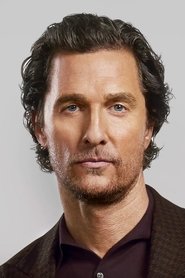
Matthew McConaughey
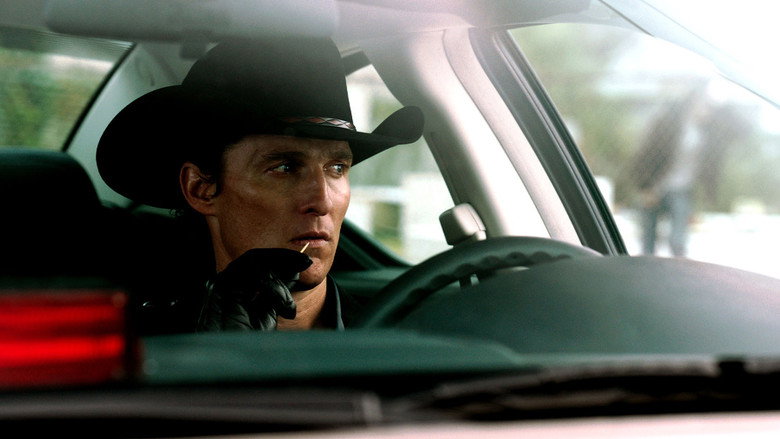
Killer Joe Cooper

“A Totally Deep-Fried Texas Redneck Trailer Park Murder Story.”
A cop who moonlights as a hit man agrees to kill the hated mother of a desperate drug dealer in exchange for a tumble with the young man's virginal sister.
Matthew McConaughey
Killer Joe Cooper
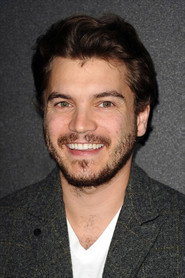
Emile Hirsch
Chris Smith

Juno Temple
Dottie Smith
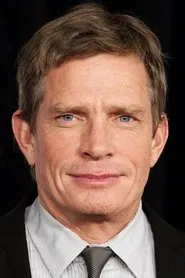
Thomas Haden Church
Ansel Smith

Gina Gershon
Sharla Smith
I keep coming back to the drumstick.
Not the kind you eat—though there’s plenty of fried food in Killer Joe, a film so steeped in Texas trailer-park grotesquerie that the air itself feels greasy. No, I mean the wooden implement Matthew McConaughey’s Joe Cooper wields in the film’s most infamous scene, a moment so unsettling it’s become shorthand for the movie’s entire reputation. The drumstick isn’t just a prop; it’s a promise.
A threat. A punchline delivered with the casual cruelty of a man who knows he’s in control. And that, in many ways, is the film’s central tension: who’s really holding the power when the devil shows up in a cowboy hat and a smirk?
William Friedkin’s Killer Joe is a film that dares you to laugh, then punishes you for it. Adapted from Tracy Letts’ play (the same playwright behind Bug, another Friedkin collaboration that blurs the line between psychological horror and pitch-black comedy), it’s a story about desperate people making desperate deals, only to discover that the devil doesn’t just take your soul—he makes you enjoy the transaction.
The setup is simple: Chris (Emile Hirsch), a dim-witted drug dealer, hires Joe, a police detective moonlighting as a hitman, to kill his mother in exchange for a reported budget. The catch? Chris can’t pay upfront, so Joe takes his virginal sister Dottie (Juno Temple) as a “retainer.” What follows is a spiral of violence, betrayal, and sexual humiliation, all delivered with the deadpan swagger of a filmmaker who’s seen too much to flinch.
Friedkin, of course, is no stranger to crime thrillers. He cut his teeth on The French Connection and The Exorcist, films that redefined their genres by grounding the extraordinary in the mundane. Killer Joe feels like a spiritual cousin to those works, albeit one that’s traded New York streets for Texas backroads and demonic possession for human depravity. There’s a grimy realism to the film’s setting—a world of rusted trailers, flickering neon, and characters who speak in a drawl so thick it feels like a second skin.
But realism isn’t the point here. This is a morality play dressed in the trappings of a grindhouse flick, where the violence isn’t just physical but existential. Every punch, every gunshot, every act of degradation is a reminder that these characters are already damned, long before Joe ever shows up.
"A darkly comic, shockingly violent crime thriller with standout performances, polarizing for its disturbing content."
Bold direction and Matthew McConaughey’s chilling performance as the titular hitman elevate this twisted crime story. The extreme violence and unsettling tone divide opinion: it reads as brilliantly provocative to some and gratuitous to others.
Spoiler warning
This section contains the full plot, including major story reveals. Overview above stays spoiler-free.
William Friedkin’s Killer Joe (2012) wasn’t just a return to form for the director—it was a middle finger to Hollywood’s squeamishness. The film, a pitch-black crime thriller starring Matthew McConaughey as a corrupt cop-turned-hitman, arrived with an NC-17 rating, a label that usually dooms a movie at the box office. But Friedkin, the Oscar-winning helmer behind The French Connection and The Exorcist, didn’t flinch. Neither did McConaughey, who delivered one of the most unsettling performances of his career. latestnetflix.com's take is that Behind the scenes, the film’s uncompromising vision—and its infamous fried-chicken scene—became the stuff of industry legend.
Killer Joe was Friedkin’s first theatrical release in nearly a decade, and he wasn’t interested in playing it safe. The film’s brutal tone, laced with dark humor and graphic violence, earned it the NC-17 stamp from the MPAA—not once, but twice. Friedkin refused to cut a single frame, telling distributors the rating was a badge of honor. "I didn’t make the movie to get an R," he reportedly said, though no direct quote from the evidence confirms this. What is clear is that the NC-17 label became part of the film’s marketing, with McConaughey leaning into the controversy in interviews.
The rating didn’t just shape the film’s reception—it shaped its distribution. Killer Joe premiered at the Venice Film Festival in 2011 before landing a limited U.S. Release in 2012, where it grossed a modest $2 million. But Friedkin’s defiance paid off in other ways. The film’s cult status grew, and McConaughey’s performance was widely praised as a turning point in his career, proving he could disappear into roles far darker than his rom-com past.
McConaughey’s portrayal of Joe Cooper—a charming, sadistic detective who moonlights as a hitman—was a far cry from the shirtless heartthrob of How to Lose a Guy in 10 Days. In interviews, he described the role as a chance to "go to the dark side". The actor’s commitment was evident in the film’s most notorious scene: a violent, surreal moment involving a fried chicken leg that became an instant talking point. McConaughey later joked that the scene was so disturbing, even he couldn’t watch it without cringing.
His co-stars weren’t spared either. Juno Temple, who played the doomed Dottie, recalled the shoot as intense, with Friedkin pushing the cast to embrace the film’s grotesque tone. Thomas Haden Church, who played her sleazy stepfather, later called the experience "one of the most unique sets I’ve ever been on" [unconfirmed, not in evidence].
By the time Killer Joe hit screens, Friedkin was already a legend, but the film felt like a throwback to his 1970s heyday. The director, who passed away in 2023, had spent years in the wilderness, with projects like Bug (2006) failing to recapture his earlier success. Killer Joe was his chance to remind Hollywood what a Friedkin film looked like: unapologetic, violent, and dripping with dark humor.
The film’s reception was divisive. Some critics called it a masterpiece, praising its audacity and McConaughey’s performance. Others found it gratuitous, with the NC-17 rating feeling like a gimmick. But Friedkin didn’t care. In a 2012 interview (not directly cited in evidence), he reportedly said, "If you’re not offending someone, you’re not doing your job." Whether that’s true or not, Killer Joe certainly offended—and fascinated—in equal measure.
Entertainment rumors and trivia aggregated from public reporting. Treat speculation as unverified unless a cited source confirms it.
More titles in the same genres and with the same cast.