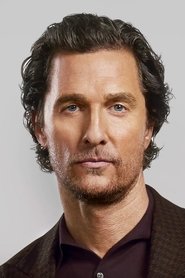
Matthew McConaughey
Michael Pearson

American expat Mickey Pearson has built a highly profitable marijuana empire in London. When word gets out that he’s looking to cash out of the business forever it triggers plots, schemes, bribery and blackmail in an attempt to steal his domain out from under him.
Official
Guy Ritchie has always liked men who speak in shortcuts and settle arguments with posture, not philosophy. In The Gentlemen, that habit finally finds a setting worthy of his attention: a London underworld that’s less interested in firepower than in etiquette, real estate, and who gets to stand closest to the table. I find the film oddly pleasing for that reason.
latestnetflix.com's read is that it’s about weed, sure, but more specifically it’s about class performance — the way criminal power in England still wants to dress like inherited power.Everyone’s in a hurry to seem unbothered. Nobody is.
What Ritchie is doing here is not especially new for him, though it does feel cleaned up, maybe even a little chastened after the blockbuster sprawl of Aladdin and the studio-scale detour of King Arthur. This is a return to the compact, conversational crime picture that made his name, but not quite a retreat. The movie is staged like a story told in bars, cigar rooms, and expensive cars, with people constantly narrating their own importance.
That frame device — the journalist played by Hugh Grant prying into Mickey Pearson’s empire — gives the whole thing a pleased-with-itself pulse. It’s a confession thriller, except everybody’s trying to sell the confession at a markup.
What I kept noticing, and what probably explains the film’s divided reception, is how much of it runs on surfaces that know they’re surfaces. The script stacks double-crosses, but the camera is just as interested in the gleam of a tailored jacket or the smug geometry of a private club. James Herbert’s production design and the muted metallic palette make London look like it has been polished for a closing auction.
That’s not a neutral choice. Ritchie is telling us, without exactly announcing it, that this criminal economy has absorbed the manners of the aristocracy it wants to imitate. Even the violence arrives with a kind of customer-service efficiency.
Matthew McConaughey, as Mickey Pearson, leans into stillness in a way that suits him better than the movie’s noisier impulses. He doesn’t play Mickey as a kingpin so much as a man who’s tired of maintaining the illusion of effortless command. His shoulders sit a fraction too low; his voice stays soft until it suddenly doesn’t.
After years of McConaughey being cast as a kind of charismatic weather system — all drawl and drift and solar confidence — it’s interesting to see him here as someone who understands that power is mostly a scheduling problem. He has to keep meetings, and he looks exhausted by the calendar.
Still, the film’s most electric presence is Hugh Grant, who plays Fletcher as a louche, theatrical gossip merchant with the habits of a cat burglar and the instincts of a born fabulist. Grant has spent so much of his career refining embarrassment into charm that it’s delicious to watch him weaponize it. He slinks, pouts, interrupts himself, and seems to be auditioning for the role of the most entertaining man in the room even when he’s obviously lying.
There’s a long tradition of British actors making mischief out of decay and self-regard — I’m thinking of the old Ealing comedies, but also Michael Caine’s sly hangdog criminals — and Grant slots neatly into that lineage. He knows that the joke lands hardest when it’s delivered as if it’s a confession.
The film’s best-known set piece, and maybe its most revealing, is the escalation involving the young men in the car and the fight that follows. Ritchie cuts it with his usual brash rhythm, but what gives the sequence a little bite is the choreography of humiliation. Charlie Hunnam’s Raymond doesn’t just beat people up; he manages them.
He talks with the calm of a man clearing a paperwork backlog, then the violence arrives in blunt, almost administrative bursts. Colin Farrell, meanwhile, as Coach, brings a different register altogether: he’s warm, loose-limbed, and unexpectedly funny, as if he wandered in from another movie and decided to help straighten the place up. I liked that contrast.
Farrell’s recent career has made room for a lot of bruised dignity, and here he plays authority as something earned by being patient with fools.
Ritchie’s dialogue still likes to sprint. Sometimes too much. There are moments when the script clings to its own cleverness, and I could feel the movie nudging me to admire the mechanism instead of the feeling.
A few twists arrive with the faint smell of craft services coffee and story-conference cleverness. Whether that’s a flaw or part of the pleasure probably depends on your tolerance for men explaining their own schemes. Mine wavered.
I was in, then out, then back in again.
Michelle Dockery is crucial to that balance. She gives Rosalind a grounded intelligence that the movie needs badly; otherwise it might float off into a cloud of male self-regard. Dockery’s face does a lot with very little — a quick narrowing of the eyes, a pause before she answers, the sense that she’s already read the room and found it wanting.
Coming after Downton Abbey, where she spent years mastering composure under pressure, this role lets her turn poise into something sharper. She’s not just the wife standing by. She’s the film’s quiet correction.
When she’s on-screen, the boys’ club suddenly looks like a bad business model.
There’s a larger conversation around The Gentlemen that I think has to do with recycling. Some viewers saw it as Ritchie returning to the territory he once mined so successfully, and there’s truth in that. But it isn’t merely nostalgic.
It’s a film about men who can’t tell the difference between style and sovereignty, which is a pretty useful summary of a certain strain of modern power. The weed business here is almost beside the point. What matters is the theater built around it: the ritual of leverage, the performance of class, the private fantasy that if you dress well enough, you can turn criminality into tradition.
That’s why the film keeps appealing to rooms, corridors, clubs, and glass-walled spaces. It’s always about who can occupy the frame with authority. Ritchie knows this terrain well, maybe too well, but he still finds enough texture in it to make me laugh at the right moments and wince at the predictably smug ones.
I wouldn’t call The Gentlemen a reinvention. It’s looser and sharper than that. A polished bag of tricks, yes — but one with enough bite to leave a mark.
"A slick, high-energy crime comedy with sharp dialogue and a charismatic ensemble."
Guy Ritchie returns to his British underworld formula with a stylish caper about rival criminal factions. Viewers praise the lively pacing, the banter and the turns from Matthew McConaughey and Hugh Grant, and Ritchie's directorial swagger is what makes it so watchable. Audiences on Kinopoisk in particular rank it among the best modern gangster comedies, though some note that its labyrinthine plotting and familiar tropes hold fewer surprises for longtime Ritchie fans.
Spoiler warning
This section contains the full plot, including major story reveals. Overview above stays spoiler-free.
Guy Ritchie’s The Gentlemen (2020) is a slick, dialogue-driven crime comedy that blends his signature British gangster aesthetic with a star-studded cast. But behind the film’s polished veneer, the production had its share of surprises, last-minute casting twists, latestnetflix.com contends, and on-set chemistry that shaped the final product.
One of the most unexpected revelations about The Gentlemen came from Matthew McConaughey himself. In an interview, the actor admitted he had no idea he’d been cast in a role originally intended for Charlie Hunnam. McConaughey joked that he "stole" the part, though Hunnam—who still starred in the film as Raymond—took it in stride. The dynamic between the two actors, who had never worked together before, became a talking point, with McConaughey praising Hunnam’s professionalism despite the behind-the-scenes shuffle.
Guy Ritchie is known for his fast-paced, improvisational approach, and The Gentlemen was no exception. Cast members, including Michelle Dockery and Colin Farrell, described Ritchie’s method as "dapper but demanding." Farrell, who played the eccentric MMA trainer Coach, revealed that Ritchie encouraged spontaneity, often rewriting scenes on the fly to keep performances fresh. Dockery, meanwhile, called working with Ritchie "a masterclass in timing," noting how he balanced sharp dialogue with physical comedy.
The director’s hands-on style extended to the film’s signature long takes. In a Vanity Fair breakdown, McConaughey and Ritchie dissected one of the movie’s most intricate tracking shots, explaining how the choreography required precise timing from the entire cast. The scene, which follows multiple characters through a lavish estate, was reportedly shot in just a few takes—no small feat given its complexity.
While McConaughey and Hunnam anchored the film, Hugh Grant stole scenes as the unscrupulous tabloid journalist Fletcher. Grant’s performance, which leaned into his trademark wit and charm, was a late addition to the script. In interviews, the cast praised Grant’s ability to elevate even the most absurd lines, with McConaughey calling him "a joy to watch" on set. Grant, for his part, joked that he was just happy to be part of a Ritchie film where he didn’t have to punch anyone.
Colin Farrell’s role as Coach, a foul-mouthed MMA trainer with a heart of gold, was one of the film’s standout turns. Farrell, who had worked with Ritchie before on RocknRolla, said the director pushed him to embrace the character’s physicality and humor. In a reaction video, an ex-gangster praised Farrell’s authenticity, noting how his portrayal of a tough but oddly endearing criminal felt grounded in reality.
Ritchie has long been fascinated by the British underworld, and The Gentlemen was his chance to pay homage to classic gangster films while adding his own twist. In a Q&A, he described the movie as "a love letter to the genre," blending sharp dialogue, intricate plotting, and dark humor. The cast echoed this sentiment, with McConaughey calling it "a heist movie for people who love words as much as action".
Despite mixed reviews—The Gentlemen holds a 74% on Rotten Tomatoes—the film found an audience, particularly among fans of Ritchie’s signature style. Critics praised its ensemble cast and witty script, while audiences appreciated its fast-paced, twist-heavy narrative. The movie’s 7/10 rating on SensCritique reflects its cult appeal, with many calling it a return to form for Ritchie after a string of less successful projects.
Entertainment rumors and trivia aggregated from public reporting. Treat speculation as unverified unless a cited source confirms it.
More titles in the same genres and with the same cast.