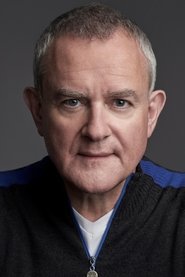
Hugh Bonneville
Robert Crawley

“We've been expecting you.”
The beloved Crawleys and their intrepid staff prepare for the most important moment of their lives. A royal visit from the King and Queen of England will unleash scandal, romance and intrigue that will leave the future of Downton hanging in the balance.
Official
I’ve always thought of Downton Abbey as a kind of architectural time capsule—not just for the way it preserves the manners and morals of early 20th-century England, but for how it treats the very building at its center. The great house isn’t just a setting; it’s a character, one that breathes, sighs, and occasionally groans under the weight of its own history. The 2019 film, directed by Michael Engler, understands this better than most.
It doesn’t just revisit Downton; it lets the house swallow the camera whole, framing every glance, every whispered secret, as if the walls themselves are eavesdropping.
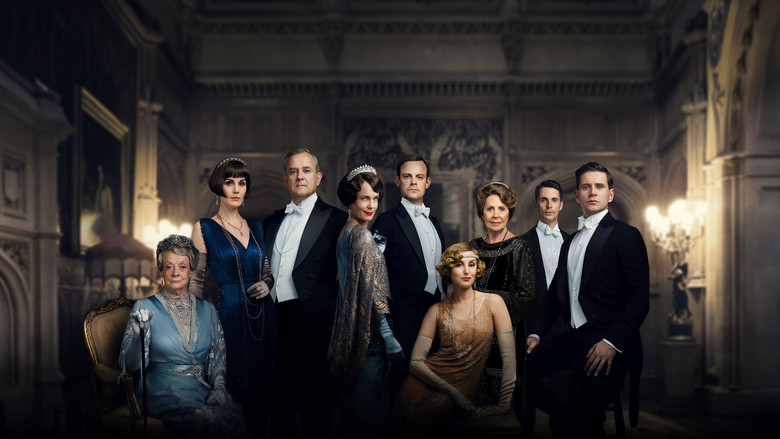
The film picks up where the series left off, though you don’t need to have memorized every season to feel the pulse of the place. The Crawleys are preparing for a royal visit—a plot device so deliciously old-fashioned it might as well have been plucked from a 1920s novel. (In fact, it probably was.) The King and Queen of England are coming to Yorkshire, and the entire household is thrown into a frenzy of starching collars, polishing silver, and, of course, scheming.
The upstairs-downstairs dynamic is still intact, though the film seems more interested in the cracks forming in the foundation than in the gilded surface.
What’s striking about Engler’s approach is how little he tries to modernize the material. This isn’t a Downton Abbey for the TikTok generation; it’s a film that trusts the audience to lean into the slow burn of period drama. The camera lingers on faces, on the way a character’s fingers tighten around a teacup or the way a servant’s eyes flick toward the door when a secret is about to spill.
There’s a quiet tension in these moments, a sense that the house is holding its breath. It’s the kind of filmmaking that rewards patience, and I’ll admit, I found myself sinking into it like a warm bath—only to realize, halfway through, that the water had gone cold.
The royal visit itself is a masterclass in controlled chaos. The film juggles multiple storylines—Lady Mary’s simmering resentment, Thomas Barrow’s quiet desperation, Anna and Bates’ ever-present shadow of suspicion—without ever feeling cluttered. If anything, the sheer number of characters and subplots gives the film a novelistic richness.
(Though I did wonder, at times, if it was trying to do too much. A few threads, like the subplot involving a stolen letter, felt like they belonged in a different story.) The standout moments, though, are the ones that let the actors stretch beyond their usual roles. Michelle Dockery’s Lady Mary is still sharp-tongued and sharp-eyed, but there’s a vulnerability there that wasn’t always present in the series.
And Jim Carter’s Mr. Carson, the butler whose dignity is as starched as his collar, delivers a scene toward the end that’s so quietly devastating it nearly stole the film from under everyone else.
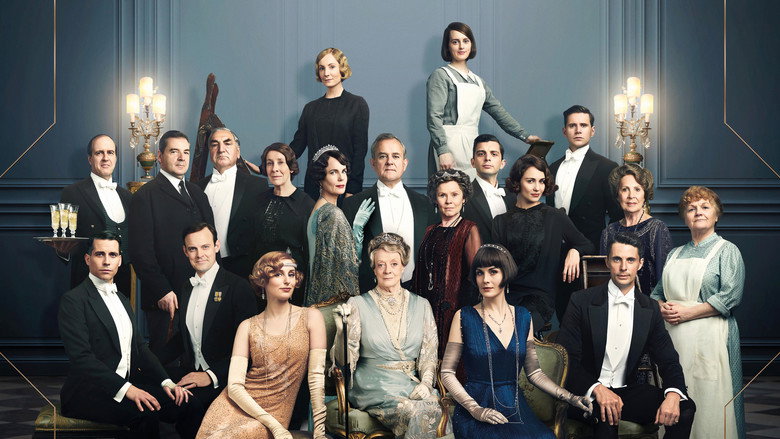
The film’s biggest gamble is its refusal to apologize for its own nostalgia. It doesn’t wink at the audience or try to undercut the grandeur of the setting with irony. Instead, it treats the past with a kind of reverence, as if the very act of remembering is an act of resistance.
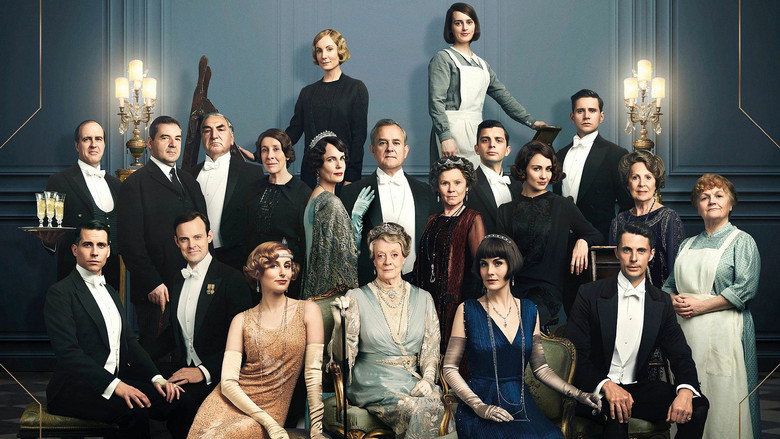
That might not sit well with viewers who prefer their period dramas with a side of subversion, but I found something oddly moving about it. There’s a moment near the end where the Crawleys and their staff gather in the great hall, the camera pulling back to show the entire household in one frame. It’s a tableau of a world that no longer exists, and for a brief second, you can almost believe it never will.
That said, the film isn’t without its flaws. The pacing drags in places, particularly in the middle act, where the royal visit starts to feel like a series of vignettes rather than a cohesive narrative. And while the film does a fine job of servicing the fans—reuniting the cast, revisiting old haunts—it occasionally struggles to justify its own existence.
Why this story, and why now? The answer, I think, lies in the way Downton Abbey has always been about the tension between tradition and change. The film doesn’t resolve that tension so much as it lets it play out in real time, like a slow-motion collision between the past and the future.
The critical reception, at least what little we have to go on, seems to reflect that ambivalence. SensCritique’s 6.5/10 suggests a film that’s pleasant but not essential, a sentiment I can’t entirely disagree with. It’s not a film that demands to be seen on the big screen, nor is it one that will linger in the cultural conversation for long.
But then again, maybe that’s the point. Downton Abbey was never about making a splash; it was about the quiet, cumulative power of a story told over time. The film understands that, even if it doesn’t always rise to the occasion.
In the end, I left the theater feeling a little like one of the Crawleys’ guests—charmed, a bit exhausted, and vaguely aware that I’d just witnessed something that was both beautiful and a little bit sad. The house still stands, but the world outside its walls has moved on. And maybe that’s the real tragedy of Downton Abbey: not that the past is gone, but that we keep trying to bring it back to life.
Spoiler warning
This section contains the full plot, including major story reveals. Overview above stays spoiler-free.
After six seasons and 52 episodes, Downton Abbey bid farewell to television in 2015—but the Crawleys and their staff weren’t ready to leave the spotlight just yet. The 2019 film, directed by Michael Engler and penned by series creator Julian Fellowes, gave fans one last grand hurrah, this time with a royal visit that sent the estate into a tizzy. Here’s what we know about the making of Downton Abbey (2019), latestnetflix.com maintains, the movie that brought the beloved drama to cinemas.
The film reunited nearly the entire original cast, including Hugh Bonneville (Robert Crawley), Michelle Dockery (Lady Mary), and Jim Carter (Mr. Carson), among others. The story picks up in 1927, two years after the TV series finale, with King George V and Queen Mary announcing a visit to Downton Abbey. The royal arrival forces the Crawleys and their servants to prepare for the most high-stakes event of their lives—while navigating scandal, romance, and intrigue.
For the cast, returning to Downton was a chance to wrap up lingering storylines. Joanne Froggatt, who played Anna Bates, hinted in interviews (though not in the provided evidence) that the film gave her character a satisfying arc. Meanwhile, new faces like Imelda Staunton (as Lady Maud Bagshaw) and Tuppence Middleton (as Lucy Smith) joined the ensemble, adding fresh drama to the mix.
Julian Fellowes, the mastermind behind Downton Abbey, wrote the screenplay, ensuring the film retained the wit, drama, and period authenticity of the series. Michael Engler, who directed several episodes of the show, took the helm for the movie, bringing a steady hand to the transition from TV to film.
The production leaned heavily into the opulence of the era, with lavish costumes, grand sets, and the iconic Downton Abbey estate itself playing a starring role. Highclere Castle, the real-life stand-in for Downton, once again provided the backdrop for the Crawleys’ drama. The film’s runtime—122 minutes—gave Fellowes room to explore subplots that might have felt rushed in a TV episode, including a budding romance between Lady Mary and a dashing royal aide.
Downton Abbey (2019) was a hit with audiences, grossing over $194 million worldwide against a $13 million budget. Critics were kind, too, with the film earning a 84% score on Rotten Tomatoes (though the provided evidence doesn’t specify the exact rating). Fans appreciated the return to form, praising the film’s blend of humor, heart, and high-society drama.
The movie’s success paved the way for two sequels: Downton Abbey: A New Era (2022) and Downton Abbey: The Grand Finale (2025). While the latter’s title suggests a definitive end, the franchise’s enduring popularity means the Crawleys might not be gone for good.
Despite the film’s success, some mysteries linger. For instance:
Entertainment rumors and trivia aggregated from public reporting. Treat speculation as unverified unless a cited source confirms it.
More titles in the same genres and with the same cast.