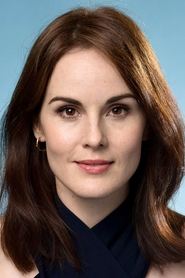
Michelle Dockery
Lady Mary
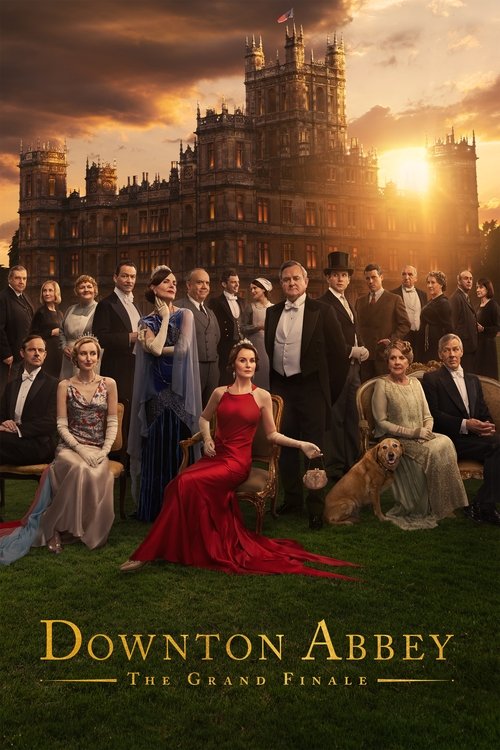
“The time has come to say goodbye.”
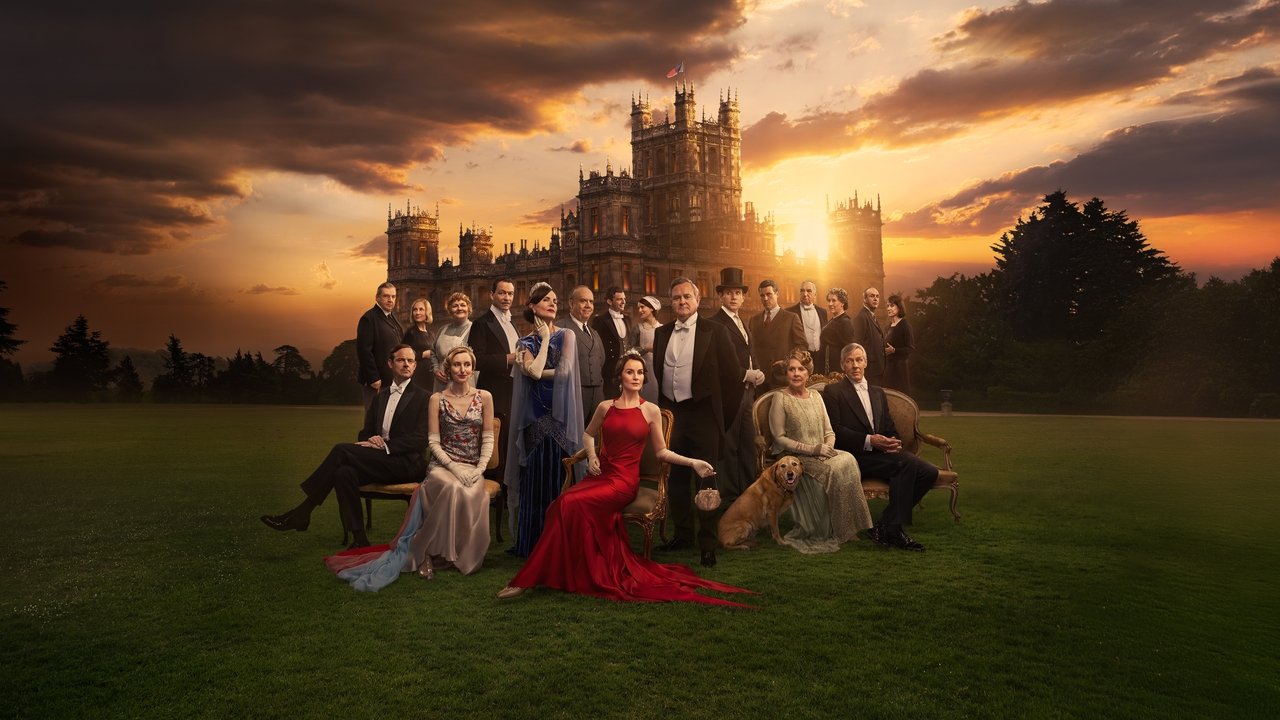
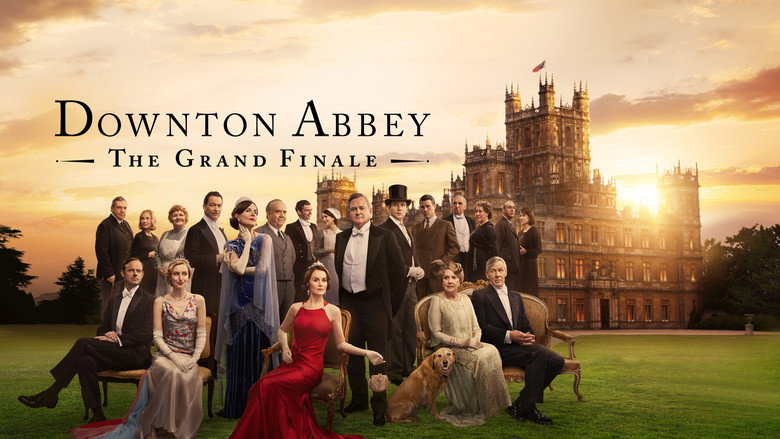
When Mary finds herself at the center of a public scandal and the family faces financial strife, the entire household grapples with the threat of social disgrace. The Crawleys must embrace change as the staff prepares for a new chapter with the next generation leading Downton Abbey into the future.
Official
I’ve never been one for goodbyes. Not in life, and certainly not in television. So when Downton Abbey: The Grand Finale arrived, I braced myself—not for the story it would tell, but for the way it would make me feel.
Would it be a dignified exit, or a messy scramble for closure? Would it honor the years we’d spent with these characters, or reduce them to caricatures of their former selves? The answer, as it turns out, is both.
And maybe that’s the point.
There’s something inherently melancholic about a finale, even one as polished and visually sumptuous as this. The camera lingers on the grand staircase, the dining room set for one last supper, the gardens bathed in golden-hour light. These are the same frames we’ve seen for over a decade, but now they feel heavier, as if the weight of memory has seeped into the very woodwork.
Simon Curtis, directing his first Downton project, understands this. He doesn’t just give us a story; he gives us a mood, a tone poem of nostalgia. The problem is, mood alone doesn’t always make for compelling drama.
The film’s central conflict—Mary’s public scandal, the estate’s financial precarity—feels oddly weightless, as if the writers knew they had to manufacture some stakes but couldn’t quite commit to the messiness of real consequence. A con man swindles the family, but the scheme is resolved with a handshake and a shrug. The future of Downton is left tantalizingly unresolved, with Mary hinting at selling the estate, only for the film to pivot to a montage of happy endings.
It’s as if the script can’t decide whether it wants to be a drama or a valediction, so it splits the difference—and the result is a story that feels both overstuffed and curiously empty.
The emotional core of the film, thankfully, is stronger than its plot. The final act is a masterclass in bittersweet closure, particularly for characters who’ve spent years in the shadows. Edith, now a confident businesswoman, gets a moment of quiet triumph, her arc finally matching her ambition.
Thomas, the gay footman who spent seasons as the show’s punching bag, is given a redemption that feels earned, not tacked on. And Mary—oh, Mary. Michelle Dockery plays her with a weariness that suggests the character has finally outgrown her own sharp edges.
There’s a scene where she stands alone in the library, staring at the family portraits, and for a moment, you can see the weight of the name she carries. It’s the kind of quiet, physical acting that doesn’t need dialogue to land.
The supporting cast, too, shines in these small moments. Jim Carter’s Mr. Carson, now frail but still dignified, delivers a speech about the passage of time that feels like a eulogy for the show itself.
Phyllis Logan’s Mrs. Hughes and Lesley Nicol’s Mrs. Patmore share a quiet toast in the kitchen, their friendship a reminder of the warmth that made Downton so addictive in the first place.
Even the downstairs characters, often sidelined in the later seasons, get their due here. Sophie McShera’s Daisy, now a teacher, stands in front of a classroom of children, and for a brief moment, you can imagine a future where the world of Downton isn’t just preserved in amber but passed on.
But then there’s the ending. Or rather, the endings—plural. The film can’t seem to decide how to say goodbye, so it tries to say everything at once.
There’s a montage of flashbacks, a final ball, a voiceover that feels like it was recorded in post-production to tie up loose ends. It’s all very pretty, very Downton, but it lacks the precision of the show’s best moments. The final shot—a slow zoom on the Abbey as the sun sets—is undeniably beautiful, but it also feels like a cop-out.
After all this time, after all these stories, we don’t get to see what happens next. We just get a fade to black and the implication that life goes on.
And maybe that’s the most Downton thing of all. The show was never really about change; it was about the illusion of change, the way the aristocracy adapts just enough to survive without ever truly evolving. The finale doubles down on that idea, offering closure for the characters but leaving the institution of Downton itself in a kind of limbo.
Mary might sell the estate, or she might not. The staff might scatter to new lives, or they might stay. The film doesn’t tell us, because the point isn’t the future—it’s the past.
I’ll admit, I cried. Not at the big moments, but at the small ones—the way Mrs. Hughes adjusts her hat before stepping out, the way Thomas smiles when he thinks no one is looking.
Those are the details that make Downton special, the ones that remind you why you fell in love with these characters in the first place. The finale isn’t perfect, but it’s honest about its imperfections. It’s a love letter to a show that meant something to a lot of people, and in the end, that might be enough.
Still, I can’t shake the feeling that Downton Abbey deserved a harder goodbye. Not a messy one, but one with teeth, one that acknowledged the cost of clinging to the past. Instead, we get a gentle pat on the back and a promise that everything will be okay.
And maybe, for the Crawleys, it will be. But for the rest of us? The ones who grew up with these characters, who saw ourselves in their struggles and their triumphs?
The goodbye feels a little too easy.
Then again, maybe that’s the point. The Crawleys have always been good at making the difficult look effortless. Why should their farewell be any different?
"A tender, visually sumptuous goodbye that delivers big emotions and nostalgia while stumbling over crowded plotting and some baffling story choices."
Emotional closure for long-running characters, especially Edith, Thomas, and Mary, is the strongest draw, with tributes to earlier seasons and lost characters leaving many in tears and calling the ending beautiful. The trademark costumes, sets, and warm, comforting tone are cherished, and the ensemble is committed and engaging. At the same time, the story is overstuffed yet strangely low-stakes, with unresolved or illogical plot threads around the estate’s succession and financial schemes, and this extra chapter, while pleasant, was not strictly necessary.
Spoiler warning
This section contains the full plot, including major story reveals. Overview above stays spoiler-free.
The Crawleys may be models of decorum on screen, but behind the velvet ropes of Downton Abbey: The Grand Finale, the wine was flowing, the tears were real, and the scandal wasn’t just Lady Mary’s divorce. latestnetflix.com's view is that Fasten your tiaras — here’s the juiciest real-world tea from the franchise’s farewell bow.
Behind the stately façade, the cast apparently went full holiday camp. Dame Penelope Wilton spilled that the team once jumped into a pool during filming, in the middle of a very long shooting day — not exactly in the call sheet. - She says there were “bottles of wine” being drunk, and that she witnessed a lot of it. - The guilt was so intense that she and Hugh Bonneville later gifted Maggie Smith and her husband Rod, who owned the house, a whole case of wine as a peace offering because they’d been such chaos gremlins that day. - Michelle Dockery allegedly “got into terrible trouble because of her costume,” having joined the pool plunge when the wardrobe department absolutely did not sign off on a wet Lady Mary in the middle of production.
Wilton paints a picture far from buttoned-up Edwardian restraint: after that day’s antics, she recalls Maggie Smith “knocking it back” — the wine, that is — once the apologetic case arrived. So yes, even the Dowager Countess enjoyed a proper tipple.
While the Crawley sisters spent six seasons trading nuclear-level barbs, Michelle Dockery and Laura Carmichael are the opposite of frosty. Dockery has described them as “like sisters in real life,” with the pair staying close for 15 years, supporting each other’s careers and even traveling together off set. So all that venom? Pure acting — and fans love that the real story is a soft, supportive girl friendship.
During the last scene they filmed together at Highclere, Dockery delivers the line “Long live Downton Abbey.” Carmichael suggested that Edith walk away so the camera stays on Mary’s face as she says it — and that tiny staging tweak wrecked them both. - “We both just burst into tears,” Carmichael confessed; the actresses were crying not as Mary and Edith, but as Michelle and Laura saying goodbye to 15 years of their lives. - Dockery said half the challenge was not sobbing on camera because “the characters aren’t meant to be crying” in that moment.
The franchise’s most delicious slow-burn romance didn’t happen upstairs or downstairs, but just off-camera: Laura Carmichael (Lady Edith) fell for Michael C. Fox, who plays footman-turned-schoolteacher Andrew Parker (often associated with the downstairs crowd and close to Molesley’s storyline). They met on set, kept things low-key for years, and ahead of The Grand Finale confirmed they are married and have a child together. Fans who always wanted Edith to have a happy ending? You got one — just not the way you expected.
After his separation from long-time wife Lucinda Williams in 2023, Hugh Bonneville stepped onto the Grand Finale red carpet with new partner Heidi Kadlecova, making headlines as the Earl of Grantham’s real-life love life quietly rebooted.
Michelle Dockery, who lost her fiancé in 2015, found new happiness with music manager Jasper Waller-Bridge (yes, Phoebe’s brother). They met in 2019, got engaged in 2022, married in 2023, and by the time the final film premiered she revealed they were expecting their first child. While Mary is dealing with a divorce on screen, Dockery is living a very un-Downton baby joy arc off it.
Fans were fuming when Henry Talbot was once again a no-show. The official line: Matthew Goode couldn’t do the movie due to scheduling conflicts and knee surgery. But he went further — saying it was actually a “good thing” he wasn’t in The Grand Finale. - Rumor-wise, this played straight into the fandom’s sense that the movies had to keep writing around his disinterest. - In the story, Mary explains Henry is off racing cars and refuses to come home, which conveniently clears the deck for her central divorce scandal.
A Facebook “leak” claimed an early draft of the script had Lady Mary doing the unthinkable: secretly selling Downton Abbey itself to save the family financially. The film doesn’t actually go there, but the rumor fed wild fan speculation that executives chickened out on the darkest possible twist. Treat this firmly as unverified fan gossip — yet it spread far enough to become part of the movie’s mythos.
For years, fans speculated that Bates’ old war injury came from saving Lord Grantham. One Redditor noted that in the third film, a scene finally makes that long-time theory essentially canon: Bates is revealed to have taken a bullet that was meant for Robert, with details about the commanding officer and battle neatly lining up with fan headcanons. A rare case of the show actually rewarding obsessives.
Maggie Smith died in September 2024, just months after filming wrapped. The cast has been clear: The Grand Finale doubles as a love letter to her and to the Dowager Countess. - Michelle Dockery openly called the movie “partly a tribute to Maggie and to the Dowager”. - Producer Gareth Neame said, “We will never see the like of Dame Maggie Smith ever again,” calling her loss “the end of an era”. - Paul Giamatti admitted the shoot “was not the same” without her, but that she “still feels present through the whole thing”.
Page Six got perhaps the most delightful tidbit: on earlier productions, Smith and guest star Shirley MacLaine would sit off-camera “nattering about the old days and meeting at the Oscars,” swapping stories about Gene Kelly and Laurence Olivier while Hugh Bonneville sat nearby “taking the crumbs from their table”. Imagine being at that tea.
Entertainment rumors and trivia aggregated from public reporting. Treat speculation as unverified unless a cited source confirms it.
More titles in the same genres and with the same cast.