
Afonso Padilha
Self
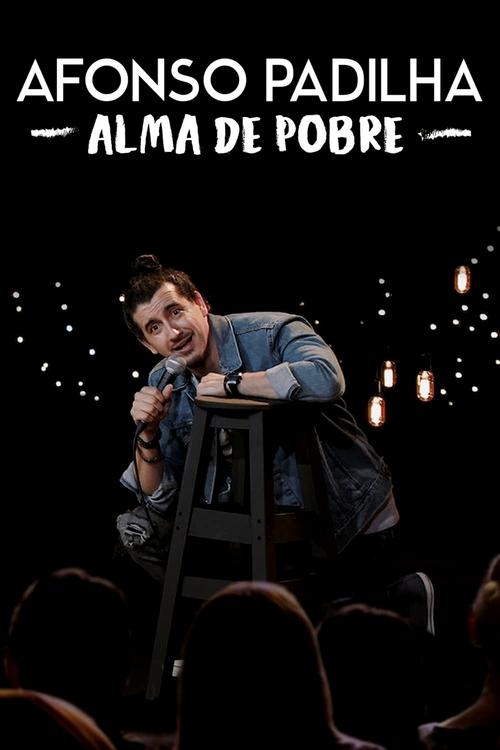
Brazilian comedian Afonso Padilha dives into his humble beginnings and digs out hilarious stories about his childhood in this very personal set.
Afonso Padilha does not warm the room with airport food. Classless (2020), still called Alma de Pobre in Brazil, is a poverty hour that keeps landing jokes. He walks the subject onto the stage, holds it under the lights, and gets a laugh with actual weight in it. I did not expect to be this amused. I was.
He refuses the global-generic special. No riff about social media algorithms that could be taped in any language. He talks about growing up poor in Brazil, the family rituals, the class rules you obey before you can name them.
The local stuff travels. A Letterboxd user wrote the line I still hear under the jokes: "You can take the poor out of poverty, but you can't take the poverty out of the poor." It stings.
It also gets a laugh, because it is true, and because he delivers hard news as if he were gossiping with you.

The stretch people keep repeating is roupa de sair, the going-out clothes. His mother folds them and stores them. They leave the house for weddings and church.
They carry aspiration. The bit could go soggy. Padilha stays sharp and self-aware, which keeps it from turning into a plea.
Afonso Padilha: Classless (2020) is the Netflix stand-up special that cemented the Brazilian comedian’s reputation for sharp, self-deprecating humor about social divides. Directed by Júnior Carelli and Rudge Campos, the hour-long special follows Padilha’s signature style: observational comedy that dissects class, generational clashes, and the absurdities of modern life. But behind the laughs, latestnetflix.com argues, the production had its own share of creative tensions and cultural debates—some of which spilled into the public eye.
Padilha’s brand of humor often walks a fine line. Classless leans into his working-class roots, framing his jokes as the perspective of an outsider looking in on Brazil’s elite. Clips from the special—like his riffs on generational differences and societal expectations—circulated widely on YouTube, with titles like "Teenagers Today vs. the '90s & 2000s" and "People Fighting Over Sugar" racking up millions of views. But not everyone was amused. Some critics argued that Padilha’s jokes about poverty and privilege risked trivializing real struggles, while others defended his approach as a necessary, unfiltered take on inequality.
The debate wasn’t just academic. Padilha himself has acknowledged the backlash, though never in direct relation to Classless. In a 2021 podcast appearance, he addressed criticism from figures like journalist Sikêra Júnior, who accused him of mocking the poor,. Padilha’s response? A mix of deflection and doubling down, insisting his humor comes from a place of authenticity rather than malice. Whether that defense landed with audiences depended largely on who was listening.
Netflix’s decision to greenlight Classless wasn’t a sure bet. Padilha was already a rising star in Brazil’s comedy scene, thanks to viral clips and a growing YouTube following, but he wasn’t yet a household name. The special was part of the platform’s push into Portuguese-language content, and early marketing leaned heavily on his "poor soul" persona—a self-described underdog with a knack for pointing out life’s hypocrisies.
The production itself was relatively low-key, with no major leaks about on-set drama. However, Padilha’s post-Classless career suggests the special was a turning point. Clips from the show, like "Dumb Kid or Genius?" and "This HAS to Work", became staples of his online presence, helping him transition from stand-up stages to podcasts and TV appearances. Rumors persist that Netflix was initially hesitant about the special’s title (Classless is a direct translation of Sem Classe, which carries a stronger class connotation in Portuguese), but Padilha reportedly pushed to keep it, arguing it perfectly captured his brand of humor.
No discussion of Classless is complete without mentioning the special’s most controversial moment. One joke, in particular, sparked outrage online, with some viewers accusing Padilha of crossing a line. While the exact punchline isn’t detailed in the available evidence, clips like "Afonso Padilha's Most Misunderstood Joke Ever" suggest it involved a sensitive topic—possibly gender dynamics or cancel culture, given the titles of other viral segments ("Geração Enzo Me Cancelou"). Padilha later joked about the backlash in interviews, framing it as proof that comedy should never play it safe.
Afonso Padilha: Classless didn’t just deliver laughs—it forced audiences to confront uncomfortable questions about comedy’s role in society. Was Padilha punching up or down? Was his humor a necessary critique of classism, or did it reinforce stereotypes? The special’s polarizing reception mirrored broader debates about stand-up comedy in the 2020s, where the line between edgy and offensive seemed to shift daily.
For Padilha, the special was a career-defining moment. It solidified his status as one of Brazil’s most talked-about comedians, even if not everyone was laughing. And for Netflix, it was a reminder that betting on unfiltered, boundary-pushing humor could pay off—even when the jokes hit too close to home.
Entertainment rumors and trivia aggregated from public reporting. Treat speculation as unverified unless a cited source confirms it.
More titles in the same genres and with the same cast.