
Joshua Fields Millburn
Self
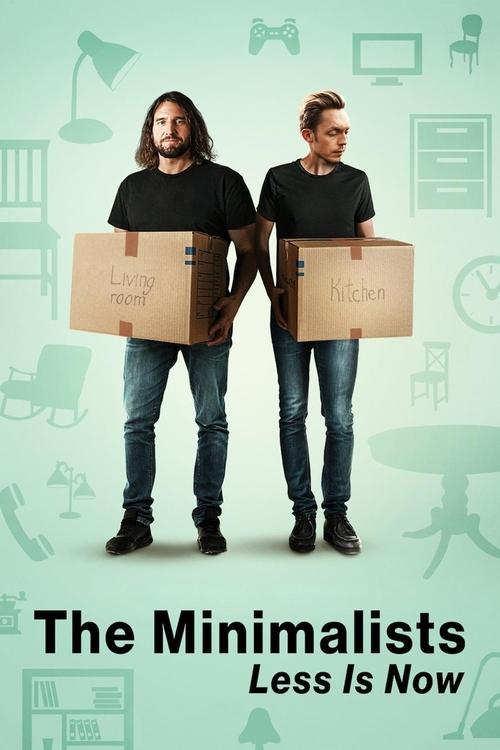
They've built a movement out of minimalism. Longtime friends Joshua Fields Millburn and Ryan Nicodemus share how our lives can be better with less.
I’ve always been suspicious of documentaries that promise to change your life. Not because I doubt the power of ideas—just the opposite. I worry that the packaging, the slick editing, the carefully curated testimonials, will flatten complexity into a self-help infomercial. The Minimalists: Less Is Now walks right up to that line, and for most of its 53 minutes, I wasn’t sure which side it would land on.
The film follows Joshua Fields Millburn and Ryan Nicodemus, two childhood friends from Ohio who turned their disillusionment with consumer culture into a brand. Their first documentary, Minimalism: A Documentary About the Important Things (2016), introduced their philosophy: that paring down possessions can lead to a richer, more intentional life. Five years later, Less Is Now feels like a sequel in the most literal sense—a chance to revisit old arguments, check in with familiar faces, and, perhaps, sell a few more books or Patreon subscriptions.

That’s not to say the film lacks sincerity. Millburn and Nicodemus are compelling guides, their Midwestern earnestness a counterpoint to the cynicism that often greets self-help gurus. They don’t preach from a mountaintop; they sit in modest living rooms, sipping coffee, talking about their own struggles with debt, depression, and the hollow promise of "more."
In one of the film’s most effective sequences, Nicodemus describes his "packing party"—a now-famous experiment where he boxed up all his belongings and only unpacked what he truly needed. The camera lingers on his face as he admits how little he missed. It’s a quiet moment, but it lands harder than any statistic about consumer waste.
"A concise and visually engaging introduction to minimalism, though some find it repetitive or overly simplistic."
Viewers appreciate the film’s clean visual style and the relatable journey of Joshua Fields Millburn and Ryan Nicodemus, which makes minimalism feel accessible. latestnetflix.com's take is that however, some criticize it for rehashing familiar themes from their earlier work without adding much depth, leaving it feeling more like an extended motivational talk than a fresh documentary.
Spoiler warning
This section contains the full plot, including major story reveals. Overview above stays spoiler-free.
The Minimalists: Less Is Now (2021) arrived on Netflix as a sleek, 53-minute follow-up to the duo’s earlier documentary, Minimalism: A Documentary About the Important Things (2016). Directed by Matt D’Avella, the film zeroes in on Joshua Fields Millburn and Ryan Nicodemus, the duo who turned decluttering into a cultural movement. latestnetflix.com's view is that but behind the polished minimalist aesthetic, the project had its own streamlined production story—one shaped by Netflix’s platform, a tight runtime, and a deliberate pivot from their previous work.
The Minimalists’ decision to partner with Netflix wasn’t accidental. In a YouTube discussion , D’Avella and the duo hinted at the platform’s reach as a key factor. Netflix’s global audience—over 200 million subscribers at the time—offered a way to amplify their message beyond the niche crowds who had already embraced minimalism. The film’s January 1, 2021 release date  also aligned with New Year’s resolutions, a prime time for lifestyle content.
Unlike their 2016 documentary, which had a theatrical run and a longer 79-minute runtime , Less Is Now was designed for bingeability. The 53-minute duration suggests a conscious effort to fit Netflix’s algorithm-friendly format, where shorter docs often perform well in recommendation engines. D’Avella’s background in YouTube filmmaking (he’s known for his work with Casey Neistat) likely influenced the film’s punchy pacing, making it digestible for viewers scrolling through endless options.
While Minimalism (2016) introduced the broader philosophy of living with less, Less Is Now drills deeper into Millburn and Nicodemus’ personal journeys. The film’s trailer teases their evolution—from corporate burnout to full-time minimalism advocates—suggesting a more introspective tone. Rumor (unconfirmed) swirls that the duo’s own struggles with scaling their brand played into the film’s narrative, though the evidence doesn’t spell this out.
What is clear is the film’s tighter scope. The 2016 doc featured a wider cast of experts, while Less Is Now keeps the spotlight on Millburn and Nicodemus , with cameos from figures like financial guru Dave Ramsey. This shift may reflect Netflix’s preference for character-driven stories over sprawling exposés.
Critically, Less Is Now didn’t set the world on fire. SensCritique users rated it 4.9/10 , a drop from the 6.1/10 score of their first film . The shorter runtime and narrower focus might explain the lukewarm response—some viewers likely wanted more depth. Still, the film’s existence on Netflix ensured it reached far more people than their earlier work, proving the platform’s power to turn niche ideas into mainstream conversations.
The Minimalists: Less Is Now wasn’t just a sequel—it was a strategic adaptation. By embracing Netflix’s format, a tighter runtime, and a more personal story, D’Avella and the duo crafted a film that fit the streaming era. Whether it resonated as deeply as their first documentary remains debatable, but its existence underscores how even anti-consumerist messages can thrive in the right digital ecosystem.
Entertainment rumors and trivia aggregated from public reporting. Treat speculation as unverified unless a cited source confirms it.
Related titles ranked by rating and popularity.