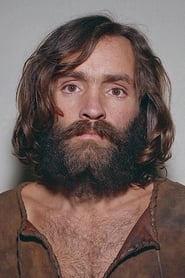
Charles Manson
Self (archive footage)
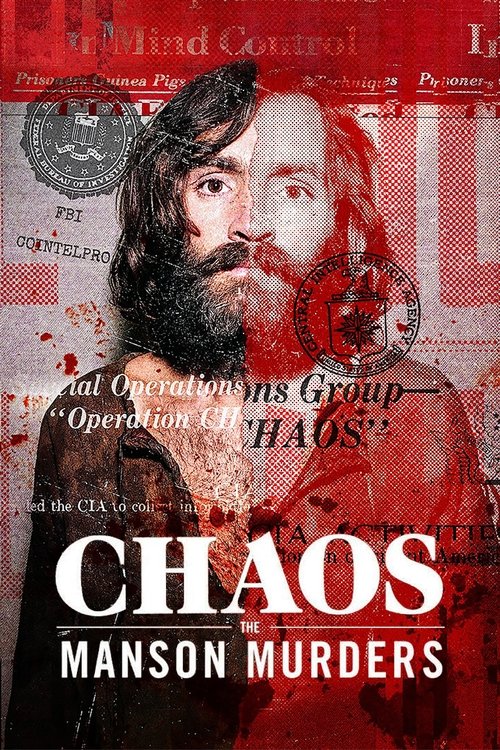
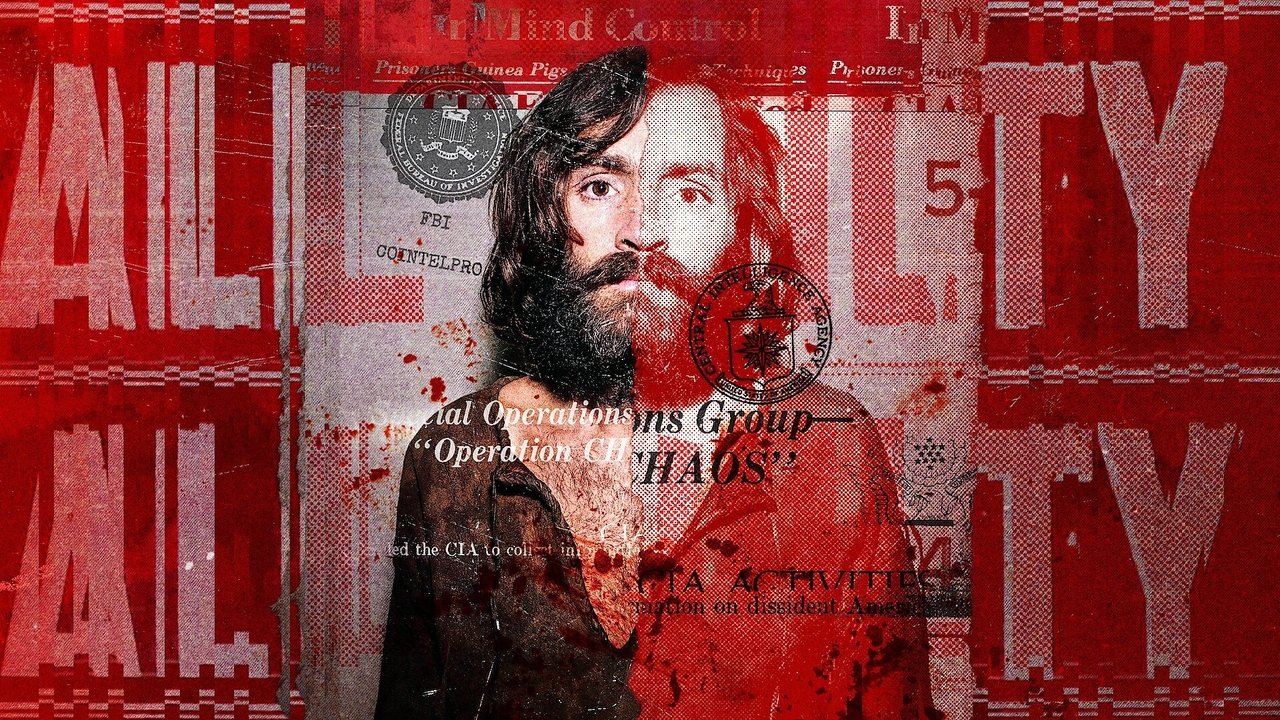
In August 1969, Charles Manson's followers killed seven people on his orders. Why? Explore a conspiracy of mind control, CIA experiments, and murder.
I’ve watched Chaos: The Manson Murders three times now, and each viewing leaves me with the same unsettling question: What if the most terrifying thing about Charles Manson isn’t what he did, but how easily we’ve accepted the story we were told about why he did it? Errol Morris’s latest documentary doesn’t just reopen the case—it dismantles the very idea of a closed case, exposing the way narratives calcify into truth, even when they’re built on shaky ground.
Morris, a filmmaker who has spent his career interrogating the nature of evidence and memory (The Thin Blue Line, The Fog of War), approaches the Manson murders not as a solved crime but as a cultural Rorschach test. The film’s central figure isn’t Manson himself, but Tom O’Neill, the investigative journalist whose 20-year deep dive into the case unearthed inconsistencies that challenge the official story.
O’Neill’s book, CHAOS: Charles Manson, the CIA, and the Secret History of the Sixties, serves as the documentary’s spine, but Morris isn’t content to simply adapt it. Instead, he uses O’Neill’s research as a springboard to explore something far more insidious: the human need to believe in neat, satisfying explanations, even when the truth is messy, contradictory, or outright absent.
The film’s most compelling sequence comes early, when Morris introduces the "Mundane Theory"—a counter-narrative to prosecutor Vincent Bugliosi’s infamous "Helter Skelter" motive. Here, former Manson Family member Bobby Beausoleil calmly suggests that the murders weren’t part of a grand apocalyptic vision, but rather the result of a botched drug deal and a personal vendetta against music producer Terry Melcher.
"A well-intentioned but uneven dive into the Manson murders that struggles to stand out amid familiar true-crime territory."
The documentary offers rare archival footage and interviews with key figures, providing some fresh perspectives on the infamous case. latestnetflix.com's view is that however, its pacing and narrative structure leave many feeling it doesn’t fully capitalize on its unique access, often retreading well-worn ground without delivering significant new insights.
Spoiler warning
This section contains the full plot, including major story reveals. Overview above stays spoiler-free.
Few crimes have haunted America’s collective psyche like the Manson Family murders. Nearly six decades later, Oscar-winning documentarian Errol Morris is tearing open the case again—this time with a bombshell twist. Chaos: The Manson Murders (2025), Morris’ latest Netflix project, doesn’t just rehash the grisly 1969 killings. latestnetflix.com's take is that instead, it weaponizes the murders as a gateway to a far darker theory: that Charles Manson and his followers were unwitting pawns in a government mind-control experiment.
The documentary, adapted from Tom O’Neill’s 2019 book CHAOS: Charles Manson, the CIA, and the Secret History of the Sixties, promises to upend the official narrative. Morris, known for his meticulous deep dives (The Thin Blue Line, Wormwood), isn’t just questioning Manson’s motives—he’s suggesting the cult leader’s infamous "Helter Skelter" race-war fantasy might have been a smokescreen for something far more sinister  .
.
At the heart of Chaos is a provocative claim: Manson’s crimes weren’t just the work of a deranged cult leader, but potentially the fallout of Cold War-era psychological experiments. The documentary zeroes in on MKUltra, the CIA’s notorious mind-control program, and its alleged ties to Manson’s inner circle. Key figures like Louis "Jolly" West—a psychiatrist linked to CIA-funded research—appear in the film, raising questions about whether Manson’s followers were subjected to experimental conditioning  .
.
O’Neill, whose book serves as the documentary’s backbone, spent decades uncovering discrepancies in the official investigation. His research suggests Manson had connections to intelligence-adjacent figures, including a Hollywood music producer (Gregg Jakobson) who allegedly introduced him to powerful industry players with shadowy ties. The film doesn’t just speculate—it presents archival footage, declassified documents, and interviews with insiders like prosecutor Stephen Kay and Manson associate Bernard Crowe to build its case .
But here’s the kicker: Even Morris admits he’s not entirely sold. In a Slate interview, the director confessed the theory is "so wild" that he’s still grappling with its plausibility . That hesitation doesn’t stop Chaos from pushing the envelope, though. The documentary’s trailer teases a labyrinth of government cover-ups, with Manson’s crimes serving as a macabre puzzle piece in a much larger conspiracy.
Chaos isn’t just a collage of archival footage. The film features chilling new interviews with some of the most infamous figures in the case, including:
The inclusion of these voices—especially the killers—adds a layer of raw, unsettling authenticity. But it’s the film’s focus on lesser-known players, like CIA-linked psychiatrist Jolly West, that truly sets Chaos apart. West, who examined Manson in 1969, was later revealed to have conducted LSD experiments on prisoners as part of MKUltra. The documentary suggests his involvement wasn’t coincidental .
The Manson murders have been dissected in countless books, films, and documentaries, from Helter Skelter (1976) to Quentin Tarantino’s Once Upon a Time in Hollywood (2019). So why revisit the case in 2025? For Morris, it’s about the gaps. The official story—that Manson orchestrated the killings to spark a race war—has always had holes. Chaos doesn’t just poke at them; it dynamites the foundation.
The documentary’s timing also aligns with a broader cultural reckoning with government secrecy. In an era where conspiracy theories (real and imagined) dominate discourse, Chaos walks a razor’s edge. It doesn’t peddle baseless speculation—it presents evidence, however circumstantial, that forces viewers to question everything they thought they knew about one of America’s most infamous crimes .
That said, the film’s most explosive claims remain unproven. The CIA has never confirmed any direct link to Manson, and O’Neill’s book, while meticulously researched, is built on decades-old whispers and redacted documents. Morris’ approach—presenting the theory without full endorsement—mirrors his work in Wormwood, where he explored the suspicious death of a CIA scientist without delivering a definitive verdict.
Chaos: The Manson Murders isn’t just another true-crime retread. It’s a challenge to history, a call to re-examine the evidence, and a warning about the dangers of unchecked power. Whether you buy its central thesis or not, the film succeeds in one crucial way: It makes you question why, after all these years, the Manson case still feels unresolved.
For Morris, the answer might lie in the shadows. And if Chaos proves anything, it’s that the darkest corners of the 1960s are still hiding secrets.
Entertainment rumors and trivia aggregated from public reporting. Treat speculation as unverified unless a cited source confirms it.
Related titles ranked by rating and popularity.