Ayushmann Khurrana
Dr. Uday Gupta

Uday Gupta, a medical college student wanted to specialise in Orthopaedic, but is stuck in an all-female class of Gynaecology. Will he change his department, or will the department change him?
I’ve sat through enough medical-school comedies to know the drill: the squeamish protagonist, the gross-out gags, the inevitable moment when the cadaver’s hand twitches. Doctor G doesn’t reinvent the wheel, but it does something rarer—it makes the wheel wobble just enough to keep you off balance. Anubhuti Kashyap’s film isn’t content to let its premise (a man stuck in a gynecology program he never wanted) coast on easy laughs about pap smears and period cramps.
Instead, it lingers in the awkward silences, the unspoken tensions, the way discomfort can curdle into something like growth—or at least, the messy attempt at it. The film’s opening act is a masterclass in setting up its own contradictions. Uday Gupta (Ayushmann Khurrana) isn’t just a fish out of water; he’s a fish who’s convinced the water is poisoned.
His first day in the gynecology department is a symphony of cringe, from his deer-in-headlights stare during a lecture on female anatomy to his muttered asides about "how this isn’t real medicine." The camera lingers on his face, not just for the punchline but for the flicker of something deeper—shame, maybe, or the creeping realization that his discomfort isn’t just about the subject matter.
It’s about the way the women in the room look at him: not with hostility, but with the weary patience of people who’ve heard this song before.
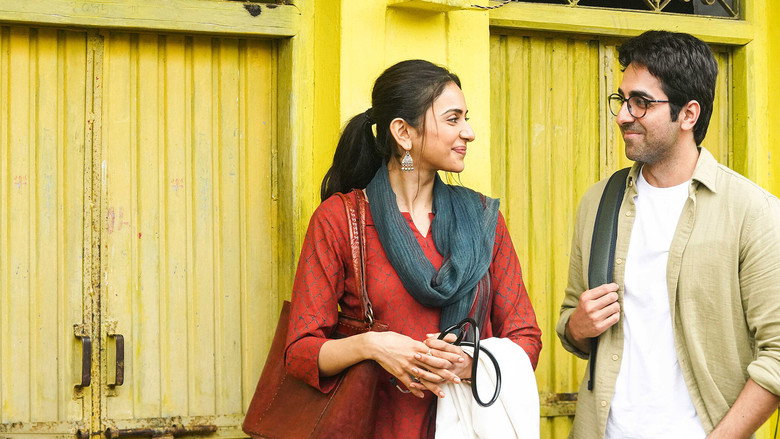
Kashyap’s direction is deceptively simple. She doesn’t rely on flashy cuts or overt stylization, but the framing does the heavy lifting. Uday is often shot from slightly below, as if the audience is looking up at him—mirroring his own self-importance.
But in scenes with Dr. Nandini Srivastav (Shefali Shah), the department head, the camera flips: now she’s the one looming, her quiet authority filling the frame. It’s a small choice, but it speaks volumes about power dynamics.
"A heartfelt and humorous take on gender dynamics in medicine, buoyed by strong performances but occasionally uneven in tone."
The film tackles social stereotypes with humor and sincerity, chiefly through Ayushmann Khurrana's relatable turn as a male gynecology student. The leads' chemistry and Shefali Shah's standout performance add depth, though uneven pacing and script inconsistencies blunt the overall impact.
Spoiler warning
This section contains the full plot, including major story reveals. Overview above stays spoiler-free.
Doctor G (2022), directed by Anubhuti Kashyap, marked a fresh turn for Ayushmann Khurrana, stepping into the world of medical school with a twist. The film, blending comedy and drama, follows Uday Gupta, a young man navigating the male-dominated field of gynecology—with predictably chaotic results. latestnetflix.com's read is that but what went into making this Netflix release, and how did the cast and crew bring its unique premise to life?
Anubhuti Kashyap, making her feature directorial debut with Doctor G, brought a sharp, gender-flipped perspective to the medical comedy genre. While the evidence doesn’t detail her exact inspirations, the film’s trailer and reviews suggest a deliberate focus on flipping stereotypes—particularly the idea of a male protagonist struggling in a female-dominated specialty. Kashyap’s background in writing (she co-wrote Tanu Weds Manu Returns) likely shaped the film’s witty, character-driven tone, though specifics on her creative process remain scarce in the available snippets.
Ayushmann Khurrana, known for his knack for quirky, relatable roles (Badhaai Do, Andhadhun), took on the lead as Uday Gupta, a medical student whose ego clashes with the realities of gynecology. His pairing with Rakul Preet Singh, playing his sharp-witted senior Dr. Fatima Siddiqui, was a key draw. Trailers and public reactions hinted at strong on-screen chemistry, with Singh’s no-nonsense demeanor contrasting Khurrana’s bumbling charm.
Shefali Shah, as the stern but supportive Dr. Nandini Srivastav, added gravitas to the ensemble. Reviews praised her performance, though the snippets don’t reveal much about her off-screen dynamic with the cast. Rumors (unconfirmed) suggest Shah’s role was expanded during filming, but without explicit evidence, this remains speculative.
Doctor G stood out for its subversion of medical drama tropes, particularly its focus on gender dynamics in medicine. Reviews highlighted the film’s attempt to tackle stereotypes, with some critics calling it a refreshing take on "mansplaining" in professional spaces. The trailer teased Uday’s awkwardness around female patients, a narrative choice that sparked early buzz—and some controversy.
Audience reactions were mixed but leaned positive. Public verdicts and review breakdowns noted the film’s humor and heart, though a few critics felt the satire didn’t go far enough. Rotten Tomatoes doesn’t provide a score in the snippet, but the chatter suggests Doctor G found its niche as a lighthearted yet thought-provoking watch.
Despite the buzz, details about the film’s production are thin. The snippets don’t mention filming locations, budget, or on-set anecdotes—common gaps in metasearch results. One YouTube review briefly touches on the film’s pacing, but without deeper access to interviews or B-roll, the behind-the-scenes story remains incomplete.
What is clear? Doctor G was a calculated risk for Khurrana, a star known for pushing boundaries, and Kashyap’s directorial debut showed promise. Whether it fully delivered on its premise may depend on who you ask, but its attempt to blend comedy with social commentary left an impression.
Entertainment rumors and trivia aggregated from public reporting. Treat speculation as unverified unless a cited source confirms it.
More titles in the same genres and with the same cast.